 savingsspot.co.uk
 For millions of people across the United Kingdom, the phrase “getting a GP appointment” instantly conjures a very specific, shared cultural anxiety: sitting on the edge of the bed at 7:59 AM, staring at a smartphone screen, waiting for the clock to tick over to 8:00 AM so you can battle through a congested telephone queue. When you finally get through twenty minutes later, the dreaded words echo down the line: “All our routine slots are gone for today.”
Primary care in the UK has undergone a seismic shift over the last decade. With rising patient demand, an ageing population, and a shifting workforce, the traditional model of simply ringing up and booking a slot with “your” family doctor three days in advance has largely vanished. However, the system is not broken beyond navigation; it has simply been re-engineered. Understanding how modern General Practice operates is the single most effective way to get the care you need, precisely when you need it.
The “Total Triage” Shift: Why Receptionists Ask Personal Questions
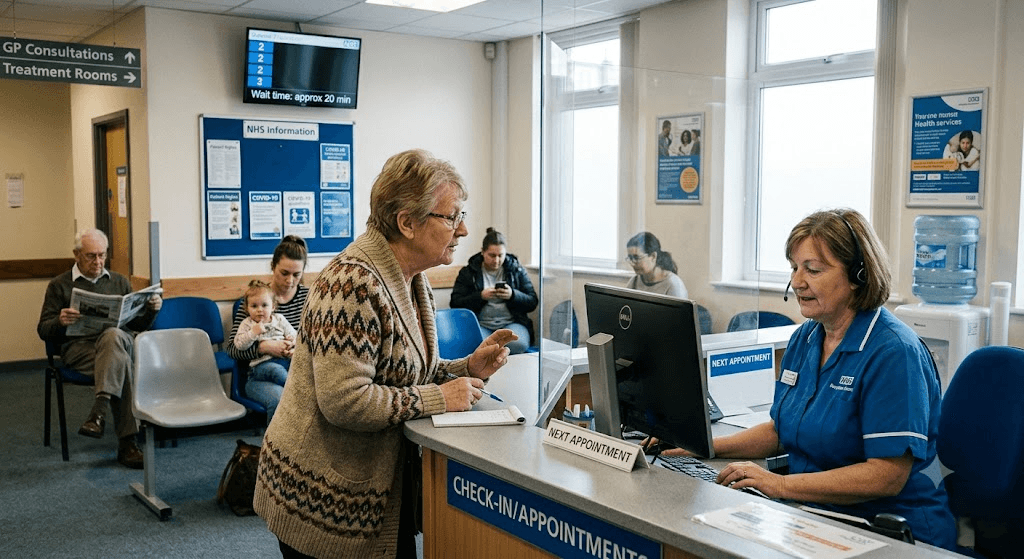
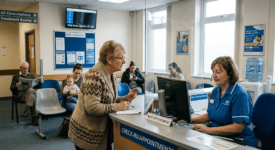
One of the most common frustrations voiced by British patients is having to explain their symptoms to a GP receptionist. It feels intrusive, leading to the common misconception that administrative staff are “playing doctor” or acting as arbitrary gatekeepers.
In reality, almost all UK practices now operate under a system called Total Triage or Care Navigation. Receptionists have been upskilled into trained Care Navigators. When they ask what is wrong with you, they are working from a strict, clinically approved algorithm designed by the practice’s senior partners. Their goal is not to stop you seeing a doctor, but to ensure you are pointed toward the exact right professional on your very first attempt.
If you call with a suspected urinary tract infection (UTI), a classic rash, or severe lower back pain, booking you in for a standard ten-minute slot with a General Practitioner might actually delay your recovery. A clinical pharmacist can issue UTI antibiotics directly; a First Contact Physiotherapist can assess your back vastly better than a GP can; a minor illness nurse can diagnose and treat the rash. By answering the Care Navigator honestly and concisely, you bypass the queue for the GP and get treated faster by a specialist.
The Wider Practice Team: Who Are You Actually Seeing?
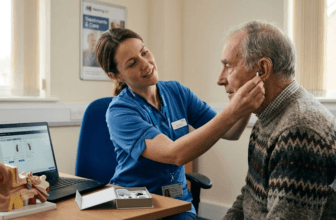
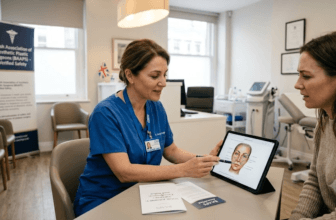
When you request an appointment, you may be offered a slot with someone who does not have “Dr” in front of their name. Accepting these appointments is often the secret to being seen within 24 hours. The modern primary care network relies on a multidisciplinary team:
- Advanced Nurse Practitioners (ANPs): Highly experienced, master’s-degree-educated nurses who can examine, diagnose, and prescribe medication for acute illnesses just like a GP.
- Clinical Pharmacists: Experts in medication. If you need a medication review, are experiencing side effects from a new blood pressure tablet, or need complex repeat prescriptions adjusted, they are the gold standard.
- First Contact Physiotherapists (FCPs): Specialists stationed inside GP surgeries to assess soft tissue injuries, arthritis, and spinal pain instantly, without needing a prior doctor’s referral.
- Physician Associates (PAs): Healthcare professionals trained to the medical model who work under the direct supervision of a GP to take medical histories, perform physical examinations, and analyze test results.
- Mental Health Practitioners: Dedicated specialists who can offer initial psychiatric assessments, bridge the gap to local talking therapies, and review mental health care plans.
Mastering the 8:00 AM Scramble: Four Actionable Tactics
If you genuinely require an acute, same-day appointment with a GP, the morning rush remains a reality. However, you can tilt the odds heavily in your favour by stepping away from the telephone.
1. Exploit the NHS App’s “Midnight Drop”
While telephone lines open at 8:00 AM, many GP practices’ IT systems (such as EMIS Web or SystmOne) automatically roll over their digital appointment rotas at midnight, or precisely at 7:30 AM. Check the official NHS App late at night or first thing in the morning before the phone lines officially open; you will frequently find a handful of newly released embargoed slots sitting there waiting to be claimed.
2. Master the Online Consultation Form (e-Consult / Patchs)
Most surgeries now feature a banner on their website directing you to an online triage system (frequently branded as e-Consult, Patchs, or AccuRx). These forms open at specific times—often 7:30 AM or 8:00 AM. Because filling out a digital text box takes three minutes, while a phone call takes five, patients using the digital form frequently enter the practice’s triage queue far ahead of the people sitting on hold to reception.
Pro tip: Keep your submission strictly factual. Do not write “I feel dreadful.” Write: “Day 4 of a productive green cough, temperature of 38.5C unresponsive to paracetamol, sharp pain in left shoulder blade when inhaling.” Clear clinical markers trigger high-priority triage.
3. The “Double Banger” Phone Strategy
If you must call, do not start dialling at 8:00:00. Dial at 7:59:45. Most modern cloud-based PBX phone systems used by the NHS take roughly 12 to 15 seconds to handshake the connection and drop you into the queue. Timing your call so the automated voice kicks in the millisecond the clock strikes eight can mean the difference between being caller number 3 and caller number 48.
4. Leverage the “Pharmacy First” Scheme
Launched across England, the Pharmacy First scheme is the most under-utilised shortcut in the NHS. You do not need a GP appointment at all for seven specific conditions. You can simply walk into almost any high street chemist and be assessed, and prescribed prescription-strength antibiotics or antivirals, for:
- Sinusitis (for patients aged 12 years and over)
- Sore throat (aged 5+)
- Earache (aged 1 to 17)
- Infected insect bites (aged 1+)
- Impetigo (aged 1+)
- Shingles (aged 18+)
- Uncomplicated urinary tract infections (women aged 16 to 64)
Routine vs. Urgent: Knowing Your Alternate Pathways
A major bottleneck in the NHS occurs when patients try to force routine issues into urgent slots, or conversely, sit on serious symptoms waiting for a two-week routine slot.
If your issue has been developing slowly over six months (such as a mild, non-changing mole, a persistent patch of dry skin, or general fatigue), request a routine appointment. Tell the receptionist clearly: “This is non-urgent; I am happy to take the first available routine slot next month.” By taking yourself out of the morning scramble, practices can often slide you into pre-booked clinics much more peacefully.
If your surgery is entirely full but your issue genuinely cannot wait until tomorrow, ask the receptionist to refer you to the local Primary Care Access Hub (sometimes called GP Out-of-Hours or Enhanced Access hubs). These are local clinics staffed by pooled NHS doctors from across your borough, operating during evenings (up to 8:00 PM) and throughout Saturdays.
Furthermore, never forget NHS 111 online. If you complete a 111 digital assessment and the algorithm determines you need to see a GP, 111 holds the electronic authority to directly inject your name into a reserved “111-only” appointment slot on your own GP’s computer system, completely overriding the local reception desk.
Maximising Your 10 Minutes
Once you secure your seat in the consulting room, the clock starts ticking. The standard NHS GP appointment is scheduled for exactly ten minutes. To extract the maximum clinical value from this brief window, you must prepare like a professional meeting:
- One appointment, one problem: The “while I’m here, Doctor” phenomenon is the leading cause of GP burnout and delayed waiting rooms. If you have three distinct issues (e.g., knee pain, low mood, and an odd digestive issue), call the surgery in advance and request a double appointment. GPs are more than happy to grant these for complex histories.
- Bring a written summary: Write down a bulleted timeline of your issue on a piece of paper or your phone notes: when it started, what makes it worse, what makes it better, and any over-the-counter remedies you have already tried. Handing this to the doctor saves four minutes of talking.
- Know your “ICE”: Doctors are trained to investigate a patient’s Ideas, Concerns, and Expectations. Speed up the process by telling them instantly. (“My idea is that it’s a tendon strain; my concern is that I might tear it if I keep working; my expectation today is to get a referral for some physiotherapy.”)
- Dress for the test: If you are attending for a sore knee, wear loose trousers or shorts. If you need a blood pressure check or have a shoulder issue, wear a short-sleeved base layer. Wasting three minutes unbuttoning multiple layers of winter clothing consumes roughly 30% of your total consultation time.
The Parallel Option: The Rise of the Private GP
With NHS waiting times pushing more families toward mixed-economy healthcare, private GP appointments have transformed from an elite luxury into an accessible mainstream backup. Companies like Bupa, Spire, and high-street digital providers such as Livi or Doctolib offer same-day private GP consultations, both via video link and in person.
A standard 20-to-30-minute private consultation typically costs between £70 and £120. The primary advantage here is time: a 30-minute slot allows for an unhurried, holistic discussion of multiple symptoms. However, consumers should be aware of the knock-on economics. While the appointment itself may be affordable, any private prescriptions issued will not be covered by the standard £9.90 NHS England base charge; you will pay the true wholesale cost of the drug plus a dispensing fee. Likewise, private blood tests or private referrals for MRI scans can quickly escalate into hundreds of pounds.
Crucially, opting to see a private GP for an isolated issue does not compromise your right to ongoing NHS care. You remain fully entitled to take a private specialist’s diagnosis back to your NHS GP to request that ongoing management, or expensive repeat medications, be transferred back onto a standard NHS repeat prescription.
Summary Checklist for Your Next Booking
Navigating British primary healthcare requires moving away from the passive “wait and call” mindset and adopting an active, tactical approach to the resources available to you. Next time you feel unwell, run through this mental checklist before hitting dial:
- Check the seven Pharmacy First conditions—can a local high-street chemist solve this today?
- Open the NHS App at 7:30 AM to hunt for midnight-drop routine cancellations.
- If using the practice’s online triage form, use cold, objective, quantifiable medical descriptors.
- If forced to call reception, view the Care Navigator as an ally whose sole job is to fast-track you to the correct practitioner.
- If the practice is locked out, use NHS 111 Online to push your way into a protected local hub slot.