 savingsspot.co.uk
 Sound is one of the most profound ways we connect with the world around us. From the subtle rustling of leaves in a quiet park to the vibrant hum of a family dinner table, our auditory system works tirelessly to process an incredibly complex landscape of noise. Yet, according to the Royal National Institute for Deaf People (RNID), approximately 12 million adults in the United Kingdom are currently living with some degree of hearing loss. Despite this staggering figure, many individuals wait up to a decade before seeking professional help. Navigating the world of hearing services can feel daunting, but understanding the options available, the diagnostic processes involved, and the technological advancements at your fingertips is the first step toward reclaiming your auditory health.
Whether you are noticing a slight dip in your ability to follow conversations, struggling with the persistent ringing of tinnitus, or simply looking to protect your ears from occupational hazards, modern audiology offers highly tailored solutions. In the UK, patients have the unique advantage of choosing between comprehensive National Health Service (NHS) pathways and independent private clinics, each offering distinct benefits.
The Early Warning Signs of Hearing Decline
Hearing loss is rarely a sudden event. In most cases, it is a gradual process that creeps up over several years, making it incredibly difficult to notice until it begins to significantly impact daily life. Because the brain is remarkably adept at compensating for missing auditory information, you might not realise how much you are straining to hear until a friend or family member points it out.
Recognising the early symptoms is crucial for early intervention. If you find yourself relating to any of the following scenarios, it may be time to consult an audiologist:
- The “Mumble” Effect: You frequently feel that people are mumbling or speaking too softly, especially in crowded environments like restaurants or pubs.
- Volume Creep: Your family constantly complains that the television or radio is turned up to an uncomfortable volume.
- Concentration Fatigue: You feel physically and mentally exhausted after social gatherings because of the intense concentration required to follow conversations.
- Telephone Difficulties: Understanding speech over the phone has become increasingly frustrating, leading you to avoid calls altogether.
- Misunderstanding Context: You frequently ask people to repeat themselves or respond inappropriately because you misheard the question.
- Tinnitus: You experience a ringing, buzzing, or hissing sound in one or both ears that does not have an external source.
The UK Landscape: NHS vs Private Hearing Services
One of the most significant decisions you will make regarding your hearing care in the UK is whether to use the NHS or seek private treatment. Both routes provide excellent standards of clinical care, but they differ substantially in terms of waiting times, product choice, and aftercare structures.
Accessing Care Through the NHS
The NHS provides a fantastic safety net for those experiencing hearing difficulties. To access NHS hearing services, your journey typically begins with a visit to your General Practitioner (GP). If your GP determines that a specialist assessment is necessary, they will refer you to an NHS audiology department or an accredited high-street provider operating under the Any Qualified Provider (AQP) scheme.
The primary advantage of the NHS route is cost. Assessments, hearing aids, batteries, and ongoing maintenance are provided free of charge. However, there are limitations. Waiting lists for an initial assessment can be lengthy depending on your local NHS trust. Furthermore, the hearing aids provided are generally Behind-The-Ear (BTE) models. While these are highly effective and technologically robust, they may not be as discreet or feature-rich as top-tier private options, and you generally do not get a choice of style or colour.
The Benefits of Private Audiology
Choosing a private hearing care provider offers a completely different experience, prioritising speed, aesthetic choice, and cutting-edge technology. Private clinics can often see you within a matter of days, meaning your journey to better hearing starts almost immediately.
When you opt for private care, you gain access to the full spectrum of global hearing aid technology. This includes ultra-discreet Completely-in-Canal (CIC) and Invisible-in-Canal (IIC) devices, as well as aids equipped with the latest artificial intelligence, rechargeable batteries, and seamless Bluetooth streaming capabilities. Private care also tends to offer more comprehensive, unhurried aftercare programmes. You are paying not just for the device, but for the ongoing expertise, regular adjustments, and personalised rehabilitation that ensures you get the absolute maximum benefit from your investment.
Inside the Clinic: What to Expect During a Hearing Assessment
The phrase “hearing test” drastically oversimplifies the rigorous diagnostic process conducted by a qualified audiologist. A comprehensive hearing assessment is a fascinating exploration of your auditory system, designed to pinpoint the exact nature and extent of your hearing loss.
A typical assessment involves several distinct stages:
- Otoscopy: Before any testing begins, the audiologist will visually examine your ear canal and eardrum using an instrument called an otoscope. They are checking for physical blockages, such as compacted ear wax, infections, or abnormalities of the eardrum that could be causing conductive hearing loss.
- Pure Tone Audiometry: This is the classic test you might be familiar with. Sitting in a soundproof booth, you will wear headphones and press a button every time you hear a tone. The audiologist will play sounds at various pitches (frequencies) and volumes (decibels) to map out your exact hearing threshold on a graph called an audiogram.
- Bone Conduction Testing: A small vibrating headband is placed behind your ear. This test bypasses the outer and middle ear, sending sound vibrations directly to the inner ear (cochlea). By comparing these results with pure tone audiometry, the audiologist can determine whether your hearing loss is sensorineural (nerve-related), conductive (blockage-related), or mixed.
- Speech Audiometry: Hearing isn’t just about detecting sounds; it’s about understanding them. This test measures your ability to hear and repeat words at different volumes, often with background noise introduced to simulate real-world environments.
- Tympanometry: A gentle puff of air is introduced into the ear canal to measure the movement of your eardrum. This helps detect issues like fluid behind the eardrum or problems with the middle ear bones.
Beyond Hearing Aids: Exploring Comprehensive Hearing Services
Modern audiology extends far beyond the prescription of hearing aids. Dedicated hearing clinics in the UK offer a wide array of specialised services designed to maintain overall ear health and address specific auditory conditions.
Professional Ear Wax Removal
Ear wax, or cerumen, is a natural and healthy substance that protects the ear canal. However, when it becomes impacted, it can cause sudden hearing loss, tinnitus, earache, and dizziness. Due to recent changes in NHS funding, many GP surgeries no longer offer ear syringing. Consequently, private ear wax removal has become a highly sought-after service.
The gold standard for wax removal today is microsuction. Unlike traditional water syringing, which carries a small risk of eardrum perforation or infection, microsuction uses a gentle medical vacuum to carefully lift the wax away. The audiologist performs this while looking through a binocular microscope, ensuring a safe, painless, and highly effective procedure that takes only minutes.
Tinnitus Management and Relief
Tinnitus—the perception of noise in the ears or head—affects millions of people in the UK. While there is no definitive “cure” for tinnitus, specialised audiology services offer highly effective management strategies. Tinnitus is often a symptom of underlying hearing loss; therefore, properly fitted hearing aids that restore environmental sounds can naturally mask the tinnitus.
For more severe cases, audiologists offer Tinnitus Retraining Therapy (TRT) and Cognitive Behavioural Therapy (CBT) techniques. Modern hearing aids also come equipped with sophisticated sound therapy generators that play soothing fractal tones, white noise, or ocean waves to help the brain habituate to the tinnitus, moving the sound from the forefront of your attention into the background.
Custom Hearing Protection
Prevention is always better than a cure. Audiologists provide bespoke hearing protection for musicians, construction workers, motorcyclists, and shooting enthusiasts. Unlike standard foam earplugs that muffle all sound, custom-moulded silicone plugs use specific acoustic filters. These filters reduce damaging high-decibel noises to safe levels while preserving the clarity of speech and music, an invaluable service for anyone regularly exposed to loud environments.
The Fascinating Link Between Hearing and Overall Health
Perhaps one of the most compelling reasons to engage with hearing services is the growing body of medical research linking hearing health to broader systemic wellbeing, particularly cognitive function. It is a lesser-known fact that treating hearing loss is one of the most effective ways to preserve brain health as we age.
When hearing declines, the brain is forced to divert significant cognitive resources toward simply decoding sounds. This “cognitive load” leaves less mental energy for memory and comprehension. Furthermore, struggling to hear often leads to social withdrawal and isolation, which are known precursors to depression.
Crucially, a landmark study published by the Lancet Commission on dementia prevention identified mid-life hearing loss as the single largest modifiable risk factor for developing dementia. By treating hearing loss with appropriate amplification, you are not just improving your ability to converse; you are actively stimulating your auditory cortex and protecting your long-term cognitive health.
Navigating the Latest Hearing Aid Innovations
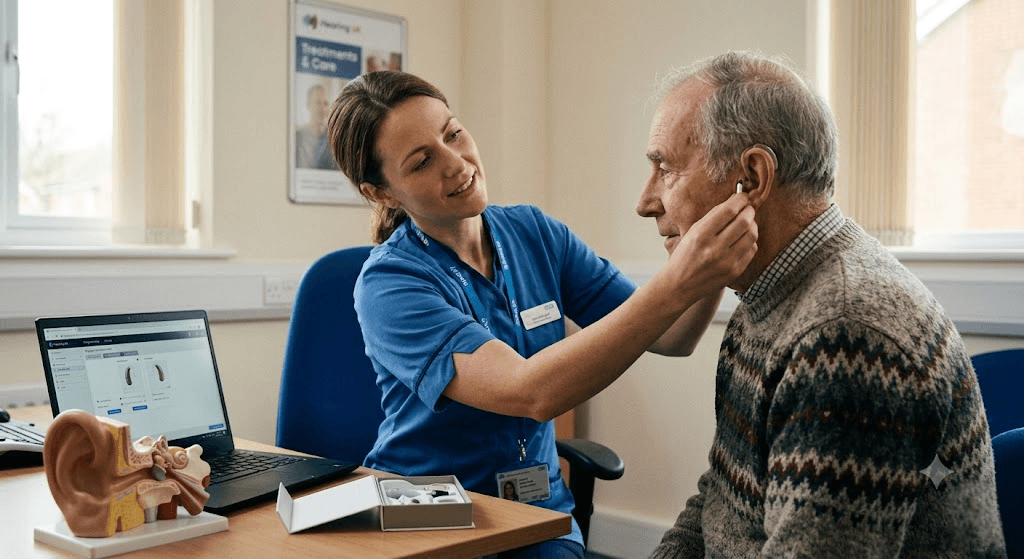
If your assessment reveals that hearing aids are the best course of action, you will be introduced to technology that has evolved lightyears beyond the bulky, whistling devices of the past. Today’s hearing aids are highly sophisticated microcomputers.
Modern devices utilise Artificial Intelligence (AI) and Deep Neural Networks. These processors scan the acoustic environment hundreds of times per second, instantly distinguishing between background noise (like traffic or clattering dishes) and human speech, suppressing the former while enhancing the latter. This allows users to experience seamless listening even in incredibly challenging environments.
Connectivity has also revolutionised the user experience. Most new hearing aids feature Bluetooth technology, allowing them to pair directly with smartphones, tablets, and televisions. This means phone calls, podcasts, and music can be streamed directly into your ears in high-definition stereo. Additionally, the shift towards lithium-ion rechargeable batteries means the frustrating days of fumbling with tiny replacement batteries are largely over; simply place the aids in their charging dock overnight, and they are ready for a full day’s use.
Preparing for Your First Audiology Appointment
Taking the first step toward better hearing is a positive and empowering decision. To get the most out of your initial consultation, a little preparation goes a long way. It is highly recommended to bring a close friend or family member with you. Not only can they provide moral support, but they can also offer the audiologist a secondary perspective on the hearing challenges you face daily, as they are often the ones who notice the subtleties of your hearing loss first.
Make a brief list of your medical history, including any medications you are currently taking, as some drugs can be ototoxic (harmful to the ear). Finally, note down specific situations where you struggle the most—whether that’s hearing your grandchildren, attending board meetings, or listening to the television. This allows the audiologist to tailor their recommendations specifically to your lifestyle needs.
Making the Right Choice for Your Auditory Health
Engaging with hearing services is an investment in your quality of life. Whether you choose the accessible route of the NHS or the technologically advanced, rapid-access pathway of private audiology, the most important action is simply to take action. The UK boasts a world-class standard of audiological care, staffed by highly regulated professionals registered with the Health and Care Professions Council (HCPC). By addressing your hearing health proactively, you ensure that you remain fully engaged with the conversations, sounds, and experiences that make life vibrant.