
 savingsspot.co.uk
 As the late summer warmth gives way to crisp mornings and falling leaves, the British retail landscape undergoes its most important psychological shift of the year. For generations of UK shoppers, the calendar was anchored by two giant discounting milestones: the post-Christmas Boxing Day rush and the more recently imported frenzy of Black Friday. However, quietly occupying the sweet spot between October and early November is the most underrated window in British commerce: the Autumn Sale.
Often branded by high street retailers as ‘Mid-Season Sales’ or ‘Autumn Promotional Events’, this specific pocket of discounting offers a remarkably different proposition to the end-of-year clearances. While Black Friday is frequently bogged down by convoluted bundle deals and artificial “was/now” pricing on obsolete electronics, the autumn sale is driven by genuine, fast-moving inventory mechanics. For the discerning British shopper, understanding the rhythm of these mid-season drops is the difference between securing high-grade, cold-weather essentials at a 40% discount, and paying over the odds come December.
The Anatomy of the UK Mid-Season Sale
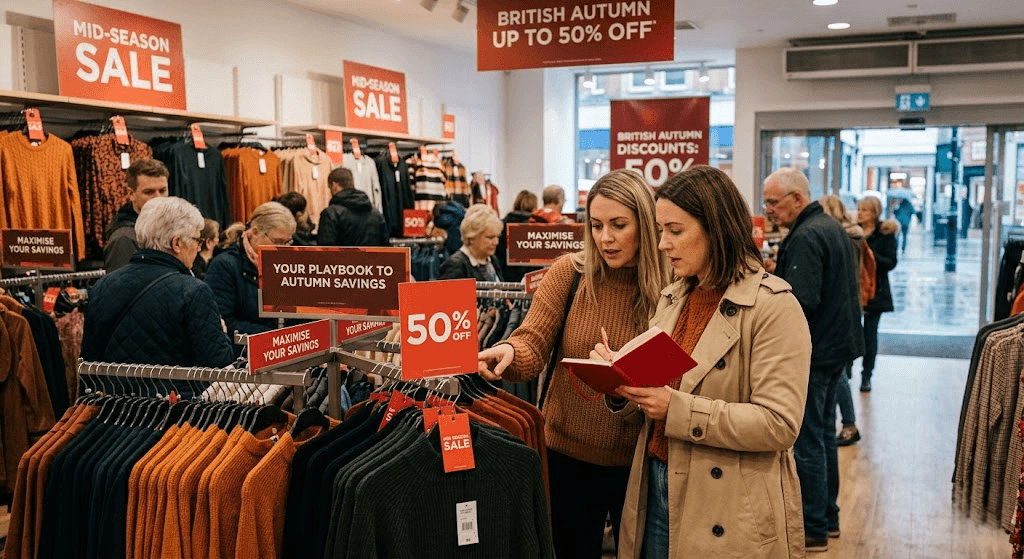
To extract real value from an autumn sale, one must first understand the retail pressures that create it. In the UK fashion, homeware, and lifestyle sectors, the commercial year is dictated by rigid warehouse delivery schedules. Autumn/Winter (AW) collections traditionally begin arriving in stockrooms during the sweltering heights of August. By the time October arrives, store managers and e-commerce directors face an acute spatial crisis.
Heavy winter stock—think thick woollen overcoats, 13.5-tog duvets, dense knitwear, and bulky boxed Christmas gift sets—requires massive amounts of physical square footage. To make room for the definitive “Winter/Festive” peak drops, retailers must rapidly liquidate their “transitional” inventory. These are the items designed for the unpredictable British September: lightweight quilted jackets, fine-gauge merino jumpers, autumn trench coats, unseasonal garden stock, and early-drop ceramics.
Because this is a scheduled stock rotation rather than a desperate end-of-line liquidation, the quality of the merchandise on offer during an autumn sale is exceptionally high. You are not picking through the neon-lycra dregs of a summer clearance; you are purchasing highly wearable, seasonally appropriate stock right at the exact moment the British weather demands you start wearing it.
The Autumn Sale Timeline: When to Strike
Navigating the autumn sales requires a tactical sense of timing. Enter the market too early, and you capture the best range of sizes but the lowest percentage drops; hold your nerve too long, and you are left browsing XS or XXL remnants. The British autumn sale season generally moves through three distinct phases:
- Phase One: The Early Bird Markdowns (Late September to Early October) — Triggered almost immediately after the children return to school. These are modest discounts, usually hovering between 20% and 25%. This is the time to buy high-risk footwear (such as standard size 5 or 6 women’s leather boots, or men’s size 9 brogues) which will inevitably sell out before the deeper cuts happen.
- Phase Two: The Core Mid-Season Drop (Mid to Late October) — The absolute sweet spot of the autumn calendar. High street giants like John Lewis, Marks & Spencer, Next, and ASOS will push their “Up to 50% Off Mid-Season” banners live. This coincides with the autumn half-term, meaning brick-and-mortar footfall increases, forcing online retailers to match high street price cuts aggressively.
- Phase Three: The Pre-Black Friday Merge (Early November) — This is a relatively new phenomenon in UK retail. To avoid the logistical nightmare of trying to ship millions of parcels during the final week of November, smart British brands now use the first ten days of November to run “Early Access” autumn clearances. These offer Black-Friday-level discounts (up to 70%), but with vastly superior stock availability.
Category Breakdown: What to Buy (and What to Ignore)
Not all retail sectors treat the autumn transition equally. To ensure your spending generates genuine utility, apply this category-by-category filter to your shopping list.
1. Autumn Fashion and Footwear
The Strategy: Prioritise natural fibres and structural outerwear. When browsing digital sale rails, filter immediately by material composition. Look for genuine wool blends (aim for at least 60% wool in coats), pure cotton corduroy, cashmere, and real leather. Retailers are desperate to clear heavy cotton-twill shirting and mid-weight knitwear to bring in their chunky, festive-themed knits.
What to ignore: Fast-fashion partywear. You will start seeing early discounts on sequined dresses and velvet blazers in October. Ignore them; the primary price collapse for occasionwear happens in the second week of December.
2. Homeware, Heating, and Soft Furnishings
The Strategy: With energy prices remaining a conscious factor for British households, the autumn sale is the premier event for thermal home upgrades. Dunelm, The White Company, and premium department stores routinely drop the prices of brushed cotton bedding, heavy velvet thermal eyelet curtains, and luxury goose-down mattress toppers by up to 40% during October. It is also the optimum week to purchase a heated throw or an energy-efficient oil-filled radiator before the first genuine winter freeze causes a nationwide run on stock.
What to ignore: Large kitchen appliances. If you need a new washing machine, fridge-freezer, or high-end espresso machine, sit on your hands. The white-goods sector operates on strict manufacturer rebates tied to the official Black Friday weekend at the end of November.
3. Garden and Outdoor Living (The Hidden Goldmine)
The Strategy: This is arguably the single most lucrative sector of the UK autumn sale. British garden centres and online patio specialists face a massive issue in October: outdoor furniture cannot be left out in the rain, and storing a massive L-shaped rattan corner sofa inside a heated warehouse for six months destroys their profit margins. Consequently, high-end gas barbecues, firepits, composite decking kits, and luxury garden lounge sets are routinely subjected to brutal 60% to 70% price slashes. Buy your summer 2027 garden setup in the wet October of 2026, cover it in a heavy-duty tarpaulin in the garage, and thank yourself next June.
4. Consumer Electronics
The Strategy: Be fiercely selective. The autumn tech sale is dominated by “generation-lag” discounting. Because Apple holds its primary iPhone and Apple Watch keynote in September, and Google follows with its Pixel event shortly after, British third-party tech retailers (such as Currys, Argos, and Amazon UK) spend October furiously discounting the *previous* year’s flagship models. If you do not care about having the absolute latest microchip, buying a 12-month-old smartphone or tablet during an October mid-season sale offers the highest performance-to-pound ratio of the year.
Five Insider Hacks for the British Bargain Hunter
To elevate yourself from a casual browser to an elite consumer, integrate these five specific techniques into your autumn shopping routine:
1. The “Incognito Basket Hold”
When shopping online at major UK fashion retailers, never log into your account immediately. Browse in a private or incognito window, drop your desired sale items into the basket, and head to the checkout page. At the point where it asks for your email address to proceed, enter it, but then close the tab entirely. In roughly 40% of cases, the retailer’s automated marketing software will flag an “abandoned cart” and automatically issue a unique 10% or 15% discount code to your inbox within 24 hours to nudge you over the line. Combine this code with the already reduced mid-season price.
2. Double-Dipping via UK Cashback Portals
Never visit a retailer’s website directly. Always open a tab via TopCashback UK or Quidco. During the autumn sales drops, these platforms routinely run “super-merchant” promotional weekends, offering up to 12% cash back on top of the merchant’s on-site sale prices. Furthermore, check your American Express, Monzo, or NatWest mobile banking apps; “merchant offers” sections frequently feature statement credits (e.g., “Spend £100 at Next, get £15 back”) which stack seamlessly with seasonal sales.
3. The Digital Price-Floor Verification
When looking at an autumn sale deal on an item like a De’Longhi heater, a Sony soundbar, or a Barbour jacket, copy the exact manufacturer part number (MPN). Paste it into Google Shopping, but also run it through **PriceRunner.com/uk** or **CamelCamelCamel** (for Amazon price histories). These tools will show you a graph of the product’s price over the last 365 days. If the “Sale Price” was actually matched or beaten during a random Tuesday in April, it is not a genuine autumn bargain—it is just baseline pricing dressed up in orange autumn marketing.
4. Exploit the “Brand Outlet” Backdoors
Many of the UK’s most prestigious high street names refuse to put giant, cheap-looking “SALE” stickers in the windows of their flagship Regent Street or Manchester Arndale stores because it damages their brand equity. Instead, they quietly funnel their mid-season overstock to their official eBay UK “Brand Outlet” stores. Superdry, Joules, Office Shoes, Oliver Bonas, and even Dyson operate verified, direct-from-manufacturer eBay outlets where surplus autumn stock is dumped at clearance rates, complete with standard consumer warranties.
5. The Physical “Scan and Search” Protocol
If you prefer the tactile experience of walking down the local high street on an October Saturday, keep your smartphone in your hand. When you find an item on a physical mid-season sale rail in a shop like TK Maxx, Zara, or Waterstones, open the Google app and tap the small camera icon (Google Lens). Take a photo of the item. Within two seconds, the internet will show you every single UK digital stockist currently holding that exact item, allowing you to instantly verify if the shop’s physical markdown is actually the cheapest price available in the country.
Know Your Rights: UK Sale Return Policies Explained
A common trap that catches British consumers during seasonal promotions is a misunderstanding of statutory consumer rights regarding discounted items. The law draws a massive, iron-clad distinction between buying a sale item on the high street versus buying it on the internet.
Buying in a Physical Shop:
Under the *Consumer Rights Act 2015*, high street shops are under **zero legal obligation** to offer you a refund on a sale item simply because you changed your mind, it doesn’t fit, or you found it cheaper elsewhere. Unless the item is genuinely faulty or misdescribed, physical stores are entirely within their rights to offer you a “Credit Note Only” or refuse the return entirely. Always ask the cashier: *”What is your specific policy on returning marked-down items?”* before tapping your card.
Buying Online:
The internet is the ultimate safe haven for the British sale shopper. Thanks to the *Consumer Contracts Regulations*, you possess an absolute, legally protected **14-day right to cancel** an order for any reason whatsoever, followed by a further 14 days to send the goods back. This applies to items bought at full price, items bought at 10% off, and items bought at 95% off in a clearance bin. The retailer cannot hide behind “sale terms apply” clauses to reject an online return.
Note: Ensure you leave the tags attached. A retailer is legally permitted to deduct money from your online refund if they deem the item has been handled beyond what is reasonably necessary to establish its nature and fit (i.e., treating your living room like a standard shop fitting room is fine; wearing the coat to a damp autumn bonfire and trying to return it smelling of woodsmoke is not).
The Rise of the “Conscious Autumn”
Finally, no contemporary assessment of the UK autumn shopping calendar is complete without acknowledging the booming circular economy. Driven partly by Oxfam’s nationwide ‘Second-Hand September’ campaign, the British public’s attitude toward the autumn wardrobe switch-over has evolved.
During October, peer-to-peer resale apps like Vinted, Depop, and eBay experience their highest listing volumes of the year as millions of Brits clear out their wardrobes to make way for winter storage. If you are hunting for high-end autumn staples—such as a genuine vintage Burberry trench coat, a Harris Tweed blazer, or a pair of Red Wing boots—the second-hand market during the October clearance window offers peerless, sustainable luxury at a fraction of high street sale prices.
The Verdict: Precision Over Panic
The UK autumn sale is the thinking person’s retail event. Because it lacks the manic, ticking-clock hysteria of late November, it affords the consumer the one thing truly required to make a sensible purchase: the time to think. By treating the October markdowns as a predictable harvest of high-quality transitional goods, auditing your wardrobe and home before you look at a single digital banner, and strictly verifying every claimed discount against historical price floors, you can navigate the season with total financial poise.