 savingsspot.co.uk
 Nothing quite unites the British public like the time-honoured tradition of the weekend takeaway. Whether it is a comforting Friday night chicken tikka masala, a hungover Sunday morning fry-up from the local café, or an emergency midweek grocery drop, food delivery apps have seamlessly woven themselves into the fabric of modern UK life. However, as the cost of living continues to command our attention, the added friction of delivery fees, service charges, and small order penalties can quickly turn a relatively modest meal into an expensive luxury.
This is precisely where the strategic application of an Uber Eats voucher transforms from a casual bonus into an essential bit of household financial management. Far too many consumers treat promotional codes as pure luck—something that occasionally appears in an email inbox or on a billboard. In reality, navigating the UK takeaway ecosystem with consistent discounts requires a tactical approach, a solid understanding of algorithmic marketing, and a few insider methods.
Understanding the Anatomy of an Uber Eats Voucher
Before you begin scouring the internet for discount strings, it is vital to understand how Uber Eats structures its promotional architecture. Unlike traditional paper coupons, digital vouchers on this platform are governed by strict, automated parameters designed to protect restaurant margins while incentivising specific customer behaviours.
The Basket Subtotal Threshold
The single most common reason a voucher fails at the checkout is the misunderstanding of the minimum spend threshold. When an Uber Eats voucher stipulates “Save £10 when you spend £20”, that £20 figure applies exclusively to the raw cost of the food or groceries in your basket. It explicitly excludes the delivery fee, the platform service fee, and any driver tips. If your food subtotal comes to £19.50, adding a 50p garlic dip to push yourself over the line is always more economically sound than paying the full price without the discount.
Account-Locked vs. Universal Promos
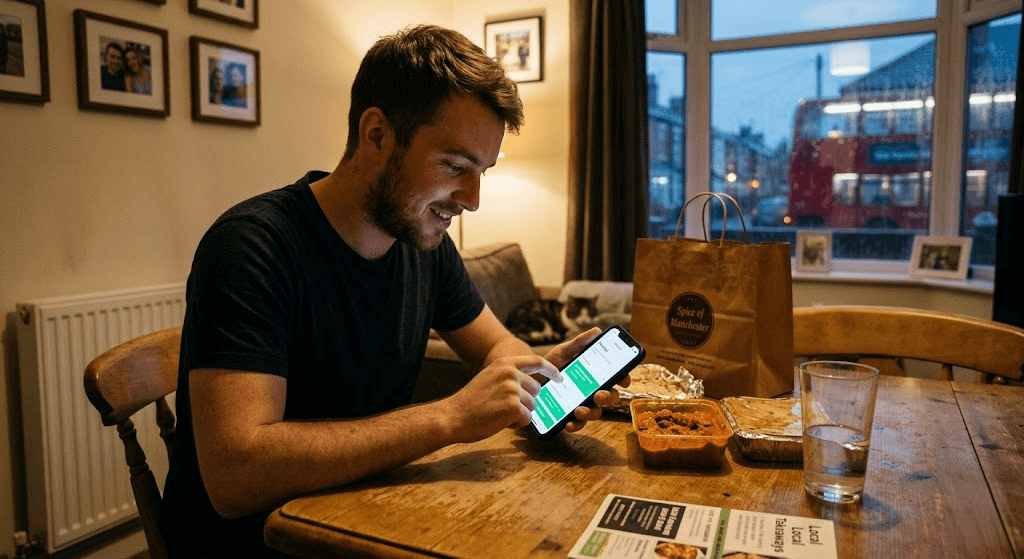
Uber categorises its discount codes into two distinct camps. Universal codes (often released during major sporting events like the Six Nations or major bank holiday weekends) can be redeemed by anyone until the redemptions cap is reached. Account-locked codes, conversely, are tied directly to your unique user ID. If a friend forwards you a bespoke code they received via email, the app will instantly reject it if your email address was not on the original distribution list.
The Prime Hunting Grounds for UK Vouchers
Finding a working Uber Eats voucher in the UK requires looking beyond generic, ad-heavy coupon aggregator websites, which are frequently cluttered with expired or fabricated strings. Instead, focus your efforts on high-probability distribution channels.
1. The Welcome Offer and Household Synergy
If you have genuinely never used the platform before, you hold the golden ticket. Uber Eats consistently offers aggressive customer acquisition discounts—often ranging from £10 to £15 off your first order. If you live in a multi-occupancy household or flatshare, ensure every single resident takes advantage of their individual welcome offer over time rather than ordering through a single communal account.
2. Student Verification Portals
If you are in higher education, you should never pay full price for a delivery. Uber Eats maintains permanent partnerships with UK student verification platforms such as Student Beans and UNiDAYS. These portals typically offer rolling, multi-use vouchers (for example, £10 off your first order, followed by tiered discounts of 10% to 15% off subsequent orders above a certain spend). You must re-verify your student status annually to keep these dynamic links active.
3. NHS and Blue Light Card Concessions
Emergency services, NHS, social care, and armed forces staff possess access to some of the most reliable takeaway discounts in the country. Through the official Blue Light Card app or the NHS Staff Benefits portal, users can frequently generate unique, single-use promotional codes that slash ordering costs. Because these codes are dynamically generated upon request, they boast a near-100% success rate at checkout.
4. The Dedicated Grocery Push
In recent years, Uber Eats has aggressively expanded beyond hot restaurant meals into the rapid grocery delivery sector, partnering with UK retail giants like Sainsbury’s, Asda, Co-op, and Waitrose. To change consumer habits, the marketing department allocates massive budgets specifically to grocery vouchers. It is exceptionally common to find codes offering “40% off your next grocery shop” sitting entirely unnoticed in the ‘Promotions’ tab of your app, even when your standard restaurant delivery discounts have dried up.
The Art of “Stacking”: Multiplying Your Discounts
One of the most fiercely guarded rules of the Uber Eats checkout system is that you cannot apply two separate promotional codes to a single order. You cannot, for instance, apply a 20% off voucher and a £5 off voucher simultaneously. However, a savvy user knows how to circumvent this limitation by stacking a voucher code with an in-app restaurant promotion.
Many independent UK eateries and high-street chains (such as Leon, Roosters Piri Piri, or local dessert parlours) run internal platform offers independently of Uber’s corporate vouchers. These are prominently displayed with green badges reading “Spend £20, Save £5” or “Buy One, Get One Free (BOGOF)”.
Because the internal restaurant offer automatically discounts the items directly inside your basket before the promotional code phase, you can safely apply an external Uber Eats voucher on top of the already reduced subtotal.
- Step 1: Navigate to the dedicated ‘Offers’ filter at the top of the Uber Eats homepage.
- Step 2: Select a restaurant running a “Buy One Get One Free” promotion on a high-value item, like a gourmet burger or a large pizza.
- Step 3: Add two of the qualifying items to your basket. The cost of the second item drops to £0.00 automatically.
- Step 4: Ensure your remaining paid items meet the subtotal threshold of your external voucher code.
- Step 5: Apply your promotional code at checkout. You have successfully secured a double discount, frequently resulting in a massive feast for less than the price of a standard single meal.
Triggering the Algorithmic Nudge
Like all sophisticated tech platforms, Uber Eats relies heavily on automated customer retention algorithms. The system constantly analyses your ordering cadence. If you order every single Friday at 7:00 PM without fail, the algorithm classifies you as a captive user; it has absolutely no financial incentive to offer you a discount code.
If you want the algorithm to start sending bespoke vouchers directly to your inbox, you need to introduce artificial scarcity into your behaviour.
The Dormant Account Strategy
If you deliberately stop opening the Uber Eats app for a period of 14 to 21 days, you will trigger an automated re-engagement sequence. The platform’s internal logic recognises that you may have defected to a rival service like Deliveroo or Just Eat. Consequently, it will begin firing automated push notifications and emails containing escalating incentives. It usually begins with a modest “We miss you – enjoy free delivery”, escalating within a week to a highly lucrative “Here is 30% off your next three orders to welcome you back”.
The Abandoned Basket Routine
Another highly effective micro-strategy involves the digital equivalent of window shopping. Open the app during peak daytime hours (around 11:00 AM or 4:00 PM), build a substantial basket from a popular local restaurant, proceed right to the final checkout screen, and then abruptly close the app without confirming payment. For certain user profiles, this action flags an “intent to purchase” drop-off in the system, occasionally prompting an automated email within a few hours containing a small nudge voucher to encourage you to complete the transaction.
Maximising Value: Gift Cards and Subscription Synergy
If you find yourself in a dry spell where no standard promotional codes are functioning, you can still artificially manufacture a discount by altering your payment method or leveraging ecosystem synergies.
The Cashback Gift Card Loophole
Never pay for an Uber Eats order directly with a standard debit card if you can avoid it. Instead, download an instant UK cashback app such as JamDoughnut, Cheddar, or TopCashback. These platforms allow you to purchase digital Uber Eats gift cards instantly, offering an immediate cashback yield (typically hovering between 3% and 7% depending on promotional rates).
You purchase a £30 gift card, receive £1.50 back into your cashback account instantly, load the voucher balance into your Uber Eats wallet, and spend it as cash. Best of all, gift card balances can be used in conjunction with standard discount codes, allowing you to layer your savings even deeper.
The Uber One Calculation
It is impossible to discuss vouchers without evaluating the elephant in the room: Uber One. This monthly or annual subscription service guarantees £0 delivery fees on select food and grocery orders alongside reduced service charges.
While an ongoing subscription requires an upfront financial commitment, it fundamentally changes the value proposition of standard vouchers. When a non-subscriber uses a “20% off” code, a substantial portion of that saving is immediately swallowed up by the standard £3.99 delivery fee. For an Uber One member, that 20% discount applies purely to the food, resulting in a significantly lower bottom-line price. Furthermore, Uber routinely drops exclusive, high-value vouchers into the wallets of active Uber One members as a retention perk.
Troubleshooting: Why Was My Code Rejected?
Few things are more deeply frustrating than carefully assembling a family dinner order only for a promotional code to flash red at the final hurdle. If your Uber Eats voucher is failing, systematically verify the following UK-specific failure points:
- Geographical Fencing: Regional marketing teams often deploy hyper-local codes to support launches in specific towns. A code designed to celebrate new restaurant additions in Manchester will systematically fail if your delivery GPS pin is dropped in Birmingham or central London.
- The Service Fee Exclusivity: Double-check your subtotal calculation. Vouchers never apply to the platform service fee (which sits at a minimum of 99p and scales with your order size up to £2.99). Ensure the pure cost of the items exceeds the minimum required spend.
- Account Multi-Accounting Flags: Uber operates incredibly aggressive device-fingerprinting and IP-tracking security protocols. If you have created a secondary email address to try and harvest a “New User” voucher on the same smartphone or using the same PayPal account as your primary profile, the system will instantly flag the transaction, void the voucher, and potentially suspend the accounts.
- Alcohol Exclusions: Due to strict UK licensing laws and minimum unit pricing regulations (particularly enforced within Scotland and Wales), many global promotional codes explicitly exclude alcohol products from contributing toward the qualifying subtotal threshold.
Making Savvy Ordering a Permanent Habit
Ultimately, securing an Uber Eats voucher in Great Britain should not be treated as a sporadic treasure hunt, but rather as an integrated step in your ordering routine. By cultivating a healthy scepticism of generic public coupon sites, taking full advantage of institutional verification portals like Blue Light and UNiDAYS, understanding the profound power of in-app promotional stacking, and learning how to step back to let the re-engagement algorithms do the hard work for you, you can dramatically reduce the financial guilt of enjoying your favourite meals delivered straight to your doorstep.