 savingsspot.co.uk
 There is a specific, quiet triumph hardwired into the British psyche. It occurs when someone compliments your winter coat, your new kettle, or your solid oak dining table, and you are compelled—by an ancient, irresistible ancestral force—to give the standard, unprompted reply: “Tenner. In the sale.”
We are a nation of devoted bargain hunters. Yet, stepping into the modern UK retail ecosystem feels less like a casual Saturday afternoon browse down the High Street and more like an exercise in forensic counter-espionage. Between artificially inflated base prices, algorithmic ‘dynamic pricing’ that shifts while an item sits in your digital basket, and perpetual, neon-splashed ‘closing down’ events that seem to outlast geological eras, spotting a genuine discount has become a serious discipline.
True savvy shopping is no longer about walking toward the biggest red poster in a shop window; it is about understanding retail mechanics, exploiting digital loopholes, and knowing the legal definitions of a price tag. Whether you are scouring the aisles of a suburban supermarket or navigating the checkout page of a digital boutique, here is the ultimate masterclass in separating genuine retail gold from promotional fools’ gold.
1. The Ecology of the ‘Yellow Sticker’
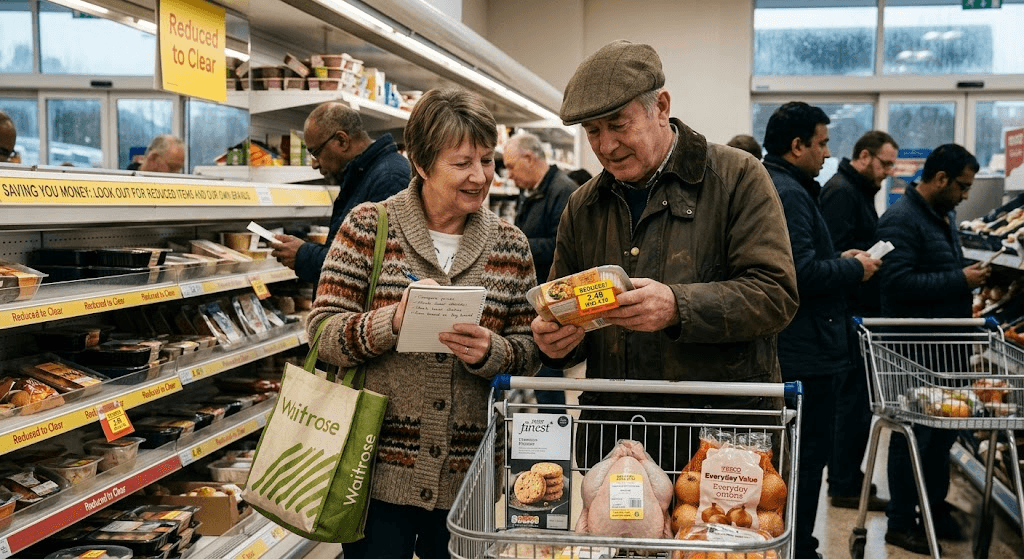
To the uninitiated, the supermarket reduced section is a chaotic jumble of bruised peaches and near-expiry pork pies. To the veteran, it is a highly predictable, mathematically governed ecosystem. Every major British supermarket operates on a strict, time-sensitive waste-reduction protocol, and understanding their daily rhythms is the quickest way to cut your weekly grocery bill in half.
The golden rule of ‘yellow stickering’ is that reductions happen in distinct, predictable waves throughout the trading day:
- The Morning Sweep (08:00 – 10:00): This is when store colleagues clear out items expiring that exact day. Reductions here are modest—usually around 10% to 20% off the Recommended Retail Price (RRP). It is prime time for grabbing a cheap office sandwich, but poor for bulk freezer-filling.
- The Post-Lunch Slump (13:00 – 15:00): The secondary review. Items that failed to move during the morning rush get their second yellow barcode, dropping to roughly 40% to 50% off.
- The Final Hour (18:30 – 20:00): The main event. Supermarkets face a hard zero-hour at midnight; anything unsold goes into the anaerobic digestion bin at a financial penalty to the store. Consequently, prices plummet by 75% to 90%. A £6 joint of roasting beef becomes £1.20; an artisanal sourdough loaf drops to 15p.
Nuance varies wildly by brand. For instance, Marks & Spencer Foodhalls tend to execute their final sweeps much earlier in the afternoon—often around 4:00 PM—targeting the post-work commuter rush. Conversely, Asda and Sainsbury’s hold their nerve until the dying hours of the evening. A lesser-known goldmine is the local suburban Co-op on a Sunday afternoon at 3:30 PM; constrained by the Sunday Trading Act of 1994 to a six-hour window, store managers are forced to aggressively clear 24 hours’ worth of fresh weekend stock in a fraction of the usual time.
2. Decoding TK Maxx: The Secret on the Price Tag
TK Maxx occupies a legendary space in British retail lore—a place where you can simultaneously buy a discounted bottle of truffle oil, a set of 1,000-thread-count Egyptian cotton bedsheets, and a neon green kayak. However, the widespread consumer belief that everything inside the store is a high-fashion runway cast-off is a carefully maintained illusion.
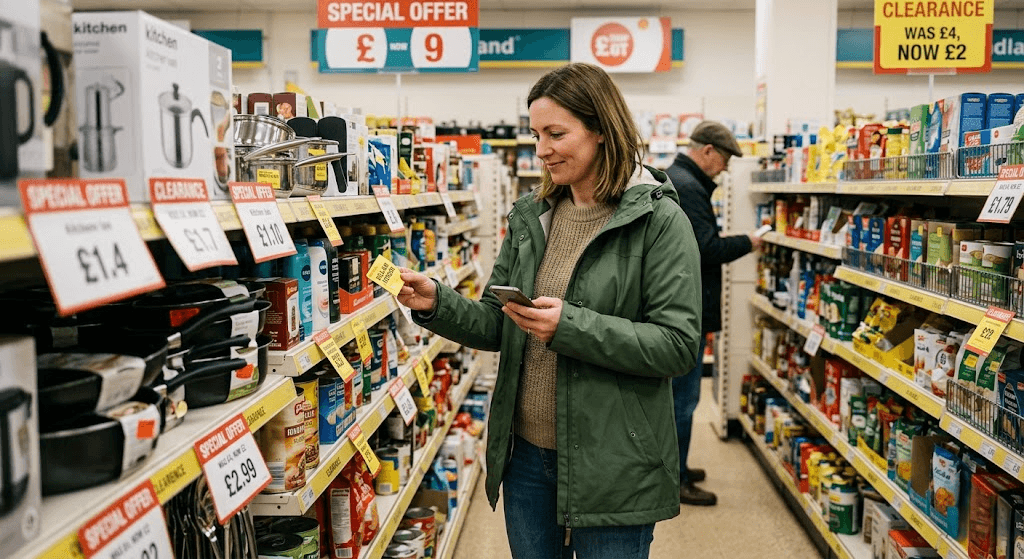
Like many off-price retailers, TK Maxx utilizes a hybrid model of genuine clearance stock and ‘Made for Outlet’ (MFO) goods—items manufactured specifically for the discount market using cheaper materials. To guarantee you are buying a genuine designer discount rather than a manufactured bargain, you have to look past the large red “RRP” claim and look at the tiny, printed numbers above the barcode on the physical paper ticket.
Look at the single digit sitting on its own, usually positioned towards the top right of the sticker or boxed off above the size code:
- Code 1: This item was produced specifically for TK Maxx. It has never seen the inside of a luxury department store. The “RRP” listed alongside it is a hypothetical estimate of what an item of similar style and build quality might cost elsewhere.
- Code 2: The holy grail. This signifies genuine unsold, surplus, or cancelled stock bought directly from a major design house or brand. When you find a Code 2 item at 60% off, you are securing a legitimate, uncompromised High Street discount.
- Code 7: An item that was packed away in a master warehouse at the end of a previous year’s season and brought back out for the current season. These are genuine brand items, often marked down a second or third time to clear physical rack space.
3. The ‘Outlet Village’ Mirage
This brings us to the broader UK phenomenon of the designer outlet village—destinations like Bicester Village in Oxfordshire, Cheshire Oaks in Ellesmere Port, or the McArthurGlen hubs scattered across the country. Millions of Britons make annual weekend pilgrimages to these open-air malls, seduced by the promise of permanent 30% to 70% discounts on premium lifestyle brands.
The uncomfortable reality is that the modern outlet village is largely populated by parallel inventory. High-end brands such as Ralph Lauren, Coach, Michael Kors, and Nike operate dedicated factory-line supply chains specifically to fill these shops. You are not buying the £400 mainline Regent Street trench coat discounted to £250; you are buying a £250 trench coat designed to look like the £400 version, constructed with lower-grade alloy hardware, simpler single-stitching, and synthetic linings.
To beat the mirage, look inside the garment at the internal care tags. Mainline retail items almost universally feature standard, woven brand labels. Outlet-specific clothing frequently gives itself away via subtle typographical shifts: an extra small diamond symbol stitched onto the inner neck tag, a label printed directly onto the polyester neck rather than stitched, or an internal serial number prefixed with the letters ‘OUT’ or ‘FAC’. If the store has sixty identical units of a specific polo shirt in every conceivable size from XS to XXL neatly folded on a display table, it is an outlet creation. If you find a lone, slightly crumpled silk dress in a size 10 hanging on a mixed clearance rail at the very back of the shop, you have found a genuine mainline refugee.
4. Algorithmic Self-Defence: Beating the Price Trackers
In the digital sphere, the concept of a ‘discount’ has been completely weaponized. Retail events like Black Friday, Amazon Prime Day, and the traditional Boxing Day sales rely heavily on anchoring bias—showing the consumer a massive “Was £999, Now £499” graphic to trigger an immediate, uncritical psychological response.
In the UK, retail pricing is monitored by the Chartered Trading Standards Institute (CTSI). Under their guidelines, for a retailer to legally claim an item “Was £X”, the product must have been available at that higher price for at least 28 consecutive days in the same outlet. However, modern mega-retailers have found highly sophisticated ways to game this rule. A common tactic is to introduce a 4K television to the digital market in September at an artificially inflated price of £1,200, sell zero units for 28 days, and then “slash” the price to its intended retail value of £699 in late October, declaring a £501 saving.
To combat this, the modern digital consumer must refuse to accept a retailer’s stated ‘Was’ price at face value. Put your trust entirely in third-party historical price aggregators:
- CamelCamelCamel: The definitive tool for Amazon UK. Paste any product URL into this engine, and it will generate an all-time pricing chart. You will frequently discover that the “70% off Prime Day Special” is actually £5 more expensive than the item’s standard resting price on a random Tuesday in March.
- PriceRunner & PriceSpy: For the wider UK web. These platforms track the historical pricing of an identical SKU across Currys, John Lewis, Argos, and independent specialists simultaneously, exposing who raised their base prices the week prior to a promotional event just to drop them back down.
5. The ‘Graded’ Underground: Why Buying New Tech is a Trap
When purchasing consumer electronics, laptops, or large kitchen white goods, paying the full RRP for a factory-sealed box is arguably the least efficient use of British sterling. The UK possesses a thriving, highly regulated “graded” and refurbished market that mainstream consumers routinely overlook due to misplaced fears regarding longevity and hygiene.
When a UK consumer buys a laptop from a major department store and returns it seven days later under their statutory rights simply because they disliked the tactile feel of the trackpad, the retailer cannot legally sell that unit as ‘Brand New’. It enters the Graded ecosystem. Graded stock is categorized into three strict, legally binding industry bands:
- Grade A (Pristine / Open Box): The item is completely indistinguishable from new. The box may have been opened, the original seal broken, or the outer cardboard slightly crushed in a delivery van, but the device itself has zero cosmetic flaws. Expect a 15% to 25% discount off RRP.
- Grade B: Minor, superficial signs of use—such as a faint micro-scratch on the bottom of a laptop chassis or a scuff on the hidden side panel of a tumble dryer. Crucially, the internal mechanics have been tested and verified as pristine. Discounts range from 30% to 45%.
- Grade C: Noticeable aesthetic wear and tear, but fully operational. Ideal for utility items hidden entirely from view, such as integrated dishwashers or garage chest freezers.
The safest entry points into this market are Amazon Second Chance (formerly Warehouse) and the eBay Certified Refurbished portal. The latter is particularly potent; items purchased through eBay’s official refurbished hub are vetted directly by the original manufacturers (such as Dyson, Panasonic, or Lenovo), shipped with brand-new OEM accessories, and come backed by an iron-clad, platform-mandated 12-month guarantee that equals standard high-street warranties.
6. The Digital Layer: The Art of ‘Triple Stacking’
Finding a product marked down on a website is merely step one; the true discount practitioner views the advertised sale price as the starting point of a negotiation. In the digital economy, the ultimate objective is ‘stacking’—layering multiple, independent financial promotions onto a single transaction.
Consider the anatomy of a perfectly executed digital purchase for an £80 pair of running shoes listed on a brand’s clearance tab:
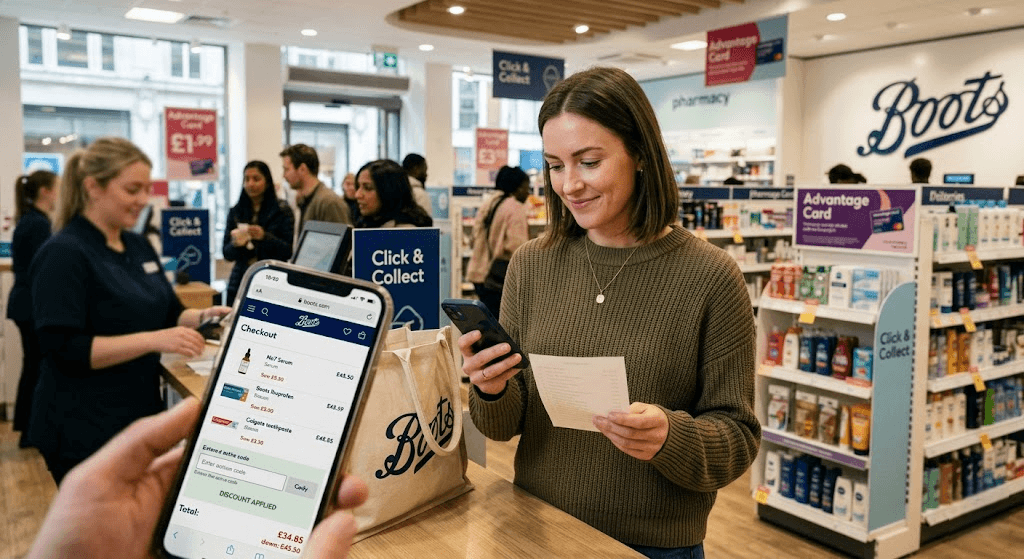
First, never check out as a guest. Open an incognito browser window and locate an introductory offer. Almost every major UK retailer offers a “10% off your first order” code in exchange for subscribing to their marketing newsletter (you can utilize a temporary, disposable email service to keep your primary inbox clear of spam). This brings the shoes down to £72.
Second, do not navigate directly to the retailer’s web address. Pass through a cashback portal such as TopCashback or Quidco. If the portal is offering a tracked 8% cashback rate for that specific sports brand, you have effectively clawed back another £5.76, lowering your real out-of-pocket cost to £66.24.
Finally, examine your payment method. If you pay using a standard high-street debit card, the trail ends there. However, if you check out using a dedicated reward card—such as a Chase UK debit card (offering 1% standard cashback) or an American Express connected to the passive card-linking app Airtime Rewards—you automatically shave an extra percentage point off your monthly mobile phone tariff or accrue points convertible to supermarket vouchers.
Through a four-minute exercise in digital discipline, a promoted “20% off” sale item has been transformed into a real-world 35% reduction.
7. Anti-Waste Apps and the ‘Best Before’ Arbitrage
The intersection of climate consciousness and household budgeting has birthed an entirely new tier of discounted shopping centered on surplus rescue. For the agile consumer, smartphone applications like Too Good To Go and Olio offer staggering value, provided you understand the unwritten rules of engagement.
With Too Good To Go, the rookie mistake is using it exclusively to buy £3.50 bags of leftover pastries from high-street coffee chains at closing time. The true high-value strategy lies in targeting premium grocery concessions and independent delicatessens. High-end supermarkets like Waitrose, Booths, and luxury hotel breakfast kitchens release their ‘Magic Bags’ at highly specific, recurring timestamps every day—often precisely 15 minutes after their standard shift ends. By setting an alarm on your phone for 18:14 PM, you can secure £30 worth of organic charcuterie, artisan cheeses, and high-grade ready meals for £4.
Furthermore, consumers must re-educate themselves on the legal definitions governing ambient food. Platforms like Approved Food and Motatos operate vast digital warehouses selling branded dried goods, tinned produce, and household cleaning supplies at up to 70% off RRP purely because they have crossed their printed date.
As outlined by the Food Standards Agency (FSA), a ‘Use By’ date is a strict microbiological safety marker applied to highly perishable items like raw meat or dairy; consuming food past this point is a genuine health risk. A ‘Best Before’ date, conversely, is merely a manufacturer’s qualitative estimate of peak texture and flavour. A packet of sea salt crisps, a tin of baked beans, or a box of breakfast cereal sitting three months past its ‘Best Before’ date is biochemically safe—yet standard retail logistics treat it as unsellable waste, pricing it accordingly.
8. Your Statutory Shield: The ‘Sale Item’ Return Myth
We conclude with the most pervasive, legally dubious myth perpetuated on the British High Street: the hand-written sign sitting beside the cash register declaring, “No refunds or exchanges on sale clearance items.”
Retailers rely heavily on the cultural assumption that the British public feels too polite to invoke the law. Under the Consumer Rights Act 2015, the price you paid for an item has zero bearing on your statutory rights. If you buy a toaster reduced from £60 to £12 in a clearance bin, and the heating element fails the second time you use it, the retailer is legally obliged to offer a full refund, a repair, or a replacement within the first 30 days. The only scenario wherein a retailer can lawfully deny a refund on a faulty discounted item is if the specific fault was explicitly pointed out to you prior to purchase (for example, a physical tag reading: “Discounted due to missing volume dial”).
When shopping for discounts online, your statutory safety net is even wider. Under the Consumer Contracts Regulations, you possess an unconditional right to cancel an order of physical goods from the moment you place it until 14 days after the day you receive it—for any reason whatsoever. It does not matter if the item was bought in an aggressive 90%-off “final clearance” web event; because you lacked the ability to physically inspect the fabric, fit, or finish before handing over your money, the law grants you a two-week window of absolute, legally protected buyer’s remorse.
The Philosophy of the Price Tag
Ultimately, mastering the art of discounted shopping in Great Britain requires a fundamental psychological shift. The modern retail apparatus is an immensely powerful, billion-pound machine engineered to manufacture urgency, prey on the fear of missing out, and confuse the true underlying value of everyday commodities.
Becoming a genuinely savvy shopper means stepping out of the role of the passive consumer of ‘offers’. It means viewing a price tag not as an objective statement of worth, but as a retailer’s opening gambit. By combining historical data tools to verify the past, digital stacking techniques to manipulate the present, and a firm grasp of consumer law to protect your future, you cease to be a target for marketing departments—and become the master of your own financial ledger.