The Hidden Margin: Why UK Retailers Offer Web-Only Discounts (And How to Exploit Them)
 savingsspot.co.uk
 You are standing in the middle of a brightly lit high street shop in Leeds, holding a winter coat. The cardboard tag says £120. On a whim, you pull out your smartphone, open the identical retailer’s official website, and search the product code. There it sits: exact same make, exact same colour, priced at £96 with a bold banner proclaiming, ‘Web Exclusive Price’. You take it to the till, show the cashier your screen, and ask them to match it. They offer an apologetic smile and deliver the standard corporate line: “I’m sorry, that’s an online-only promotion. We can’t put that through the tills here.”
To the average consumer, this feels like an absurd failure of internal logic. Why would a brand actively penalise a customer who has taken the time to walk into their shop, interact with their staff, and prepare to hand over cold, hard cash? Yet, across the UK’s retail landscape—from fashion and consumer electronics to home insurance and DIY giants—the dual-pricing strategy has become the absolute standard.
Web-only discounts are not random acts of generosity designed to reward digital literacy. They are the visible tip of an enormously complex, highly calculated algorithmic iceberg. Understanding why the digital high street is cheaper is the first step; mastering the mechanics of how these discounts are triggered is how the savvy British shopper turns a standard 10% saving into a 35% masterclass in consumer leverage.

The Economics of the Digital High Street
To understand the web-only discount, one must first look at the crushing financial reality of running a traditional retail operation in Great Britain. The UK possesses one of the most punishing commercial property tax systems in the developed world: Business Rates. When you purchase a television inside a physical retail park in Surrey, a massive percentage of that purchase price goes toward keeping the literal roof over the television’s head.
A physical item carries a long, expensive trail of overheads:
- The Footprint Tax: High street floor space is priced per square foot; a distribution centre in the ‘Golden Triangle’ of UK logistics (the East Midlands) operates on vast, cheap cubic volume.
- The Energy Crisis: Heating, air conditioning, and illuminating a 10,000-square-foot glass-fronted unit for ten hours a day.
- Shrinkage: The polite retail term for shoplifting, damaged display stock, and till discrepancies—a multi-billion-pound annual drain that online warehouses virtually eliminate.
- Staffing Ratios: A physical shop requires a human being standing behind a till whether one customer walks in or one hundred. An automated fulfillment hub scales purely to the volume of the conveyor belt.
When an online retailer offers you a 20% web-only discount, they are not actually losing 20% of their margin. They are simply handing you back a portion of the money they saved by not having to pay a local council for the right to place that item on a wooden shelf.
The Great Data Exchange: Siphoning ‘Zero-Party’ Intel
There is a second, far more lucrative reason an online store will happily slash twenty pounds off your basket: your identity.
When you walk into a shop, buy a pair of shoes with a standard Visa card, and walk out, you are a retail ghost. The shop knows a transaction occurred, but they do not know your name, your age, your home address, or what other three pairs of shoes you looked at before deciding on that specific pair.
On the web, a discount code acts as a digital Trojan Horse. To claim that “15% off your first online order” voucher, you must hand over an email address. The moment you do, you have shifted from an anonymous footfall statistic into an active node in a Customer Relationship Management (CRM) database. The retailer has calculated their Customer Acquisition Cost (CAC). If handing you £15 off a £100 order secures your email address, allows them to drop a tracking cookie into your browser, and gives them the legal right to land in your Gmail inbox twice a week for the next four years, they haven’t lost £15—they have bought a long-term annuity at an absolute bargain price.
The Anatomy of a ‘Fake’ Web Discount
Before celebrating a digital price slash, British consumers must learn to navigate the murky waters of reference pricing. The UK operates under strict guidelines enforced by the Advertising Standards Authority (ASA) and the Chartered Trading Standards Institute (CTSI). However, retailers have become extraordinarily adept at stretching the spirit of these laws to their absolute breaking point.
The most common psychological trap is the Anchor Price. Under UK rules, to claim an item is “Was £100, Now £70”, the item must have been offered at that higher price for at least 28 consecutive days in the recent past.
What the algorithm does, therefore, is practice ‘price resting’. A digital retailer will list a mattress at an artificially inflated price of £1,000 for exactly 29 days in the dead of summer when nobody is buying bedding. On day 30, a massive, flashing site-wide banner appears: “WEB EXCLUSIVE SLEEP EVENT: 50% OFF!” The mattress drops to £500. The consumer feels the intoxicating rush of having beaten the system, wholly unaware that £500 was the true target Recommended Retail Price (RRP) all along. The £1,000 figure was a ghost generated purely to serve as a psychological anchor.
Advanced User Tactics: How to Force the Web Discount
If the web dictates the price based on algorithms, the consumer must learn to treat online shopping not as a static catalogue, but as a dynamic video game. You can actively force the system to generate a bespoke web discount if you understand what makes the software nervous.
1. The 48-Hour Basket Freeze
The most sensitive trigger in any modern e-commerce platform is the ‘Abandoned Cart’ sequence. Retailers spend millions trying to solve the issue of digital drop-off. You can turn this panic into profit.
Log into the website, ensure you are signed into your account so they know who you are, add the high-value items to your basket, go all the way to the final delivery address page—and then close the tab. Do not go back.
In roughly 60% of modern retail setups, an automated sequence will initiate. Within 4 hours, you will receive an email: “Did you forget something?” Ignore it. Within 24 hours, the tone will shift to gentle persuasion. By hour 48, the algorithm’s desperation threshold is usually breached, triggering the ultimate sweetener: a bespoke, one-time alphanumeric code offering 10% to 15% off the basket to close the transaction.
2. Weaponising the ‘Incognito’ Illusion
There is a persistent urban myth that clearing your cookies or browsing in Incognito mode automatically drops the price of flights and hotels. The truth of dynamic pricing is far more granular. Web platforms track your device profile and your geo-location.
If you are shopping for a high-end coffee machine on a top-tier MacBook Pro, connected to an IP address located in an affluent postcode in Chelsea, certain dynamic pricing engines will serve you the ‘Premium Web Tier’. If you open a VPN, route your connection through an IP in a lower-income regional area, and view the same page via a simulated Android mobile browser, the “Web Discount” served to you can occasionally widen. Test the parity across two different devices before committing to a high-ticket item.
3. The Masterclass: ‘Layer Stacking’
A standard web discount is single-dimensional. True digital consumerism relies on stacking three separate, non-communicating discount mechanisms on top of a single transaction.
Imagine a kettle listed on a brand’s website at £100. The physical shop sells it for £100. Here is how the digital stack operates:
- Layer 1 (The Base Web Deal): You locate the product on a digital-only marketplace or the brand’s ‘Hidden Outlet’ sub-domain, where it is listed at a web-only base price of £85.
- Layer 2 (The Affiliate Cashback): Rather than going directly to the site, you open an established UK cashback portal (such as TopCashback or Quidco). You click their tracked link to the retailer, which promises an exclusive 8% cash return on the net purchase price.
- Layer 3 (The Burner Welcome Code): Upon arriving at the site, you use a secondary ‘burner’ email address to trigger the standard pop-up: “Sign up for our newsletter for 10% off your basket.”
- Layer 4 (The Payment Gateway Bonus): You check out using a dedicated rewards debit card or an introductory credit card that offers 1% cash-back on all web transactions.
The maths resolves as follows: The £85 base price becomes £76.50 after the 10% welcome code. The cashback site tracks 8% of that (£6.12) to drop into your digital wallet sixty days later. Your bank drops 76 pence into your rewards account. The physical high street shopper paid £100.00; you paid an effective, fully legal price of £69.62 for the exact same box, delivered to your front door.
The ‘App-Trapped’ Discount: The New Frontier
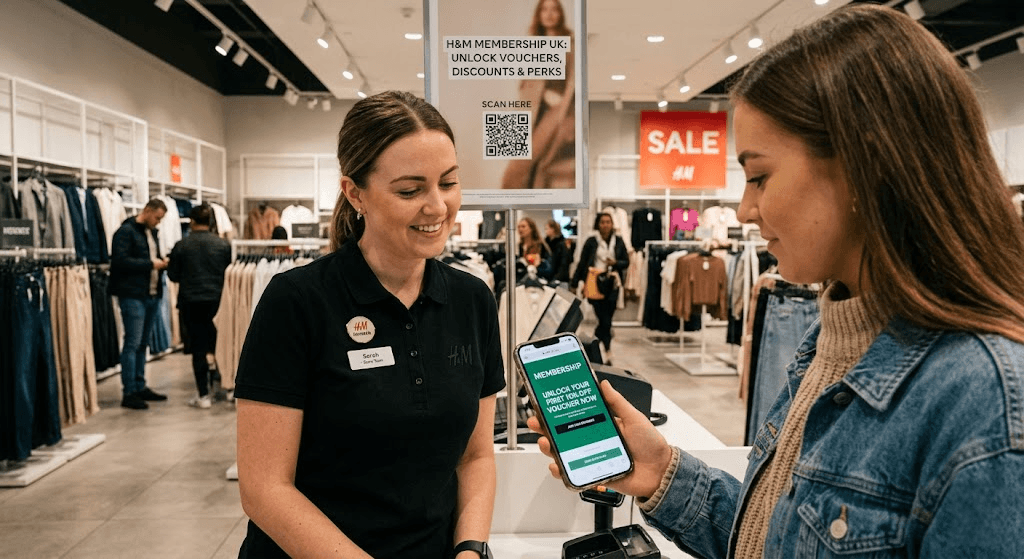
In the last twenty-four months, the traditional ‘Web-Only’ discount has begun to evolve into something more restrictive: the App-Only Discount. Brands like ASOS, H&M, and various major UK supermarket chains are aggressively offering discounts that do not even appear on their standard desktop websites.
The psychology here represents the final evolution of the digital land grab. A website tab can be closed; a website can be subjected to ad-blockers and automated voucher-searching extensions like Honey. A native mobile app, however, sits permanently on the glass screen of your phone. It collects real-time background location data, it tracks your screen-time habits, and crucially, it possesses the power of the Push Notification.
When a brand gives you 20% off to download their app, they have effectively convinced you to install a permanent, branded billboard directly inside your palm. They have bypassed the Google search engine entirely. The next time you want a pair of jeans, they don’t have to pay Google for the top sponsored search result; your thumb will instinctively gravitate toward their branded square on your home screen.
Summary: The Rules of Digital Engagement
The high street will remain a vital, highly tactile part of the British cultural identity, but its role has fundamentally changed. It is no longer the place of purchase; it is the showroom. It is the place to check the fit of the shoulders, test the click of the keyboard, or feel the weight of the ceramic.
Once the physical assessment is complete, the informed consumer steps back, pulls out the glass rectangle, and plays the digital game. By understanding the retailer’s desperation for data, the tax loopholes of the logistics sector, the legal boundaries of reference pricing, and the sheer power of an abandoned digital basket, you cease being a passive consumer. You become an active participant in the modern margin—taking back the exact percentage the high street was trying to charge you just for walking through the door.