 savingsspot.co.uk
 There is a distinct, quiet satisfaction unique to the British consumer: the feeling of securing an item for a fraction of its recommended retail price. In an era dictated by fluctuating living costs and tightening household budgets, hunting for daily deals has evolved from a casual hobby into an essential life skill. However, the modern digital landscape is saturated with noise. Between flashing countdown timers, dubious “was/now” pricing, and inbox-clogging promotional emails, separating a genuine bargain from a clever marketing trap requires a tactical approach.
Whether you are trying to shave twenty pounds off your weekly grocery shop, upgrade your home appliances, or book a weekend getaway on a shoestring, understanding the mechanics of the UK’s daily deal ecosystem is paramount. This guide explores the platforms, the psychology, and the insider techniques used by the country’s most savvy bargain hunters.
1. The Titans of the UK Deal Scene
To shop effectively, you must first map the territory. The UK daily deals market is broadly split into three distinct categories: the community aggregators, the digital voucher giants, and the brand-specific flash portals.
Community Aggregators: HotUKDeals
If you only visit one website to check the temperature of UK retail, make it HotUKDeals (HUKD). Unlike standard promotional sites run by automated scrapers, HUKD relies on a “wisdom of the crowd” model. Real consumers post deals they have discovered, and the community votes them either “Hot” or “Cold”. Because the user base is notoriously unforgiving of inflated baseline prices or high postage fees, any deal that reaches over 200 degrees is almost universally a genuine, market-beating price. The platform covers everything from mispriced business class flights to 50p multipacks of crisps at Farmfoods.
The Voucher and Experience Giants: Wowcher and Groupon
Platforms like Wowcher and Groupon operate on the model of bulk purchasing power. They are the premier destinations for speculative spending—items or experiences you didn’t know you wanted until you saw them at 60% off. They excel in three specific arenas: local restaurant dining, spa days, and unbranded garden or home gadgets. The golden rule with these platforms is to treat the advertised headline price as an invitation to investigate, rather than an absolute truth.
Retailer-Specific Daily Portals
Major retailers have realised that hosting their own daily deal landing pages keeps consumers locked inside their own ecosystems. The most prominent examples include:
- Amazon Today’s Deals: A constantly rotating carousel of “Lightning Deals” that last for just a few hours. While massive discounts on Amazon’s own tech (Echo devices, Fire sticks) are common, third-party merchant deals require careful vetting.
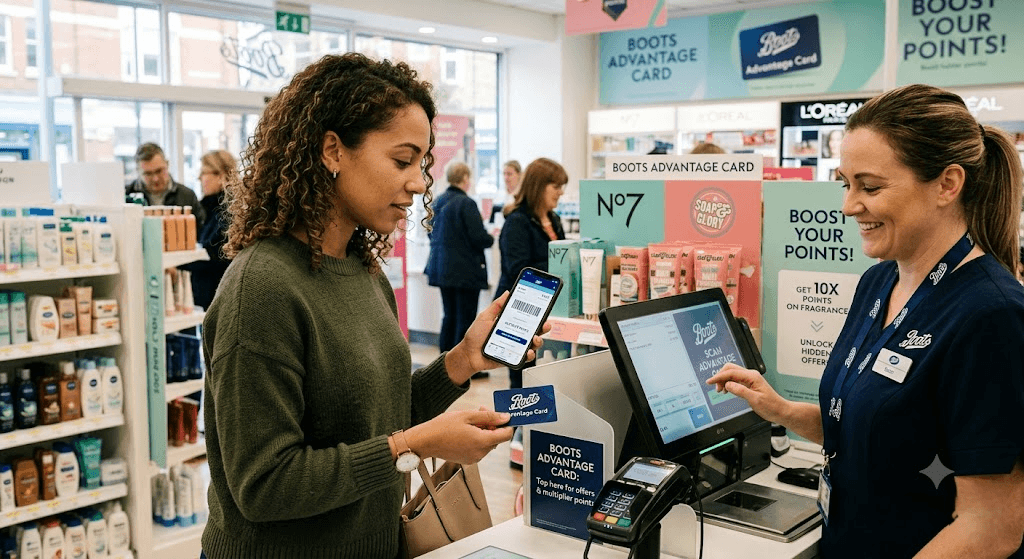
- Boots £10 Tuesday: Every Tuesday, the high-street pharmacy drops the price of dozens of premium skincare, wellness, and beauty items to exactly £10 for 24 hours. For products normally retailing between £18 and £35, it remains one of the most consistent weekly single-day price drops in the UK.
- O2 Priority / Vodafone VeryMe: For telecom customers, these apps act as daily micro-deal hubs, offering free high-street coffees, discounted cinema tickets, and priority access to gig tickets on specific days of the week.
2. Deconstructing the Psychology of the Flash Sale
Retailers do not offer daily deals purely out of benevolence; they use them to trigger specific psychological responses that bypass a consumer’s rational budgeting filters. Understanding these triggers is the only way to insulate yourself against bad purchases.
The primary weapon is Scarcity and Urgency. When you see a banner proclaiming “Only 3 left at this price!” or a ticking digital clock counting down the seconds, your brain experiences a spike of cortisol. This induces the Fear Of Missing Out (FOMO). To combat this, implement the 24-Hour Rule for any non-essential purchase over £30. If the deal expires before the 24 hours are up, accept the loss; the money saved by avoiding impulsive purchases will vastly outweigh the occasional missed discount.
The second psychological trap is Price Anchoring. If an online shop displays a vacuum cleaner with the tag “Was £299, Now £149”, your brain anchors to the £299 figure, perceiving a £150 gain. However, the true value of an item is what the wider market charges for it today. Before clicking ‘Buy’, drop the product name into an independent price tracker like PriceRunner or use the browser extension CamelCamelCamel (specifically for Amazon). You will frequently discover that the item hasn’t been sold at its “Was” price for nine months, and the “Now” price is simply the standard going rate across the internet.
3. The Art of Deal Stacking
Amateur shoppers find a deal and buy it. Expert shoppers find a deal, and then layer three other discounts on top of it. This practice, known as deal stacking, is where the most significant savings are generated.
To execute a masterclass deal stack, you follow a strict sequence of operations before reaching the digital checkout:
- Secure the base daily deal: Locate an item already heavily discounted in a flash sale.
- Apply a promotional voucher: Check dedicated voucher sites or browser plugins to see if the retailer accepts an extra “10% off your first order” code or a student discount (via UNiDAYS or Student Beans) on top of sale items.
- Route through a cashback portal: Never go directly to a retailer’s web address. Open a tab for TopCashback or Quidco, search for the retailer, and click through their tracking link. This earns you anywhere from 1% to 15% of the purchase price back as a post-sale cash rebate.
- Pay with a rewards card: Settle the transaction using a cashback debit card (such as Chase UK’s 1% offer) or a points-yielding credit card like an American Express to collect rewards on the final total.
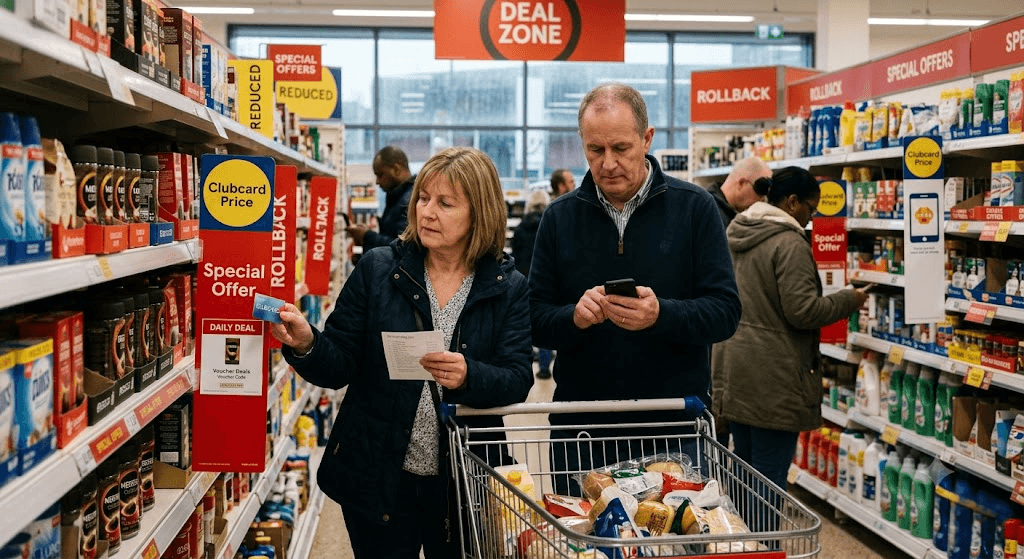
- Capture loyalty points: Ensure your Nectar card, Tesco Clubcard, or Boots Advantage card is digitally linked to the transaction.
By stacking these layers, an item advertised at “30% off” can effectively result in a total real-terms cash retention of 45% or 50%.
4. High Street Warfare: Mastering the ‘Yellow Sticker’
While digital daily deals offer convenience, the most visceral bargain hunting in the United Kingdom happens strictly offline, in the chilled aisles of the local supermarket. The “Yellow Sticker” economy—the practice of heavily marking down fresh food that has reached its display “use by” date—is a daily ritual governed by strict unwritten laws and specific store timings.
While local store managers have personal discretion over their exact schedules, reliable nationwide patterns exist for the major UK supermarkets:
- Marks & Spencer: Generally operates a two-tier markdown system. The first wave happens mid-morning (around 10:00 AM) with modest 15% to 20% reductions. The serious price drops, where high-end ready meals and luxury meats fall by up to 75%, typically occur between 5:30 PM and 6:30 PM.
- Sainsbury’s: Tends to start their clearance sweeps slightly earlier in the afternoon, kicking off around 1:30 PM. However, the final, aggressive clearance sweep happens after 7:00 PM.
- Tesco: Famous amongst seasoned clearance hunters for the “7:00 PM hover”. Shop floor staff will emerge with handheld thermal printers to slash remaining expiring stock to absolute pennies.
- Aldi and Lidl: Take a different approach. Look for 30% or 50% bright orange or red stickers applied first thing in the morning as staff put out the fresh daily deliveries.
When shopping yellow stickers, keep a clear head regarding your home freezer capacity. Almost any yellow-stickered meat, fish, hard cheese, or loaf of bread can be thrown directly into the freezer the moment you get home, effectively pausing its expiration clock indefinitely.
5. The Green Revolution: Food Waste Apps
In recent years, the intersection of sustainability and daily deal hunting has spawned a massive secondary market driven by smartphone applications. The undisputed market leader in the UK is Too Good To Go.
The app allows consumers to buy “Magic Bags” of surplus food from local cafes, bakeries, supermarkets, and hotel breakfast buffets at the end of their trading day. These are usually priced at £3.00 to £5.00 for contents worth at least three times that amount. Because the contents are a total surprise based entirely on what failed to sell that day, it turns daily meal planning into a game of culinary roulette.
To secure the highly coveted Magic Bags—such as a Sunday afternoon roast dinner carvery bag from Toby Carvery, or a massive haul of pastries and sandwiches from Greggs—you have to learn the “drop times”. Most venues automate their daily bag releases for the exact moment their collection window closes for the previous day. If a local bakery’s collection time is 5:00 PM to 5:30 PM today, open the app at precisely 5:15 PM to secure tomorrow’s bag.
6. Four Traps Every Deal Hunter Must Memorise
As you refine your daily deal strategy, keep an active eye out for these four quintessential modern retail hazards:
The Phantom RRP
Under UK advertising guidelines, a retailer can legally claim an item “Was £100” as long as it was offered at that price for a minimum of 28 consecutive days at some point in the last six months. Unscrupulous retailers will place a generic television at an absurdly high price in a single, remote rural branch for a month, purely so they can slap a “Save £400” sticker on it nationwide for a Bank Holiday weekend sale.
The Postage Sting
A classic trick deployed by digital voucher sites. You purchase a voucher for a personalised photo canvas or an ergonomic pillow for a wildly cheap £4.99. When you go to the third-party website to redeem your code, you discover the mandatory standard UK delivery charge is £9.99. Always check the fine print for the vendor’s standard P&P (postage and packaging) rates before buying the base voucher.
Grey Market Tech
When buying heavily discounted smartphones, cameras, or gaming consoles from independent online daily deal hubs, check the exact model numbers carefully. Many ultra-cheap deals are “Grey Imports”—stock originally manufactured for the Asian or Eastern European markets. While the hardware itself is identical, they often arrive with a two-prong European plug inside the box and, crucially, carry zero UK manufacturer warranty.
The ‘Excluding August’ Holiday Voucher
Travel daily deals look breathtaking on paper: “Two nights in the Lake District with dinner and prosecco for £99!” Always read the blackout dates. More often than not, the voucher is strictly valid for Sunday through Thursday nights, excludes all school half-terms, excludes Bank Holidays, and expires in the damp chill of mid-November.
7. Constructing Your Daily Routine
The secret to sustainable bargain hunting is passive vigilance. If you spend three hours a day manually refreshing fifty different retail websites, the value of your invested time quickly erodes the actual financial savings you make.
Instead, put automated tools to work. Set up specific Keyword Alerts on HotUKDeals for high-ticket items you know you will need in the next six months (for example: “OLED TV”, “Child Car Seat”, “Air Fryer”). Download browser extensions like Honey or Pouch so that the tedious step of searching the web for working promotional codes happens instantly in the background the second you land on a checkout page.
Finally, make a habit of consulting the weekly email dispatch from Martin Lewis’s MoneySavingExpert. Published every Wednesday, it serves as a masterfully curated executive summary of the single best consumer loopholes, flash sales, energy fixes, and bank switching bonuses currently live in the UK.
By shifting your personal consumer habits from proactive searching to passive filtering, you transform yourself from a target of retail marketing into a master of it. The deals are out there waiting every single morning; you just need to ensure you are holding the right net when they fall.