
 savingsspot.co.uk
 There is a distinct, highly specific emotional arc to receiving a wedding invitation in the post. First comes the warm rush of being included in someone’s major life milestone. Second comes the frantic mental scan of your wardrobe. Finally, the inevitable, daunting question settles in: What on earth am I going to wear?
Attending a wedding in the United Kingdom presents a unique set of sartorial hurdles. You are not just dressing for a party; you are dressing to negotiate centuries-old etiquette, the perilous geography of gravel driveways, and a climate that can deliver a sunstroke-inducing heatwave and a torrential downpour within the same forty-five-minute drinks reception. This manual is designed to dismantle the guesswork, offering modern, stylish, and practical guidance for British wedding guests.
The Four Unbreakable Golden Rules
Before looking at colour palettes or seasonal trends, every guest must anchor themselves to four foundational truths of British wedding etiquette. Transgressing these is the quick-fire way to end up as the subject of hushed conversations over the evening buffet.
- The “Not-Quite-White” Rule is Absolute: Everyone knows not to wear a floor-length white gown. However, the danger zone lies in the “loopholes”. Off-white, pale cream, extremely light champagne, and ice-blue that photographs as white are all off-limits. If a dress is 80% white with a smattering of pastel florals, put it back on the rail. When in doubt, ask yourself: If the bride caught me out of the corner of her eye from twenty paces, would her heart skip a beat? If yes, choose another outfit.
- Respect the Sacred-to-Secular Pivot: A significant portion of British weddings begin in an historic, unheated 12th-century parish church and end on a sticky, neon-lit dancefloor in a converted barn. If you are wearing a dress with a plunging neckline, an open back, or bare shoulders, bring a tailored blazer, a silk pashmina, or a structured cropped jacket for the ceremony.
- The Great British Cobblestone Test: Stilettos and the English countryside are mortal enemies. If the invitation mentions a “country house”, a “walled garden”, a “tipi”, or a “marquee”, you will be walking on grass, sinking into damp earth, or navigating medieval cobbles. Opt for a block heel, a stylish wedge, or invest in a pair of clear plastic heel-stoppers.
- Never Out-Sparkle the Hosts: A wedding is a celebration, not a red carpet audition. While joyous, expressive dressing is encouraged, wearing head-to-toe mirrored sequins to a relaxed 2:00 PM registry office ceremony crosses the line from “well-dressed” to “attention-seeking”.
Translating the Invitation: The Dress Codes
British couples are increasingly opting for creative, sometimes baffling, dress codes on their stationery. Here is the literal translation of what those little italicised words at the bottom of the card actually require of you.
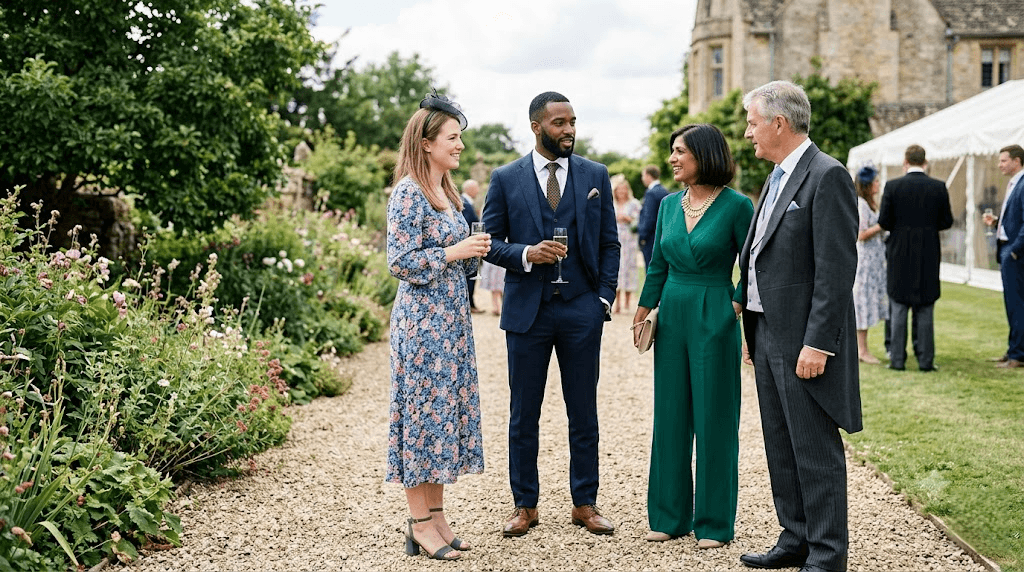
Morning Dress (Formal Traditional)
The most traditional of all British dress codes, usually reserved for high-society, cathedral, or ultra-formal estate weddings.
- For Men: This is strictly a black or grey morning coat (tails), striped trousers, a double- or single-breasted waistcoat, a crisp white shirt with a turn-down collar, and a silk tie. Top hats are occasionally requested, though usually carried rather than worn.
- For Women: High formality. A smart, structured day dress or a sophisticated two-piece suit. Hems should sit at the knee or lower; shoulders must be covered for the service. A hat or a substantial, structural headpiece is non-negotiable.
Black Tie
Increasingly popular for winter weddings and grand evening receptions.
- For Men: A dinner jacket (tuxedo) in black or midnight blue, trousers with a satin braid down the outside leg, a white dress shirt with a turn-down collar (never a wing collar with a modern tux), a hand-tied black silk bow tie, and highly polished black dress shoes.
- For Women: A floor-length evening gown is the safest and most glamorous bet. While a very chic, highly structured midi-dress can pass mustard in a modern city setting, sweeping the floor with rich silks, velvets, or chiffons is the traditional standard.
Lounge Suit
This is the standard, default setting for 80% of UK weddings.
- For Men: A classic, well-tailored two-piece or three-piece suit in navy, charcoal, or mid-grey. A tie is expected, though the groom may set the precedent on the day for jackets to be unbuttoned and ties loosened post-speeches.
- For Women: The ultimate playground for the classic “wedding guest dress”. Think vibrant midi-dresses, sophisticated tailored jumpsuits, or a sharp trouser co-ord. Hats are entirely optional here, though a statement padded headband offers a wonderful modern compromise.
“Dress to Party” / Smart Casual / Bohemian
Often found on invitations for festival-style weddings, rural tipis, or urban warehouse parties.
- For Men: Chinos or tailored separates. You can ditch the tie entirely. An unbuttoned Oxford shirt paired with a textured unstructured blazer (think linen in summer, corduroy or tweed in autumn) strikes the right balance.
- For Women: Relax the silhouette. Flowing tiered dresses, high-waisted wide-leg trousers paired with a silk camisole, or printed wrap dresses. Swap the fascinator for loose waves or a scattering of decorative hairpins.
Navigating the Four Seasons
In the UK, dressing for the month printed on the invitation is a game of probability. Here is how to tackle the seasonal roulette.
The Spring Gamble (March – May)
Spring in Britain can mean a balmy 18°C amongst the daffodils, or a bitter 4°C gale with sideways sleet. The secret to spring is intentional layering. Never buy a spring outfit that relies on the sun coming out to look complete.
Opt for long-sleeved midi dresses in uplifting, optimistic tones like sage green, dusty rose, or cornflower blue. Invest in a statement coat—a lightweight tailored trench, a pastel duster coat, or a double-breasted long blazer—that is so much a part of the outfit that you won’t mind keeping it on during the toast if the venue is draughty.
The Summer Trap (June – August)
When the British sun does shine, it brings a heavy, humid heat that turns synthetic fabrics into personal saunas. Avoid cheap polyesters at all costs during the summer months.
Look for natural, breathable weaves: pure linen, lightweight cotton-poplin, silk, or high-quality viscose. Summer is the time to embrace bold, dopamine-inducing patterns. Lemon yellows, hot magentas, and rich tangerines work wonderfully against the backdrop of a sunlit English lawn. However, pack a pair of discreet sunglasses; squinting through a forty-minute outdoor humanist ceremony will leave you with a headache before the champagne is even uncorked.
The Autumn Shift (September – November)
Arguably the most sartorially rewarding season for a British wedding. As the leaves turn, your palette should pivot toward rich, warm, complex jewel tones: deep forest green, burnt orange, mulberry, plum, and mustard.
This is the moment to play with tactile fabrics. Heavyweight crepes, hammered silks, jacquards, and early appearances of velvet add incredible depth to an outfit. For men, swapping a standard silk tie for a knitted wool tie or adding a subtle tweed waistcoat introduces a wonderfully rustic, seasonal texture.
The Winter Fortress (December – February)
Winter weddings require a shift from “pretty” to “majestic”. Cold weather drains the blood from the skin, so wash out the pale pastels and lean heavily into deep, highly saturated tones like emerald, crimson, deep navy, and black (yes, you can wear black to a modern winter wedding, provided it is broken up with striking gold or silver accessories).
Women should look toward tailored velvet trouser suits, or long-sleeved, high-neck structured dresses paired with closed-toe Mary Janes or sleek leather ankle boots beneath a maxi hem. For men, a heavy wool-flannel suit or a double-breasted velvet dinner jacket provides both extreme warmth and an air of vintage Bond-esque sophistication.
The Evolution of Headwear
For decades, the “fascinator”—a collection of stiff synthetic feathers glued to a plastic comb—dominated the British wedding landscape. Thankfully, contemporary guest style has largely moved on.
If you wish to wear something on your head, consider these three modern avenues:
- The Crown Headband: Made famous by Prada and embraced wholeheartedly by the British high street, a thick, padded velvet or satin Alice band gives the height and formality of a hat without the risk of it blowing into the wedding cake during a gust of wind.
- The Wide-Brimmed Boater: For high-summer, formal weddings, a stiff, flat-brimmed straw boater angled slightly over one eye offers striking, sculptural drama reminiscent of vintage Ascot.
- The Classic Disc: If you prefer a traditional fascinator, look for a “percher”—a large, tilted woven disc that sits on a discrete wire band. Keep the embellishments strictly minimal; let the clean geometry of the shape do the talking.
The Sustainable Shift: To Buy or To Rent?
The modern British wedding guest is acutely aware of the financial and environmental cost of the “one-wear dress”. The UK has become the global epicentre of the peer-to-peer fashion rental revolution. Platforms like HURR, By Rotation, and My Wardrobe HQ allow you to wear a £700 designer gown by The Vampire’s Wife, RIXO, or Cecilie Bahnsen for the price of a standard high-street dress.
If you prefer to buy, apply the “Three-Event Rule” to the changing room. Before taking it to the till, force yourself to name three distinct future occasions where you can wear it. Can that silk slip dress be worn to the wedding with heels and a blazer, to a summer holiday dinner with flat leather sandals, and to an autumn dinner party over a fine-knit merino polo neck? If it cannot survive three distinct iterations, leave it behind.
The “Guest Handbag of Survival”
No matter how breathtaking your ensemble, a British wedding is an endurance sport lasting anywhere from eight to fourteen hours. The smart guest packs their clutch bag like an elite mountaineer preparing for an expedition. Ensure your bag contains:
- Hydrocolloid blister plasters: Apply these to the heels before the friction begins, not after the skin has broken.
- A tiny packet of safety pins: For dropped hems, snapped delicate straps, or a friend’s malfunctioning zip.
- A travel-sized miniature of your perfume: To re-ground yourself after the sweaty transition from the dinner tables to the dancefloor.
- A heavy-duty portable phone charger: Because trying to book an Uber from a rural stone barn with 2% battery at midnight is a uniquely modern form of despair.