 savingsspot.co.uk
 There is a distinct, quiet satisfaction in boarding a four-hour flight to the Mediterranean knowing the person sitting across the aisle paid £340 for their seat six months ago, while you secured yours for £46 while making a cup of tea on Tuesday morning. In the UK travel market, hunting for TUI late flight deals has evolved from a game of teletext roulette into an exercise in data observation. Because TUI operates under a fundamentally different business model to the ultra-low-cost carriers, the rules of engagement for finding their eleventh-hour fare drops require an entirely separate strategy.
Whether you are trying to reach the Balearics for a long weekend or looking to secure a long-haul jump to the Caribbean without paying scheduled airline premiums, understanding how TUI’s inventory management actually works is the difference between paying full retail and flying for the cost of a tank of petrol.
Why TUI Flight Prices Behave Differently to EasyJet and Ryanair
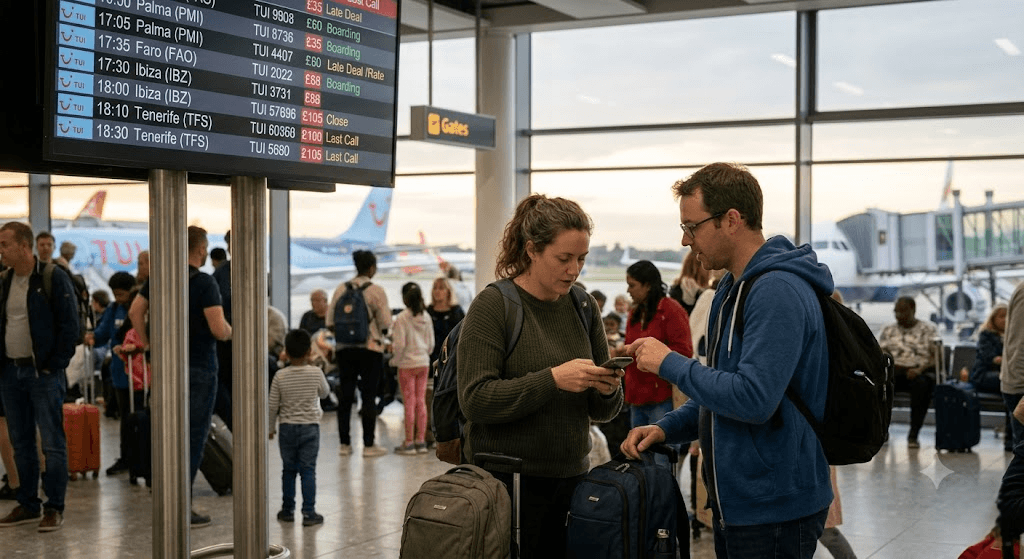
To master the TUI late flight ecosystem, you must first forget everything you know about standard airline booking curves. When you book a seat with British Airways, EasyJet, or Ryanair, you are dealing with a pure scheduled carrier. Their pricing algorithms are built on a curve that starts moderately low, rises steadily as the departure date approaches, and spikes wildly in the final 72 hours to capture desperate business travellers and family emergency flyers.
TUI Airways is not a scheduled carrier; it is the dedicated in-house transport arm of a vertically integrated tour operator. TUI’s primary commercial objective is not to sell you a plane ticket; it is to fill the thousands of hotel rooms across Greece, Spain, Turkey, and Cyprus that they have financially committed to or outright own.
When a TUI Boeing 737 takes off from Manchester or London Gatwick, the company views every empty seat as an unrecoverable, highly perishable asset. Unlike a scheduled airline that can absorb a 70% load factor because the last-minute corporate bookings subsidized the empty space, TUI views an unsold seat at the 72-hour mark as an absolute failure. If they can sell that seat for £35, they have not only recouped a sliver of the aviation fuel cost, but they have also created a potential customer for their onboard retail, their airport transfers, and their partner car hire firms. Therefore, while a Ryanair flight gets more expensive the closer you get to the tarmac, a TUI flight is programmed to drop off a cliff.
The Countdown Window: When Do Prices Actually Drop?
The biggest mistake British holidaymakers make is assuming “late” means “the night before”. In the modern digital ticketing era, the clearance cycle follows three distinct automated sweeps.
The 14-to-10 Day Mark: The Initial Wobble
This is the exact point where TUI’s yield management software looks at a specific route—say, Birmingham to Palma de Mallorca—and assesses the balance between remaining package holidays and standalone seat inventory. If the associated hotels in Magaluf and Santa Ponsa have sold out, but the charter flight still has 38 seats remaining, the system disconnects those seats from the “Package” database and dumps them into the “Flight-Only” clearance bucket. You will suddenly see a £280 return fare slide to £145.
The 7-to-3 Day Mark: The Sweet Spot
This is the most stable window for balancing price against domestic logistics. At this point, the algorithm has stopped hoping for organic, full-price package sales. Fares for mid-haul European destinations typically drop into the £60–£90 return bracket. Crucially, booking inside this window gives you enough time to arrange your UK airport parking, buy your travel insurance, and sort your pet sitting without incurring massive “emergency” domestic premiums that wipe out your flight savings.
The 48-Hour Fire Sale: High Risk, High Reward
Inside 48 hours, human intervention frequently takes over from the automated software. Revenue managers at TUI’s Luton headquarters are handed a daily morning report of “distressed inventory”. If an aircraft sitting at Bristol Airport has 19 empty seats for a 06:15 departure to Corfu the following morning, those seats will be dropped to the absolute floor—often £29 to £49 one-way. This window is strictly for the hyper-flexible traveller whose suitcase is permanently packed on top of the wardrobe.
The ‘Orphaned Seat’ Secret: How to Find £150 Long-Haul Returns
While most British bargain hunters use TUI for quick hops to Spain or the Greek islands, the most lucrative anomalies in the entire European aviation market happen on TUI’s long-haul network. TUI operates a fleet of state-of-the-art Boeing 787 Dreamliners out of Gatwick, Manchester, and occasionally Birmingham, flying to high-density resort hubs like Cancun (Mexico), Punta Cana (Dominican Republic), Montego Bay (Jamaica), and Melbourne (Florida).
Because a long-haul package holiday is a major financial commitment for a family, TUI sells the vast majority of these seats 9 to 12 months in advance. However, when cancellations occur, or when a massive resort in Mexico suffers a booking slump, TUI is left with “orphaned” Dreamliner seats.
A scheduled flight to Barbados with Virgin Atlantic or British Airways booked four days in advance will routinely cost upwards of £1,100. An orphaned TUI seat to Bridgetown, dropped into the clearance sweep 96 hours before departure, can regularly be secured for £179 to £220 return. When hunting for these, ignore the standard weekend departure dates; look specifically at Tuesday and Wednesday long-haul departures, as these are the hardest inventory days for the operator to clear naturally.
The UK Departure Airport Strategy
Your geographical flexibility within Great Britain dictates the quality of the late deals you will be offered. The inventory behaves in completely opposite ways depending on whether you are flying from a massive northern hub or a tiny regional airstrip.
- The Big Clearing Houses (Gatwick & Manchester): Because TUI bases the lion’s share of its fleet at LGW (North Terminal) and MAN (Terminal 2), the sheer volume of daily flights means there is almost always leftover inventory. If you live within a two-hour drive of either of these hubs, you can afford to hold your nerve until the very last minute. Fares here drop more incrementally because the catchment area is vast enough to find a buyer at £79 before it has to drop to £39.
- The Mid-Tier Battlegrounds (Birmingham, Bristol, Glasgow, Newcastle): Fares at these airports are subject to the wildest swings. Because the flight frequency to any single destination might only be twice a week, an unsold batch of 15 seats on a Thursday flight to Dalaman triggers an aggressive algorithm drop much earlier than it would at Gatwick.
- The Regional Wildcards (Norwich, Bournemouth, Exeter, Cardiff, East Midlands): TUI operates a fascinating “thin-route” strategy from these smaller local hubs. If a flight from Norwich to Crete has eight unsold seats four days out, the algorithm knows the population density of Norfolk won’t magically provide eight spontaneous travellers at £150. The price on these regional oddities will occasionally collapse to £20–£30 just to get a warm body on the aircraft. If you live near a regional airport, set up dedicated bookmarks for their specific departure codes.
The ‘Dummy Package’ Trick: When a Hotel Makes Your Flight Cheaper
There is a hidden mathematical quirk built into the TUI database known among seasoned travel agents as the “Throwaway Room” or the “Dummy Package”.
Because TUI receives massive tax advantages and internal financial subsidies when selling an ATOL-protected “Package Holiday” as opposed to a raw, unprotected flight ticket, the central booking engine will sometimes artificially keep the price of a seat-only ticket high to push consumers toward the holiday tab.
If you see a late flight to Tenerife priced at £240 return, immediately open a second private browsing window and search for “TUI Package Holidays” to Tenerife for the exact same dates, sorting the results by “Price: Low to High”. It is remarkably common to find a 2-star, self-catering apartment in a remote part of the island bundled with those exact same return flights for £185 total.
You book the package, you take the ATOL certificate, you board the flight, and when you arrive at the destination airport, you simply inform the TUI transfer rep that you have made your own accommodation arrangements and won’t be needing the coach or the hotel key. You have just saved £55 on your flight, gained statutory package travel protection, and TUI’s local resort manager gets an empty room they can double-book to a walk-in guest. It is a victimless glitch in the matrix.
The Hidden Math: Baggage, Boarding, and Extras
The true value of a cheap flight is calculated at the boarding gate, not the checkout screen. This is where TUI holds a massive, under-reported advantage over the classic budget airlines that British consumers routinely fail to calculate.
As of current aviation regulations, if you buy a £40 late flight with Wizz Air or Ryanair, bringing a standard 10kg overhead wheeled cabin bag will cost you an additional £25 to £40 each way via their “Priority” tier. Your £40 flight is actually a £110 flight.
With a standard TUI Airways flight-only booking, your ticket automatically includes **10kg of hand luggage** with generous dimensions (55 x 40 x 20 cm) which goes in the overhead locker, alongside a personal item (like a small handbag or laptop case) that must fit under the seat in front. Therefore, a TUI late deal priced at £65 is objectively cheaper than an EasyJet deal priced at £45 once you pack enough clothes to last more than 36 hours.
However, you must navigate their hold luggage traps carefully:
- The Pooled Allowance Hack: If you do decide to pay for checked baggage on a late flight, TUI allows you to pool your weight across the travelling party. If a couple buys one 20kg bag between them, Person A can check a bag weighing 14kg, and Person B can carry a small hold holdall weighing 6kg. You do not need to buy two separate 15kg quotas.
- The Airport Check-in Trap: While TUI does not charge the draconian £55 “boarding pass print fee” made famous by Ryanair, their standard late flight deals do not include selected seating. If you do not check in online via the TUI App at the 48-hour mark and allow the system to randomly allocate your seat, doing it at the desk will leave you with the middle seats at the absolute rear of the cabin next to the lavatories.
- Long-Haul Sustenance: On TUI short-haul flights (under 7 hours), the service is strictly buy-on-board retail. On their long-haul Dreamliner flights, a standard hot meal and a pre-landing snack are still included in the clearance price of the ticket, though alcoholic drinks outside of the meal service will require a contactless card.
Five Golden Rules for the TUI Search Engine
When you are sitting at your computer ready to sweep the TUI servers for an upcoming drop, apply these five strict operational filters:
- Ditch the specific search bar: Never type “Flights to Malaga” into the search box. Go directly to the “Deals” navigation tab, select “Flight Deals”, and set the “Leaving from” box to “All UK Airports” (or your specific cluster, e.g., “North East”). Leave the destination set to “Anywhere”. The best deals are the ones you didn’t know you wanted to take.
- Utilise the +/- 3 Days View toggle: Once your search populates, immediately hit the “Flexible Dates” grid view. TUI’s pricing matrix is notoriously clumsy at hiding massive drop-offs; a flight departing on a Friday morning might be £210, while the Thursday evening departure 14 hours earlier is sitting at £43.
- Ignore the ‘Only 2 seats left at this price’ red text: This is a standard consumer-urgency web script triggered by inventory batching. When TUI drops prices, they release them in tranches of four or six seats to prevent a single third-party online travel agent (like On the Beach or LoveHolidays) from sweeping the entire discounted row in one API pull. Once those “last two” seats are sold, the page refreshes, and four more appear at the exact same price.
- Check the return leg times immediately: A classic TUI late flight trap is the “Asymmetric Hop”. They will sell you an incredible outbound flight from London Stansted on a Friday morning for £22. However, when you look at the return leg on the Sunday night, the only available TUI flight back lands at Glasgow Prestwick at 03:40 AM. Always check the landing geography of the return leg before committing your credit card.
- Cross-reference the TUI UK App against the Desktop site: TUI routinely runs mobile-only acquisition codes. It is standard practice for them to drop a generic banner on the top of their iOS and Android app offering “£20 off per passenger on flight-only bookings departing within the next 21 days” using a code like *LATE20* or *FLYNOW*. This code will frequently fail to apply or fail to even be advertised on the standard desktop browser version of the site.