 savingsspot.co.uk
 For years, UK consumers have been sold a frustrating paradox: doing the right thing for the planet will cost you a small fortune. We have been conditioned to believe that ‘sustainable’, ‘organic’, and ‘zero-waste’ are luxury labels tied to premium price tags. But as the conversation around the climate crisis shifts from niche lifestyle choices to mainstream economic policy, the financial reality has flipped.
Today, some of the most generous discounts, cashbacks, and tax breaks available to the Great Britain public are explicitly tied to reducing your carbon footprint. Businesses are under immense pressure to hit their Environmental, Social, and Governance (ESG) targets, and the UK Government is legally bound to reach Net Zero by 2050. The result? They are actively willing to pay you to be greener.
Whether you are looking to upgrade your wardrobe, cut your grocery bill, insulate your home, or swap your daily commute, this guide breaks down the most lucrative eco-friendly discounts and green incentives currently operating across the UK.
1. High Street Fashion Take-Back Schemes
The UK is the fourth-largest producer of textile waste in Europe, with millions of tonnes of clothing ending up in landfill every year. To combat this—and to drive footfall back into brick-and-mortar stores—major British high street retailers have turned to ‘circular discounting’. In exchange for your old textiles, they will give you direct money off your next purchase.
John Lewis: BeautyCycle
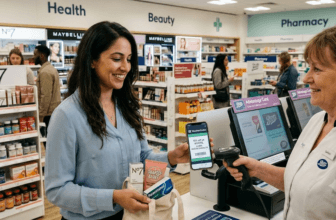
While clothing drop-offs are common, recycling makeup packaging is notoriously difficult due to mixed plastics and mirrored glass. The John Lewis BeautyCycle scheme solves this. If you are a ‘My John Lewis’ member, you can bring in five empty beauty products (from any brand, not just those sold by John Lewis) to one of their in-store beauty counters. In return, you receive £5 off your next beauty purchase of £20 or more. It is one of the most reliable ways to get a 25% discount on high-end skincare or cosmetics.
Marks & Spencer: Shwop
M&S’s long-running ‘Shwopping’ initiative, run in partnership with Oxfam, has recently gone digital. When you drop a bag of pre-loved clothing into the Shwop drop box at any M&S clothing store, you scan the QR code on the box using your M&S Sparks app. This deposits a free treat into your digital wallet—most commonly a free bag of Percy Pigs, a hot drink in the M&S Café, or a tailored 10% discount voucher for their more sustainable ‘Plan A’ apparel ranges.
H&M: Garment Collecting Programme
H&M operates one of the most accessible take-back schemes on the high street. You can hand in a bag of unwanted clothing or home textiles of any brand, in any condition—even odd socks, ripped tights, or stained bedsheets that charity shops cannot accept. For every bag you deposit at the cash desk, you receive a digital voucher for £5 off a £25 spend, alongside ‘Conscious Points’ to use toward future discounts.
Schuh: Sell Your Soles
Footwear is a massive contributor to landfill because the glues and mixed rubbers make shoes almost impossible to break down naturally. High street footwear giant Schuh runs the ‘Sell Your Soles’ scheme. Bring in a single pair of unwanted shoes (any brand, any condition), and they will give you a £5 voucher instantly redeemable against any new pair of shoes priced at £25 or over.
2. The Grocery and Coffee Refill Revolution
The easiest way to generate a compounding green discount is through your daily food and drink habits. Single-use plastic is the primary enemy of the modern supermarket, and retailers are offering concrete unit-price reductions for consumers willing to bring their own vessels.
The 50p Reusable Cup Margin
If you buy a takeaway coffee every working day, bringing a reusable cup is the highest-yield lifestyle tweak you can make. The discounts across the UK high street vary wildly, but the clear winner is Pret A Manger, which offers a massive 50p off any barista-made drink if you hand over your own cup. Over a standard 48-week working year, this single habit saves you £120.
- Pret A Manger: 50p discount
- Starbucks: 25p discount
- Costa Coffee: 20p discount (plus double ‘Beans’ on the Costa App, meaning you earn a completely free coffee after just four purchases instead of eight)
- Greggs: 20p discount off any hot drink
Surplus Food Apps: Too Good To Go & Olio
Food waste accounts for roughly 8% of all global greenhouse gas emissions. Rather than throwing out perfectly good food at closing time, UK supermarkets, bakeries, and carvery chains use the app Too Good To Go. You purchase a ‘Magic Bag’ of surplus stock at roughly 70% to 80% off the retail price. A £12 selection of Morrisons groceries or a box of fresh Greggs pastries typically costs between £3.09 and £3.99.
For a 100% discount, the peer-to-peer sharing app Olio connects you with local neighbours and registered ‘Food Waste Heroes’ who have collected surplus stock from local Tesco and Iceland branches. The food is listed on the app and given away entirely for free to stop it heading to the commercial bins.
3. Greener Gadgets: E-Waste Trade-Ins
Electronic waste is the fastest-growing waste stream in the UK. Because smartphones, laptops, and kitchen appliances contain precious, finite earth metals like lithium, cobalt, and gold, your broken tech has intrinsic scrap value.
Currys: Cash for Trash
Many people have a ‘drawer of doom’ at home filled with tangled USB cables, dead electric toothbrushes, and obsolete MP3 players. Currys runs an initiative called ‘Cash for Trash’. You can take literally any broken or unused piece of small tech into a Currys store, and they will safely recycle it for you. In exchange, they will give you a voucher for £5 off any purchase of £25 or more.
Apple Trade In & Refurbished Portals
If you are upgrading an iPhone, Mac, or iPad, using Apple’s official Trade In programme acts as a point-of-sale discount. Depending on the generation and condition of your old device, Apple will instantly knock between £40 and £630 off the price of your new product.
Furthermore, savvy eco-shoppers should look to certified refurbished platforms like Back Market or musicMagpie. Buying a ‘Pristine’ grade refurbished iPhone 14 rather than a brand-new one saves roughly 175g of electronic waste, prevents 80kg of carbon emissions, and typically offers a cash discount of 20% to 35% off the standard Apple RRP.
4. Transforming the Home: Grants, Subsidies, and Freebies
The UK has some of the oldest, most poorly insulated housing stock in Western Europe. Heating our drafty homes accounts for a massive chunk of the nation’s carbon output. Because of this, the UK Government and utility providers offer heavy financial interventions.
The Great British Insulation Scheme
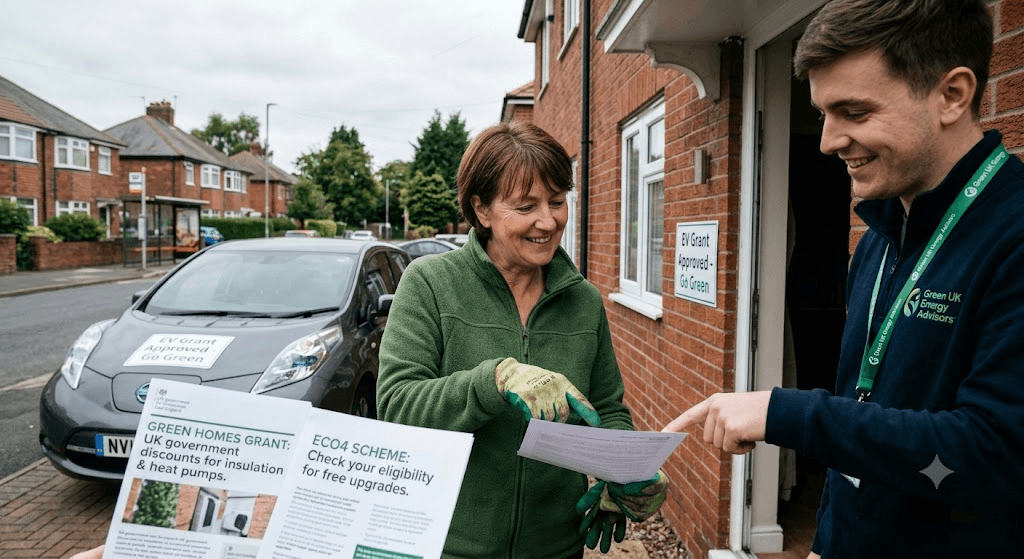
Running until March 2026, this government scheme is designed to help families in lower council tax bands insulate their homes. If your home has an Energy Performance Certificate (EPC) rating of D to G, and falls within Council Tax bands A to D in England (or A to E in Scotland and Wales), you could be eligible for free or heavily discounted cavity wall or loft insulation. Upgrading a poorly insulated semi-detached house can knock up to £300 off your annual gas bill.
The Boiler Upgrade Scheme (BUS)
To phase out fossil fuel gas boilers, the Government is offering property owners in England and Wales an upfront grant of £7,500 towards the cost of installing an air source heat pump or a ground source heat pump. Because this is a direct grant rather than a loan, it does not need to be repaid, making the installation of green heating technology roughly comparable to the cost of fitting a standard premium combi-boiler.
100% Free Water-Saving Kits
Every major water provider in the UK—including Thames Water, Severn Trent, United Utilities, and Scottish Water—offers their residential customers a box of free water-saving gadgets. By visiting SaveWaterSaveMoney.co.uk and typing in your postcode, your local supplier will post you a pack completely free of charge. These packs usually include:
- Regulated shower aerators: Mixes air with your water flow to keep the pressure high while using 30% less hot water.
- Save-a-Flush bags: Polymers placed in your toilet cistern that save one litre of water per flush.
- Swivel kitchen tap inserts: Reduces kitchen sink water consumption by up to 50%.
Octopus Energy: Octoplus Rewards
If you are a customer of green supplier Octopus Energy and have a smart meter installed, you can opt into their ‘Octoplus’ scheme. During times of high demand on the National Grid (such as a cold Tuesday evening in January), Octopus runs ‘Saving Sessions’. If you agree to turn off your heavy appliances—like washing machines, ovens, or EV chargers—for an hour, they pay you in ‘Octopoints’. These points can be converted directly into credit on your energy bill, or swapped for 2-for-1 cinema tickets at Odeon and free hot drinks at National Trust sites.
5. Getting Around: Sustainable Transport Incentives
Transport remains the largest single emitting sector of greenhouse gases in the UK. Moving away from single-occupancy petrol cars is heavily incentivised through the UK tax system.
The Cycle to Work Scheme
The Cycle to Work scheme is one of the greatest legal tax loopholes available to the British workforce. Operating as a ‘salary sacrifice’ arrangement, your employer buys a bicycle and cycling safety gear on your behalf, and you pay them back out of your gross (pre-tax) monthly salary over 12 to 18 months.
Because the repayments are taken *before* Income Tax and National Insurance are deducted, a basic-rate taxpayer saves roughly 32% on the total cost of the bike. A higher-rate (40%) taxpayer saves roughly 42%. This applies not just to standard push-bikes, but to high-end e-bikes and cargo bikes, meaning a £2,000 electric commuter bike could end up costing you closer to £1,160.
PlusBus Rail Discounts
When booking a National Rail ticket to any town or city in Britain, look for the tick-box to add a ‘PlusBus’ pass to your transaction. For a nominal flat fee (usually between £2.50 and £4.00 depending on the destination), you get unlimited hop-on, hop-off bus travel across that entire city for the day. Buying this bundled green ticket is up to 50% cheaper than paying for individual bus fares upon arrival.
6. Digital Eco-Perks: Apps That Pay You to be Green
A new wave of ‘Green FinTech’ apps has arrived in the UK, offering retail cashbacks funded entirely by sustainable marketing budgets.
Bower: The Recycling Rewards App
The Bower app gamifies your household waste. When you finish a product—be it a plastic milk bottle, a cereal box, or a shampoo container—you scan its barcode using the app. You then walk to your local council recycling bin or a supermarket soft-plastic drop-off point, and confirm your GPS location. The app awards you points for correctly sorting the item, which can be withdrawn as real cash to your UK bank account or donated to environmental charities.
GreenJinn
While standard supermarket cashback apps focus on processed foods, GreenJinn is built specifically around healthy, organic, and plant-based challenger brands. By browsing their weekly coupons, you can claim between 30% and 100% cash back on items like oat milk, meat-free sausages, organic chickpeas, and bamboo toilet paper at Sainsbury’s, Waitrose, and Tesco. You simply photograph your paper receipt, and the money is transferred via PayPal.
Smart Shopping: How to Avoid the ‘Greenwashing Trap’
While taking advantage of eco-discounts is brilliant for your bank balance, it is vital to practice consumer mindfulness. The dark side of corporate green discounting is ‘greenwashing’—offering a token environmental incentive purely to trigger unnecessary consumption.
If a fast-fashion brand gives you a £5 voucher for dropping off an old t-shirt, but that voucher requires a minimum £35 spend on brand-new, virgin-polyester clothing, the net result for the planet (and your wallet) is negative. The golden rule of the conscious consumer applies even to discounts: The most sustainable product in the world is the one you already own, and a 20% discount on something you don’t actually need is still a 100% waste of your money.
Focus your energy on structural discounts—like the Cycle to Work scheme, free home insulation, and coffee cup deductions—that reward you for making permanent, systemic changes to your everyday life. By aligning your personal budget with the circular economy, you can ensure that keeping your bank account in the black helps keep the planet green.