 savingsspot.co.uk
 For decades, the British high street operates on a quiet, unspoken binary: you can either shop cheap, or you can shop good. To purchase a t-shirt crafted by workers paid a genuine living wage, or to fill a kitchen pantry with pesticide-free, soil-regenerating produce, was long viewed as a middle-class indulgence—a quiet tax levied solely on those with comfortable disposable incomes. However, as the UK navigates a prolonged cost-of-living squeeze alongside a worsening climate crisis, this outdated dichotomy is finally fracturing.
Ethical shopping is no longer the exclusive preserve of high-end boutiques in West London or overpriced artisanal farm shops in the Cotswolds. Driven by savvy consumer tech, a booming circular economy, and a profound cultural shift toward conscious consumption, sourcing high-integrity goods at a fraction of their recommended retail price has become an accessible art form. This is your blueprint for securing genuine, ethical shopping deals across Great Britain, proving that a tight domestic budget and a clear conscience can happily coexist.
1. Redefining the “Deal”: Cost-Per-Wear vs. The Fast Fashion Trap
Before hunting for discount codes or digital sales, we have to fundamentally rewire our definition of a “bargain”. The British retail landscape has been warped by ultra-fast fashion titans offering five-pound party dresses and two-pound t-shirts. When an item costs less than the price of a pint of lager in a Yorkshire pub, the reality is stark: you aren’t getting a deal; someone else down the supply chain simply paid the remainder of the bill for you through suppressed wages or unsafe working conditions.
True ethical shopping relies heavily on the cold economic metric of Cost-Per-Wear (CPW) or Cost-Per-Use. A thirty-pound high-street jumper made of virgin, non-recycled acrylic that loses its structural integrity after three trips through the washing machine possesses an actual cost-per-wear of ten pounds. Conversely, an ethically sourced, ninety-pound certified organic cotton knit purchased in a seasonal archive sale for fifty pounds, which survives six winters of heavy rotation (roughly 180 wears), carries a CPW of just 27 pence.
When assessing ethical deals, look past the initial checkout figure and evaluate the lifecycle value. True sustainable brands construct their wares to survive. Therefore, a twenty percent discount on a slow-fashion garment represents vastly superior long-term economic value than a seventy percent flash-sale discount on a synthetic garment destined for a municipal landfill in six weeks.
2. The Second-Hand Renaissance: Beyond the Standard Charity Shop
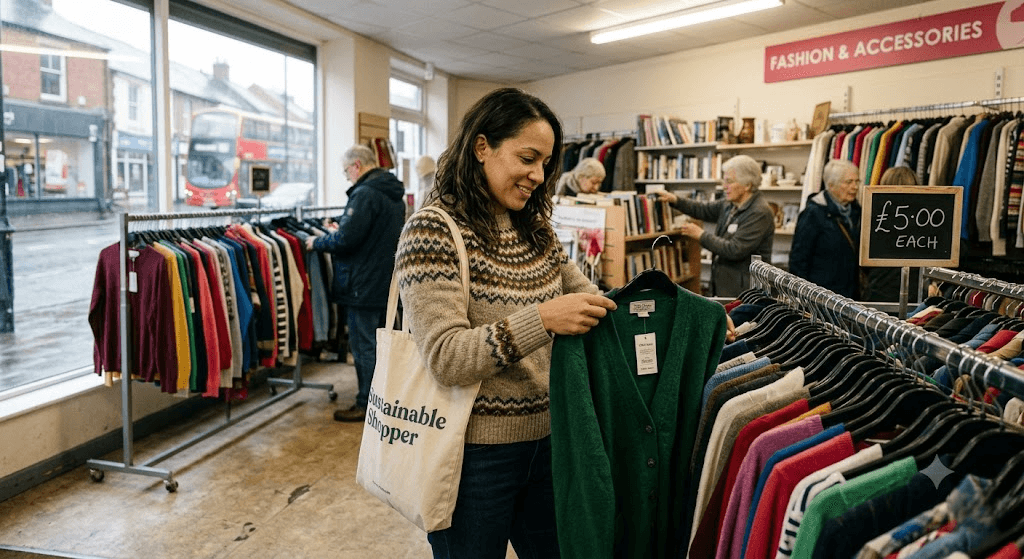
The UK possesses one of the most mature, beautifully developed second-hand ecosystems in the world. However, finding high-end ethical brands on the rails of a local high-street charity shop relies heavily on geographic luck. If you want guaranteed, high-tier ethical deals, you need to look at how the pre-loved sector has digitised and segmented.
The Rise of the “Brand Archive” and Imperfect Hubs
Many of Britain’s most celebrated sustainable pioneers have realised that destroying slightly damaged or surplus stock is an ecological and financial sin. Instead, they have launched dedicated digital outlet branches specifically for the domestic market:
- Lucy & Yak’s ‘Imperfects’: The cult, Brighton-born dungaree brand regularly hosts digital and physical ‘Imperfect’ drops. Garments featuring microscopic fabric misprints, slightly wonky pocket stitching, or dye variations are sold off at steep discounts, keeping perfectly wearable organic cotton in circulation.
- Finisterre’s Lived & Loved: The Cornish B-Corp surf and outdoor brand operates a dedicated pre-owned platform. UK customers can buy professionally inspected, washed, and repaired pre-worn waterproofs, fleeces, and merino knits at forty to sixty percent off the original retail price.
- eBay UK’s ‘Imperfects’ Hub: Moving far beyond the concept of a digital car boot sale, eBay’s official Imperfects destination partners directly with premium sustainable brands to sell ex-display, slightly scuffed, or customer-returned stock with statutory consumer rights and money-back guarantees.
Charity Shopping Goes Ultra-Curated
If you prefer the tactile thrill of the physical hunt, pivot away from standard mixed-donation shops and track down designated “Boutique” charity shops. The British Red Cross, Shelter, and Oxfam operate high-end boutique branches in affluent postcodes across Edinburgh, Manchester, and London. Furthermore, the central Oxfam Online Shop acts as a hidden national clearinghouse; volunteers across the country siphon off high-value, ethically certified, or vintage items and list them in one searchable digital inventory.
3. Ethical Groceries: Slicing the Sustainable Food Bill
Eating ethically in the UK frequently triggers anxious visions of twenty-pound organic chickens and eye-watering vegetable box subscriptions. Yet, the most ethical way to buy food happens to be the most financially savvy: intercepting systemic waste.
The “Wonky” Produce Movement
Roughly three million tonnes of edible, highly nutritious food is wasted on UK farms every single year simply because it fails to meet the strict, cosmetic aesthetic criteria of the major supermarkets. Enter the agricultural rescue boxes:
Enterprises like Oddbox purchase surplus and misshapen fruit and vegetables directly from growers and deliver them to your doorstep. Because you are buying crop overruns, oddly curved cucumbers, or slightly discoloured apples that would otherwise be ploughed straight back into the soil, the price per kilo routinely undercuts standard organic supermarket tiers, whilst ensuring British farmers receive a fair yield for their labour.
The Magic of ‘Too Good To Go’
While widely downloaded for picking up cheap end-of-day sausage rolls or sweet pastries, the real ethical life-hack inside the *Too Good To Go* application lies in targeting independent British farm shops, zero-waste refill stores, and high-end organic grocers. Securing a “Magic Bag” from an independent green grocer for four pounds frequently yields twelve to fifteen pounds worth of premium organic tofu, local sourdough, and heritage root vegetables that have simply reached their display ‘Best Before’ date.
The Bulk Refill Calculation
Zero-waste refill shops have suffered from an unfair public reputation for being needlessly expensive. While it is true that buying dried exotic fruits or artisanal vegan chocolate by weight will cost a pretty penny, buying standard household pantry staples—such as jumbo oats, red lentils, long-grain rice, and washing soda—at a local UK refill shop is frequently cheaper per hundred grams than buying pre-packaged plastic bags at the major supermarkets. You pay strictly for the raw weight of the product, passing zero margin over to corporate packaging manufacturers.
4. Navigating the Sales: Anti-Black Friday and Bundle Economics
Standard retail operates on a model of psychological manipulation: inflate a product’s base price artificially, then discount it heavily in November to make the consumer feel like a master negotiator. Genuine ethical brands, operating on razor-thin, fair-trade margins, physically cannot afford to offer seventy percent off without bankrupting their supply chain.
Instead, ethical deals manifest through three distinctly transparent promotional models:
- The “Green Friday” Counter-Movement: During late November, ignore the high street frenzy and look for brands running “Buy One, We Give One” initiatives, offering free lifetime repair vouchers with any purchase, or pledging to donate 100% of the day’s net profits to UK wildlife trusts and reforestation projects. The cash price remains stable, but the intrinsic moral value of your purchase doubles.
- Pre-Order Discounts: Because overproduction is the single greatest driver of global textile waste, forward-thinking British brands (such as *Paynter Jacket Co.*) operate on strict, limited-batch pre-order models. They routinely offer a ten to fifteen percent discount to customers willing to pay upfront and wait six weeks for the garment to be manufactured. This eliminates the brand’s inventory risk, and those exact operational savings are handed directly back to you.
- Circular Bundle Economics: Look at Isle of Wight-based *Rapanui*. They produce organic, circular-economy clothing powered by renewable solar energy. Because shipping individual t-shirts creates a wasteful carbon footprint, they offer permanent “Bundle Deals” (for example, five organic cotton t-shirts for the price of three). Crucially, every item contains a scannable neck tag; when the shirt eventually wears out years down the line, you scan it, post it back for free UK recycling, and receive a cash credit toward your next bundle.
5. Digital Gatekeepers: Tools to Verify the Deal
A discounted price tag is profoundly useless if the ethics behind it are built on a foundation of “greenwashing”—the corporate practice of spending more money on marketing an eco-friendly image than on actually implementing sustainable practices. To ensure your hard-earned pounds are backing legitimate actors, keep three verification tools bookmarked:
The Good On You App
Recognised as the global gold standard for fashion transparency, this platform rates thousands of brands on a rigorous five-point scale based on their verifiable impact on People, the Planet, and Animals. If you spot an aggressively marketed “sustainable deal” from a mainstream high-street retailer, run their brand name through the database first. You will routinely discover that their much-touted “Conscious Collection” accounts for less than two percent of their overall production output, serving as a convenient moral shield for a heavily exploitative business model.
The Ethical Consumer Database
A truly brilliant British institution based out of Manchester, *Ethical Consumer* has been publishing uncompromising, fiercely independent scorecards on everything from ethical bank accounts and energy providers to washing-up liquid and baked beans since 1989. While their deep dive comparison tables sit behind a modest, low-cost subscription, the financial outlay pays for itself within a month of making smarter, highly ethical supermarket switches.
The B-Corp Directory
When investigating an unfamiliar digital deal, scroll immediately to the website footer and look for the **Certified B Corporation** stamp. To achieve this accreditation in the UK, a company must open its books to a brutal, legally binding third-party audit of their entire social and environmental performance—from employee pension contributions to supply chain carbon offsets. If a UK B-Corp launches a seasonal sale, you can check out with the absolute confidence that the discount was not subsidized by a factory worker losing their weekend overtime pay.
6. Ethical Home & Beauty: The Power of Concentrates
The UK domestic cleaning and personal care market is currently undergoing a massive structural revolution aimed at a very simple goal: stop shipping water. A standard plastic bottle of kitchen surface spray or high-street shampoo consists of roughly eighty to ninety percent plain water. Consumers are effectively paying a premium for heavy-haulage diesel lorries to transport tap water up and down the M6.
The ultimate ethical deal in this sector is the **concentrate switch**:
Pioneering British brands like Ocean Saver, Neat., and Splosh sell you a single, aesthetically pleasing, highly durable aluminium or recycled plastic trigger bottle. Moving forward, you simply order tiny, concentrated pods or liquid refill pouches that drop straight through a standard UK letterbox. You drop the pod into your existing bottle and top it up with warm water from your own kitchen tap. Because the shipping volume and weight are reduced by over ninety percent, the cost of your household cleaner drops to roughly one pound per bottle, whilst instantly eliminating dozens of single-use plastic trigger sprays from your annual household waste.
Similarly, established UK natural beauty brands like Faith In Nature offer five-litre bulk jerry cans of their vegan, cruelty-free shampoos, conditioners, and body washes. Teaming up with a neighbour, housemate, or family member to split a five-litre drum reduces the cost per hundred millilitres to less than half the price of buying individual 400ml bottles at a high-street chemist, keeping twelve plastic bottles out of the municipal recycling loop in the process.
The Bottom Line: The Most Ethical Deal is the One You Don’t Make
As the architecture of British retail shifts, the tools at our disposal to buy ethically on a realistic, everyday household income have never been more abundant. From wonky vegetable boxes to factory overruns and closed-loop textile bundles, the modern ethical deal is born out of hyper-efficiency, smart logistics, and waste eradication, rather than the dark mechanics of human or environmental exploitation.
However, the ultimate rule of ethical consumerism remains beautifully, stubbornly low-tech: pause before you click “Buy Now”. The most sustainable, ethically sound garment, sofa, or piece of technology on the planet is the one already sitting inside your home. Before seeking out a deal on something new, investigate the expanding, beautiful network of volunteer-led **Repair Cafés** operating in village halls, libraries, and community centres from Cornwall to the Scottish Highlands. Here, passionate local hobbyists will help you rewire a broken toaster, patch a torn waxed jacket, or fix a wobbly chair for the price of a friendly chat and a small donation for tea and biscuits.
When the time inevitably comes that you do need to open your purse or wallet, treat your spending power for what it truly is: an economic vote. By actively redirecting your monthly budget away from the faceless, monolithic titans of fast consumption and pointing it toward the clever, transparent, and circular British enterprises fighting to do things the right way, you aren’t just securing a fantastic deal—you are personally underwriting the survival of a fairer, greener marketplace.