 savingsspot.co.uk
 It is a modern digital rite of passage for every British holidaymaker. You sit down with your laptop on a wet Tuesday evening, find a well-timed flight to Malaga or Tokyo, navigate your way past four consecutive screens of aggressive car hire upsells, and arrive at the final payment checkout. There, sitting just above the total price, is a small, empty, mocking rectangular box: “Enter promo code”.
For the next twenty minutes, your booking session hangs in limbo while you open fifteen different browser tabs, visiting ad-heavy voucher websites. You type in FLIGHT10, SUMMER20, and SAVE50. You click links that promise “revealed codes” only to refresh the page and tell you the sale expired in 2023. Eventually, defeated by the dreaded red text reading “This code is invalid or not applicable to this itinerary”, you pay the full fare.
The global airline industry spent decades mastering the art of algorithmic dynamic pricing. They do not hand out flat discounts out of a sense of corporate generosity. However, genuine flight discount codes do exist, they do circulate in the UK market, and they can shave hundreds of pounds off a booking—provided you understand the rigid digital architecture that governs them.
The Anatomy of an Airline Fare (And Why Your Code Failed)
To successfully hunt for a flight discount code, you must first understand what you are actually trying to discount. When you buy a plane ticket from a UK departure airport, the headline price you pay is not a single product; it is a stacked cake of separate financial transactions.
- The Base Fare: The actual revenue the airline keeps for carrying you from Point A to Point B. On a £250 ticket to Rome, this might only be £45.
- Carrier-Imposed Charges (YQ/YR): Historically known as “fuel surcharges,” these are arbitrary fees added by the airline to cover operational overheads.
- Government Taxes: Specifically, UK Air Passenger Duty (APD), which varies wildly depending on whether you are flying short-haul Economy (£7) or long-haul Premium/Business (£142+).
- Airport Passenger Service Charges: The fee the airline pays to Heathrow, Gatwick, or Manchester for the right to use their security lanes and terminal facilities.
Here is the golden rule that saves 90% of user frustration: The vast majority of airline promo codes apply strictly to the Base Fare.
If British Airways issues a “20% off” discount code, and you apply it to a £100 return flight to Berlin where the base fare is £20 and the taxes/fees are £80, the code will not reduce your total to £80. It will reduce your base fare to £16, bringing your new total to £96. When users see a £4 discount on a “20% off” promotion, they assume the website is broken. It is not broken; it is operating under strict aviation revenue accounting.
The Hierarchy of UK Flight Vouchers
Not all voucher codes are birthed in the same marketing department. They generally fall into four distinct tiers of accessibility.
1. The Public Flash Code
These are the codes plastered across the top banner of an airline’s homepage. Examples include Qatar Airways’ recurring global sales or Wizz Air’s “20% off all flights booked before midnight” promos. Because they are open to the entire internet, the airline automatically raises the underlying base inventory price slightly the morning the code goes live to protect their yield. They offer modest, but guaranteed, savings.
2. The Closed-Group Verification Code
These offer the highest success rate in the UK because they require third-party identity verification, stopping the general public from exhausting the allocation. The most prominent examples include:
- The Student Tier: Verified via UNiDAYS or Student Beans. Qatar Airways runs a world-class “Student Club” offering 10% off your first booking, 15% off your second, and 20% off your third, alongside complimentary Super Wi-Fi. Emirates offers a flat up to 10% discount on flex fares for UK students holding an active institution email.
- The Key Worker Tier: Verified via the UK Blue Light Card or Health Service Discounts portal. Virgin Atlantic routinely offers Blue Light Card holders up to £60 off long-haul economy fares, while British Airways operates a dedicated NHS booking gateway offering 5% to 10% off published fares.
3. The Point-of-Sale (POS) Launch Code
When an airline opens a brand-new route out of a UK airport (for example, easyJet launching a new connection from London Southend, or Norse Atlantic starting a new route from Gatwick), they face an empty seat crisis. To generate immediate cash flow and search engine momentum, they will drop a route-specific code (e.g., SOFIA20) valid only for departures originating from that specific regional tarmac.
4. The Apology / Retention Voucher
These are unique, alphanumeric single-use strings generated by customer service customer relationship management (CRM) software. If your luggage was delayed at Manchester Airport, or your flight to Edinburgh was pushed back by three hours, airlines will frequently offer a £50 “Goodwill eVoucher” to deter you from filing a formal UK/EU261 cash compensation claim.
How the “Big Four” UK Carriers Handle Discounts
If you are flying out of the United Kingdom, your digital strategy needs to pivot depending on whose livery is painted on the tail fin.
British Airways
British Airways treats public discount codes with extreme suspicion, preferring to reward loyalty via Avios. However, they consistently leave two doors open:
First is the BA On Business portal. This is a free-to-join loyalty programme specifically for UK sole traders and limited companies. Joining gives you an immediate company gateway that frequently offers 5% off the base fare of standard commercial flights, completely separate from your personal Executive Club account.
Second is the “Shareholder Myth”. For years, UK travel forums claimed that holding 200 shares in International Airlines Group (IAG) granted a 10% discount code. This benefit was officially terminated. Do not buy IAG stock expecting a cheap flight to Barbados.
easyJet
easyJet operates a closed ecosystem. They almost never release generic codes to voucher websites. Instead, their discounts are locked behind two mechanisms:
The Orange Drop: easyJet’s weekly promotional newsletter. If you have opted out of their marketing emails to keep your inbox clean, you have accidentally locked yourself out of their voucher system. When easyJet wants to push off-peak winter sun, they drop unique, account-bound link codes directly into registered user inboxes on Tuesday afternoons.
easyJet Plus / Flight Club: While easyJet Plus is a paid membership (£215/year), “Flight Club” is an invite-only loyalty tier awarded to UK passengers who book more than 20 flights a year. Flight Club members are routinely issued “Name Change” voucher codes and companion pass discounts that regular consumers cannot access.
Ryanair
Michael O’Leary’s commercial strategy relies on raw, unadorned baseline undercutting. Ryanair does not use standard promotional codes in the traditional sense; their booking engine is not built to process third-party voucher math. Instead, they utilize “Value Stripping”. When they run a “Buy One Get One Half Price” or “Flights from £12.99” promotion, the discount is hard-coded into the seat selection screen automatically.
Warning: If you see a website advertising a “Ryanair 20% off Code”, it is a phantom link designed solely to drop an affiliate tracking cookie onto your hard drive.
Virgin Atlantic
Virgin Atlantic is the most generous UK long-haul carrier regarding traditional promotional codes, largely because they are locked in a perpetual battle for market share against British Airways at Heathrow.
They distribute their codes heavily through the Virgin Red app. By linking a standard Virgin Flying Club account to Virgin Red, users can frequently trade as few as 200 “Virgin Points” for a unique promotional code granting £30 to £50 off a cash Premium or Upper Class booking.
Seven Legitimate Strategies to Source Valid Codes
If you have checked your student portals, logged into your airline accounts, and found nothing, you must employ active digital extraction methods.
1. The “Salted Email” Welcome Loop
Almost every major international carrier flying out of the UK offers a first-time booking discount (usually 10% or €15/£15) in exchange for subscribing to their marketing newsletter. Carriers like Air France, KLM, and TAP Air Portugal are famous for this.
If you have already used your primary email address to get this code three years ago, use the Gmail Salt Trick. If your email is [email protected], enter your email into the airline’s sign-up box as [email protected]. The airline’s automated database views this as a brand-new human being and will instantly dispatch a fresh, unique 10% welcome code to your standard inbox.
2. The Abandoned Itinerary Trigger
Airlines spend millions on “basket recovery” software. To trigger it deliberately:
- Log into your airline account (ensure your UK mobile number and email are attached).
- Select your flights, choose your seats, and proceed to the final credit card entry screen.
- Do not enter your card details. Simply close the browser tab.
Wait 24 to 48 hours. If the flight’s load factor (the percentage of seats sold) is running behind the airline’s historical projections for that specific week, the CRM system will automatically trigger an email: “Did you forget something? Finish your booking today with code COMEBACK10 for £20 off.”
3. Online Travel Agent (OTA) App Arbitrage
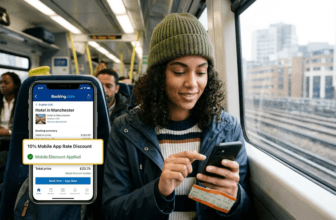
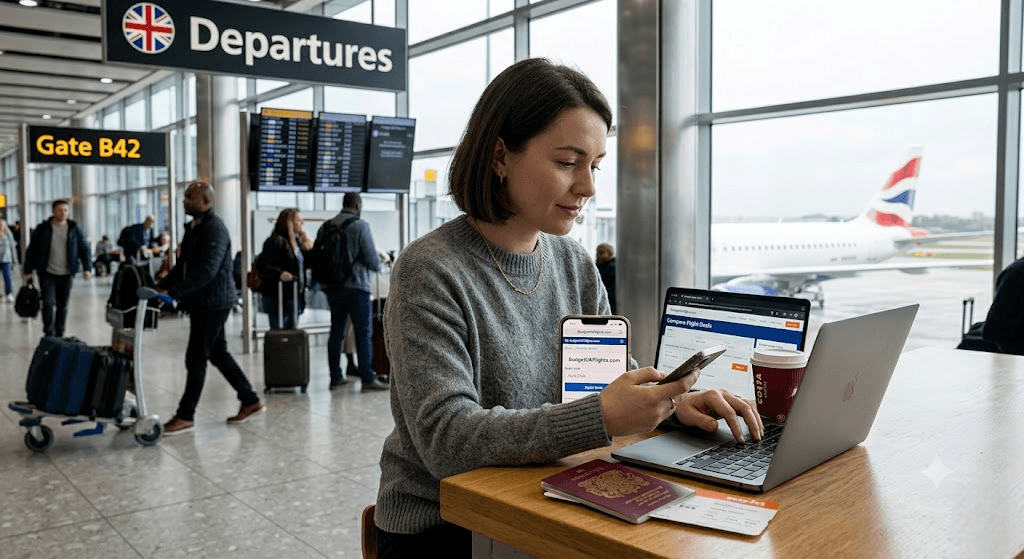
Aggregators like Opodo, eDreams, and Trip.com are locked in a desperate bid to force UK consumers to download their mobile applications. Consequently, they run aggressive “App-Only” promotional codes (e.g., £15 off any flight booked via the app).
The Strategy: Find your flight on a desktop PC via Google Flights to establish the true baseline price. Download the OTA app, apply the mobile-only discount code, and check the final figure. Crucial caveat: OTAs frequently inflate the base price of the ticket inside their app by £10 to cover the cost of the £15 voucher. Only press “Pay” if the net cost is lower than booking directly with the airline.
4. Point-of-Sale Geolocation Shifting
Airlines price their routes based on the wealth and currency strength of the country the buyer is sitting in. Occasionally, an airline will release a high-value discount code exclusively for a foreign market.
For example, a South American carrier flying from London Heathrow to Bogota might release a 20% discount code celebrating a Colombian national holiday, valid only on the .com.co version of their website. By using a secure VPN to switch your IP address to Bogota, navigating to the local domain, and applying the local promo code, you can force the booking engine to apply the discount to a UK departure. Pay with a fee-free UK travel card (like Monzo, Starling, or Chase) to avoid foreign transaction markups.
5. The Corporate Perks Audit
Millions of UK employees work for companies subscribed to corporate benefit platforms such as Perkbox, Edenred, or Benefits at Work. Because these portals sit behind corporate logins, search engine crawlers cannot index them, meaning the codes inside stay pristine and functional.
Log into your work intranet and search the benefits directory for “Travel” or “Airlines”. You will frequently discover standing, year-round corporate discount codes for carriers like Emirates (typically 8% off base Economy / 10% off Business) or Virgin Atlantic that your HR department forgot to tell you about.
6. The Inflight Magazine Audit
If you are travelling on a low-cost carrier, pick up the physical, dog-eared copy of the inflight magazine sitting in the seatback pocket, or look at the back of your paper duty-free receipt. Airlines frequently sell the back page of their inflight menus to third-party travel partners or use it to push their own winter schedules, printing static codes (e.g., FLYAUTUMN25) that never get published on digital web hubs.
7. Co-Branded Banking Links
Open your American Express UK, Barclays Avios, or Lloyds Bank mobile app and navigate to the “Merchant Offers” section. While not a code you type into a box, these platforms operate “Statement Credit Promos”—for example: “Spend £400 or more with Singapore Airlines, get £75 back.”
Once you click “Save to Card”, you simply go to the airline’s website and book as normal. The bank reads the merchant code at the point of settlement and refunds the £75 directly to your balance. Because this happens on the banking side, it completely bypasses the airline’s stingy promo-code algorithms.
The Advanced Art of “Stacking”
The true grandmasters of UK travel do not settle for a single discount code; they practice the financial art of Stacking—layering multiple independent discount mechanisms over a single transaction.
Consider the following real-world scenario for a British traveller booking a cash flight to Bangkok with Qatar Airways valued at £800:
- The Baseline Check: The traveller locates the £800 fare on Google Flights.
- The Gateway Entry: They do not go straight to QatarAirways.com. They log into TopCashback UK, locate the Qatar Airways merchant link (offering a standard 2.5% cashback on flights), and click through. (Potential return: £20.00).
- The Code Application: Sitting on the booking page via the tracking link, they log into their verified Student Club / UNiDAYS account and apply their 10% promotional code to the £600 base fare portion of the ticket. (Immediate cash saving: £60.00).
- The Payment Execution: They pay the remaining £740 balance using a British Airways American Express Premium Plus card. The card awards 1.5 Avios per £1 spent. (Points generated: 1,110 Avios, worth approximately £11.10 in real-world redemption value).
The Final Audit: The traveller secured the exact same seat, on the exact same plane, as the person sitting next to them. But their net cash outlay was £720, they gained £20 in a cashback wallet, and they added £11 worth of frequent flyer currency to their account. They turned an £800 flight into an effective £688.90 expenditure without visiting a single spam voucher website.
Why Did My Legitimate Code Bounce? (Troubleshooting)
You have found a code that you know is 100% active, yet the airline’s website rejects it. Before throwing your mouse, check these four systemic traps:
1. The “Operating vs. Marketing” Trap
Airlines operate massive global alliances (Oneworld, SkyTeam, Star Alliance). You might hold a valid discount code for Air France, and you use it to book a flight from London to Boston on AirFrance.co.uk. The code fails. Why? Because when you look at the fine print, the flight is “Operated by Virgin Atlantic” or “Operated by Delta”. Promotional codes strictly demand that the metal aeroplane carrying you belongs to the company issuing the voucher.
2. The Fare Class Lockdown
Consumers view Economy class as a single entity. Airlines view Economy as a 15-letter alphabet of “Fare Buckets” (e.g., Y, B, H, M, L, V, S, N, Q, O). When an airline releases a discount code, their revenue managers almost always exclude the bottom two tier buckets (usually “Basic Economy / Hand Luggage Only”). If you have selected the cheapest possible light fare, the booking engine will reject the voucher. You often have to upgrade to “Standard Economy” (with a checked bag) for the code to engage.
3. The “Ghost Session” Lock
This is the most common technical glitch in modern travel booking. You enter your valid code, the price drops, and you proceed to the 3D Secure banking verification screen. Your banking app takes too long to load, or you hit the “Back” button to check a passenger’s middle name. The session breaks.
When you try to re-enter the promo code five minutes later, the site says: “This code has already been redeemed.” Because you didn’t finish the transaction, the airline’s server has locked that single-use voucher to your “abandoned” basket in the cloud. Do not panic. Simply close your entire browser, wait 30 to 45 minutes for the server’s automated memory sweep to wipe the dead basket, open an ‘Incognito’ window, and try again.
4. The Regional Departure Lock
A code designated for the Great Britain market will verify your point of origin via three separate data points: your IP address, your chosen departure airport (e.g., LHR, MAN, EDI), and the billing address of the credit card used at checkout. If you try to use a UK-market discount code to book a one-way flight starting in Madrid and landing in London, the system will instantly flag the non-UK departure point and invalidate the string.
Frequently Asked Questions
Are voucher websites like Groupon, Wowcher, or MyVoucherCodes safe for flight codes?
For package holidays (e.g., a TUI or Jet2Holidays flight+hotel bundle), yes; these sites regularly hold genuine, working affiliate codes. For pure, scheduled “seat-only” flights on major airlines, they are almost universally a waste of time. Pure flight margins are too thin for airlines to hand out 15% margin cuts to third-party affiliate aggregators.
Do flight promo codes apply to infants and children?
Generally, no. Infants travelling on a lap (under 2 years old) are charged a flat percentage of the adult fare (usually 10%) plus mandatory insurance/customs fees. Promotional codes are almost exclusively programmed to calculate deductions against adult baseline tariffs.
Can I apply a discount code retroactively if I forgot to put it in?
Never. Once a ticket number (an e-ticket starting with a 3-digit airline accounting code like 125- for British Airways) has been generated and dispatched to your email, the financial ledger for that seat is locked. Cancelling the flight within a 24-hour cooling-off period and rebooking with the code is your only remedy, though you must check the airline’s specific 24-hour cancellation refund policy before attempting this.
Why do some codes require me to pay in a specific currency?
Airlines occasionally issue codes to balance their foreign currency reserves. If a carrier holds too much British Sterling and needs US Dollars to pay a Boeing maintenance invoice, they will issue a promotional code that only works if the user manually toggles the website’s display currency to USD before checkout.