 savingsspot.co.uk
 Every time you proceed to an online checkout without clicking through a cashback portal first, you are essentially leaving a small handful of loose change on the shop counter and walking away. In a UK economic climate where the weekly grocery shop, energy tariffs, and basic vehicle maintenance command an ever-tighter grip on our household budgets, ignoring cashback is a luxury very few consumers can justify.
For the uninitiated, the concept often triggers a polite, instinctively British sense of scepticism: “If a retailer is willing to give me seven percent of my money back just for clicking a specific link, what is the catch?” The short answer is that there isn’t one. Cashback is not a scam, nor is it a complex financial derivative; it is simply the digital evolution of standard affiliate marketing, re-engineered to put the commission into the pocket of the buyer rather than a giant tech conglomerate.
Whether you are looking to shave a few pounds off your next train ticket or pull in over £500 a year through strategic “stacking”, this guide outlines the real-world mechanics of the UK cashback ecosystem and how to turn it into a frictionless, passive income stream.
The Hidden Mechanics: How the Rebate Economy Works
To understand why retailers happily pay you to shop, you have to look at their “Cost Per Acquisition” (CPA) budgets. High street brands and digital merchants spend billions annually on Google Ads, television spots, and Instagram placements to convince you to buy their products. When TopCashback or Quidco sends a customer directly to that retailer’s site via an affiliate tracking link, the retailer pays the portal a pre-agreed commission for facilitating the sale.
Rather than pocketing the entirety of that commission, the major UK portals do something remarkably clever: they pass the vast majority—sometimes up to 105% of it, subsidised by their own site advertising revenue—straight back to you. The retailer gets a guaranteed, completed sale; the portal maintains an active, loyal user base; and you get a retrospective discount.
Even better is the view taken by HM Revenue & Customs. Because standard consumer cashback is legally categorised as a “discount on the purchase price of goods or services” rather than generated income, the money you accumulate is 100% tax-free. It does not eat into your Personal Savings Allowance, nor does it require a declaration on a self-assessment tax return.
The Duopoly: TopCashback vs. Quidco
If you live in the UK and want to earn serious cashback, you will inevitably end up operating within a duopoly. While smaller niche sites exist, TopCashback and Quidco are the undisputed market heavyweights. Between them, they have integrated tracking links for virtually every major operator in the British retail space, from Asda and Boots to British Airways and Aviva.
TopCashback (TCB)
Widely regarded by serious UK “point-hackers” as the more lucrative of the two, TopCashback operates on a model that routinely offers slightly higher baseline percentages. They operate two membership tiers: a completely free ‘Classic’ account, and a ‘Plus’ account. The Plus account deducts a flat £5 per year directly from your annual cashback earnings (never from your actual bank account) in exchange for access to higher promotional rates and exclusive top-up bonuses. If you use the site more than three times a year, the Plus tier mathematically pays for itself.
Quidco
The original pioneer of the UK cashback scene, Quidco countered its rival’s aggressive rates by introducing the “Highest Cashback Guarantee”. If you make a purchase through Quidco and subsequently find that TopCashback was offering a higher percentage on the exact same item on the exact same day, Quidco will not only match the rate, but will top it up by an additional 2%. Like TCB, they offer a standard free tier alongside an optional £1-per-active-month ‘Premium’ tier.
The Savvy Strategy: Do not practice brand loyalty here. Open an account with both platforms. Keep both logged in on separate browser tabs. Whenever you are about to purchase something, take five seconds to type the merchant’s name into both search bars and go with whoever is offering the higher yield that morning.
Passive Cashback: The “Set and Forget” Apps
The biggest point of failure for new cashback hunters is ‘click fatigue’—the sheer human forgetfulness of remembering to visit a portal before buying a pair of socks or ordering a Friday night takeaway. To bypass human error entirely, the UK market has birthed a generation of passive Open Banking and card-linking apps.
Airtime Rewards
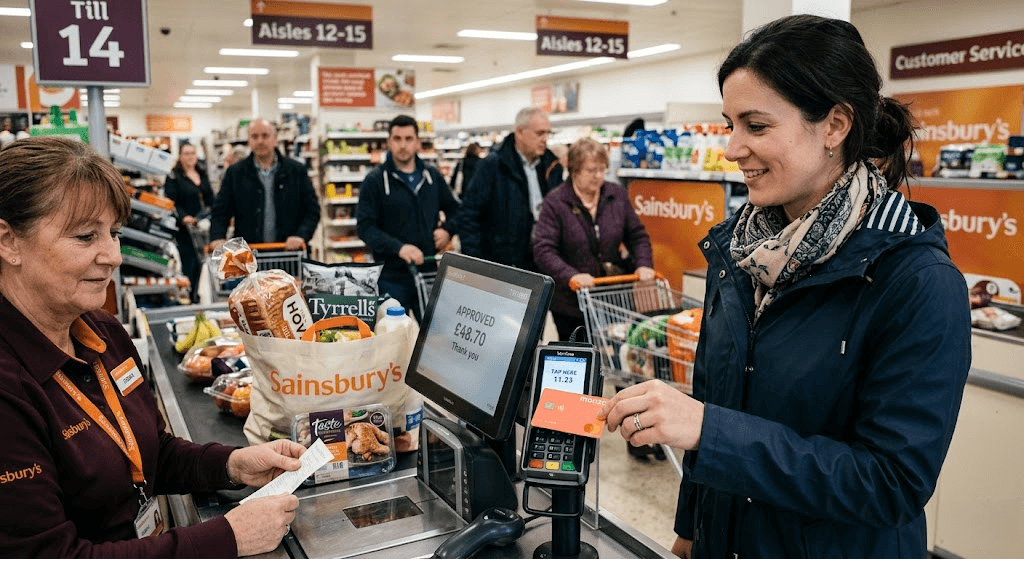
This is arguably the most effortless money-saving tool available to UK smartphone users. You download the app and link your standard Visa or Mastercard debit and credit cards to it once. From that moment on, whenever you spend money at a partnered retailer (which includes massive footprints like Greggs, Boots, Argos, Halfords, and Morrisons), the Visa/Mastercard payment network automatically flags the transaction and credits your Airtime account.
Once your balance hits £10, you push a button, and the app pays the money directly to your mobile network provider (EE, O2, Vodafone, Three, or giffgaff), instantly shrinking your next phone bill. You never have to open the app at the till; it happens entirely in the dark.
Cheddar and JamDoughnut
These platforms take a slightly different approach, leaning heavily on the UK’s advanced Open Banking framework. Cheddar tracks your linked bank accounts and drops instant cash into an in-app wallet when you spend at participating stores.
JamDoughnut operates on an “instant gift card” model. If you are standing in the aisle at Sainsbury’s or sitting at a table in a Greene King pub, you open the app, buy an exact-value digital gift card using your banking app, and receive between 3% and 8% of the cash back instantly into your JamDoughnut jar. You then show the digital barcode to the cashier to settle your bill.
The Debit Card Revolution
Historically, significant cashback was the exclusive playground of high-end, high-APR credit cards. Over the last five years, however, challenger banks and traditional high street institutions have been forced to turn their standard debit cards into earning tools to stop customers migrating.
- Chase UK: Upon launching in the UK, the digital-only bank offered a flat 1% cashback on almost all standard debit card spending for a year. While now subject to a monthly £500 pay-in requirement to keep the perk alive, it remains the ultimate “zero-thought” everyday spending card. Spending £800 a month on groceries, petrol, and sundries yields a totally passive £96 a year.
- Santander Edge: The spiritual successor to the legendary 123 account. For a £3 monthly fee, Santander gives you 1% back on supermarket shopping and travel, alongside 1% back on your household Direct Debits (council tax, broadband, gas, and electricity) up to a combined cap of £20 a month. A well-managed Edge account nets a household roughly £170 in pure profit annually.
- NatWest / RBS Reward Accounts: These operate on a simple behavioral bribe. You pay a £2 monthly fee; they give you £4 back every month so long as you have two Direct Debits of at least £2 leaving the account and log into their mobile app once a month. It is an effortless £24 net gain per year per person.
The High Art of “Stacking”
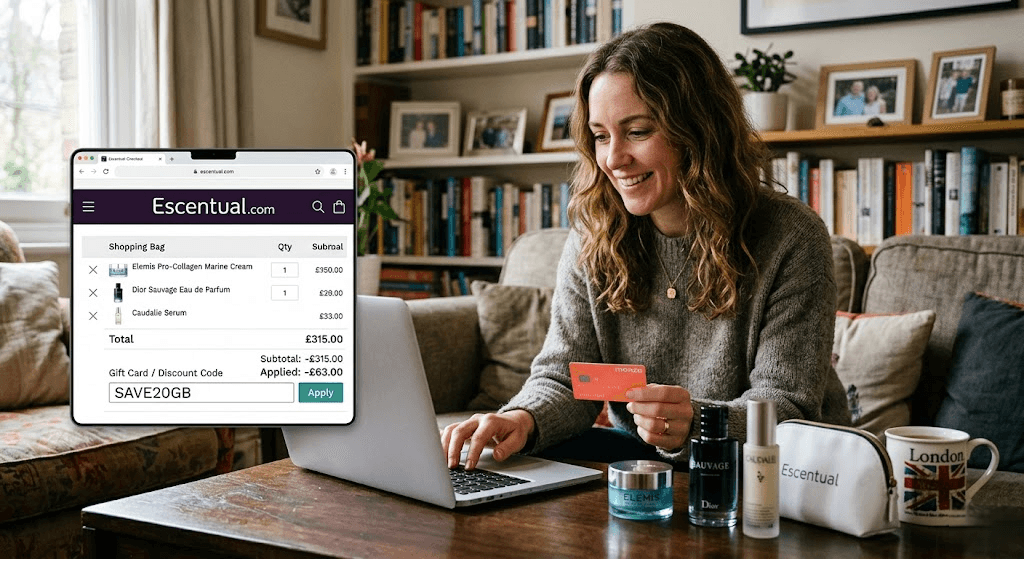
The true masterclass of the UK rebate economy is a practice known as stacking. This involves combining three or four distinct cashback mechanisms into a single, unified transaction, forcing multiple separate companies to pay you a yield on the exact same pound spent.
Consider a practical, everyday scenario: Buying a £500 laptop from Currys.
- You open a clean web browser and navigate to TopCashback. You search for Currys, see they are offering 4% cashback on computing, and click the link to be transferred to the Currys website. (Expected yield: £20.00)
- You add the laptop to your shopping basket and proceed to the payment page. Instead of typing in your standard debit card, you pay using an American Express Platinum Cashback Everyday credit card, which yields 0.5% on standard purchases. (Expected yield: £2.50)
- Because Amex happens to be running an “Amex Offers” statement credit promo on your app that week offering “£25 back on a £250+ spend at Currys”, that triggers automatically upon the card being charged. (Expected yield: £25.00)
- At the checkout, you type in your Currys ‘Perks’ loyalty number, earning you a digital voucher for a future purchase.
By taking roughly ninety seconds of extra administrative friction, a £500 retail purchase has generated £47.50 in hard cash returns. You have effectively created your own personal 9.5% sale.
Big-Ticket “Life Admin”: The High-Yield Paydays
While chasing 4p back on a £1.20 pack of chewing gum via an open banking app is a fun micro-habit, the real needle-movers in the UK cashback scene occur during your annual “life admin” renewals. Insurance companies and telecom providers offer wildly disproportionate bounties to secure new contracts.
When your car insurance, home insurance, or broadband contract comes up for renewal, never go directly to a comparison site like CompareTheMarket or GoCompare. Instead, access those exact same comparison engines through the dedicated links inside Quidco or TopCashback.
It is entirely standard for a UK broadband provider (such as Virgin Media, BT, or Community Fibre) to offer a **£80 to £135 cash bounty** simply for switching your connection via a portal link. Similarly, taking out a fresh SIM-only mobile contract via a cashback portal frequently results in the portal paying you a sum so high that, when factored against the monthly line rental, the phone contract effectively costs you under £2 a month over the course of the year.
Four Golden Rules to Prevent Tracking Failures
The single greatest frustration in the cashback world is the “untracked purchase”—an instance where you spent £400 on a hotel room, but the portal’s system failed to register your click. To insulate yourself against digital misfires, apply these four technical disciplines:
1. Create a “Vanilla” Browser Profile
Modern internet browsers are heavily fortified with ad-blockers, anti-tracking scripts, and privacy extensions (such as uBlock Origin, Ghostery, or Brave’s native shields). These tools do their job too well: they instantly sever the digital “cookie” that TopCashback relies on to prove to the retailer that they sent you. Set up a completely naked, secondary browser profile (e.g., a standard, un-tweaked installation of Microsoft Edge or Google Chrome) dedicated strictly to your cashback shopping.
2. Never Mix Outside Voucher Codes
If you click through Quidco to buy a coat from ASOS, but at the checkout page you type in a 15% off promotional code you found on a site like *VoucherCodes.co.uk* or via an influencer’s TikTok feed, your cashback will almost certainly be declined. The retailer’s system views the influencer’s code as the “final referrer”, overwriting Quidco’s claim to the commission. Only ever use discount codes that are explicitly advertised on the cashback portal’s own page for that merchant.
3. Beware the “Quote Retrieval” Trap
When running car insurance quotes via a portal, complete the purchase in that exact sitting. If you generate a quote on a Monday, get emailed a reference number, and then go back on Friday typing the reference number directly into the insurer’s website to buy it, the tracking chain is broken. You must click through the portal fresh on the day of actual purchase.
4. Treat Pending Cash as “Ghost Money”
Until a cash figure moves from *’Pending’* to *’Payable’* in your portal dashboard, act as though it does not exist. Retailers take anywhere from 30 to 120 days to validate claims to ensure you didn’t return the item for a refund. Furthermore, if a retailer falls into financial administration (as happened to high-street names like Wilko and Made.com in recent years), any pending cashback tied to them vanishes instantly as their unsecured debts are wiped.
The Verdict: An Essential Consumer Reflex
Adopting a cashback strategy requires a small psychological pivot. You have to train your brain to stop viewing an online purchase as a one-way street where money leaves your account forever, and start viewing it as a round-trip transaction where a percentage is destined to return.
By combining a passive card-linker like Airtime Rewards for your high-street coffees, a 1% cashback debit card for your weekly groceries, and an open tab on TopCashback for your digital shopping and annual utility switches, an average UK household can comfortably harvest between £300 and £700 of tax-free capital every twelve months. In an economic landscape defined by squeezed margins, that isn’t just savvy point-scoring; it is sensible, defensive household management.