savingsspot.co.uk
 There is a distinct, almost gravitational pull towards the corner sofa in modern British homes. It has evolved from a bulky 1970s relic into the undisputed champion of family living rooms, capable of defining open-plan spaces and turning awkward nooks into sanctuaries of comfort. However, finding the perfect piece is only half the battle; finding it at a price that doesn’t require remortgaging the house is the other. This is where the allure of a corner sofa sale comes into play.
Entering the sales season—whether it’s the chaotic Boxing Day rush, the mid-summer clearance, or an unexpected flash event online—can feel overwhelming. The banners are flashing, the countdown timers are ticking, and the prices seem to be dropping by the second. But a bargain is only a bargain if it actually fits through your front door and suits your lifestyle. This article isn’t just about spotting a red sticker; it is about strategically navigating the market to secure a high-quality centrepiece for your lounge that will last for years, not just until the warranty expires.
Why the Corner Sofa Has Conquered the UK
Before diving into the mechanics of the sale, it is worth understanding why these L-shaped giants are in such high demand. In the UK, where property sizes can vary wildly from sprawling countryside cottages to compact city flats and Victorian terraces, space is a premium commodity. The traditional three-piece suite—usually a three-seater, a two-seater, and an armchair—is notoriously space-inefficient. It creates “dead zones” in the corners of a room and often dominates the floor plan.
The corner sofa solves this geometry puzzle. By hugging the perimeter of the room, it opens up the centre, creating a perception of airiness and flow. Alternatively, in larger open-plan kitchen-diners, a corner sofa acts as a physical divider, zoning the “relaxing” area from the “eating” area without the need for walls.
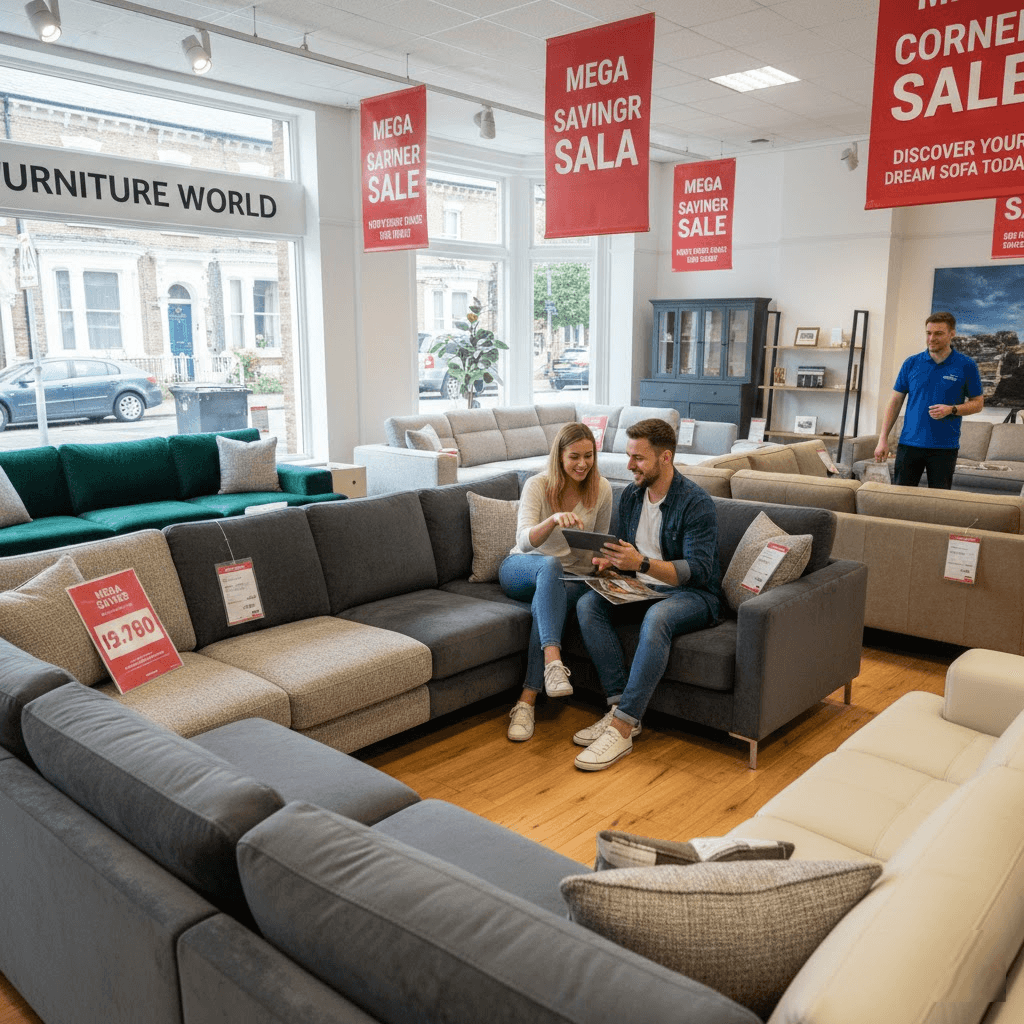
When you are scrolling through a corner sofa sale, you are not just buying seating; you are buying a lifestyle upgrade. You are purchasing the ability to sprawl out fully on a Sunday afternoon. You are buying the capacity to seat the whole extended family for a cup of tea without dragging in dining chairs from the kitchen. It is a communal hub, and getting it right requires a blend of aesthetic appreciation and ruthless practical measurement.
The Golden Rule: Measure Twice, Buy Once
The most common tragedy in the furniture world is the “delivery day pivot.” This is the heartbreaking moment the delivery team tilts their heads, sucks their teeth, and declares that the sofa simply won’t go round the bend in the hallway. When buying during a sale, return policies can sometimes be stricter, or restocking fees might apply, making accuracy non-negotiable.
You must measure more than just the wall where the sofa will live. You need to map the entire journey from the delivery van to the living room. This includes the height and width of the front door, the narrowest point of your hallway, and the angle of any internal doors. If you live in a flat with a lift, measure the lift. If you have a winding staircase, measure the clearance height.
Furthermore, understanding the orientation is critical. In the trade, you will see terms like “Left-Hand Facing” (LHF) and “Right-Hand Facing” (RHF). This refers to the position of the longer section or the chaise arm as you stand in front of the sofa looking at it, not as you sit on it. Buying the wrong orientation in a rush because it was 50% off is a disaster that will ruin the flow of your room forever.
Pro Tip: Before you commit to a purchase, use masking tape or old newspapers to map out the exact footprint of the sofa on your living room floor. This allows you to physically see how much space it takes up and ensures you can still walk around it comfortably.
Decoding the Price Tag: What is a Real Bargain?
Not all sales are created equal. In the furniture industry, there are genuine clearances and then there are “perpetual sales.” Being able to distinguish between the two will ensure you are getting quality for your money.
- End of Line Clearance: These are often the gold standard of sales. A retailer is discontinuing a specific fabric or a model design to make way for new stock. You can pick up high-end, luxury frames for a fraction of the cost. The catch? You usually cannot customise it. What you see is what you get.
- Ex-Display Models: If you are shopping in-store, ask about the floor models. These have been sat on by hundreds of people, yes, but they have also been vacuumed daily and are usually “broken in” nicely. Inspect them closely for scuffs or sun fading, but don’t be afraid to negotiate even further on the sticker price.
- Seasonal Sales: These are the big programmed events (January Sales, Bank Holidays). Manufacturers often produce specific “sale models” for these times. Be wary here; sometimes (though not always) the specifications on these promotional models are slightly lower—perhaps a lower density foam or a different grade of leather—to hit that attractive price point. Always check the specs.
Fabric vs. Leather: The Material Battle
When browsing a corner sofa sale, the material choice will dictate the longevity of your purchase. It is easy to be seduced by a stunning blush pink velvet number that is heavily discounted, but if you have two muddy Labradors and a toddler, that velvet will be a source of constant anxiety.
The Case for Fabric
Fabric corner sofas offer the widest range of textures and warmth. In the UK, where winters can be grey and chilly, a tactile fabric like chenille, boucle, or a soft weave adds immediate “cosiness.”
Velvet is having a massive resurgence. It is luxurious, reflects light beautifully, and creates a sense of opulence. Modern performance velvets are surprisingly durable and stain-resistant, but they still require regular brushing to prevent “crushing” of the pile.
Wovens and Linens offer a more relaxed, Scandi or farmhouse look. They breathe well in summer but can be susceptible to snagging if you have cats with sharp claws.
The Case for Leather
Leather is the pragmatist’s choice, but that doesn’t mean it lacks style. A tan leather corner sofa ages like a fine wine, developing a patina that tells the story of the home. It is hypoallergenic (great for dust mite sufferers) and easy to wipe down.
However, beware of “Faux Leather” or “Bonded Leather” in sales. While cheap, these materials can peel and crack within a few years. If the budget allows, always aim for “Full Grain” or “Top Grain” leather, even if it means waiting for a slightly deeper discount.
Modular Flexibility: The Future-Proof Choice
One of the smartest investments you can make during a sale is a modular corner sofa. Unlike a static L-shape that is bolted together, modular sofas come in individual sections—corner units, armless chairs, and footstools—that can be rearranged.
Why is this vital? Because life changes. You might move house, and suddenly your left-hand facing sofa needs to be a right-hand facing one. With a modular set, you simply swap the pieces around. You can even break the sofa apart to create separate seating areas for a party. If you are renting or planning to move in the next few years, prioritizing a modular design in a sale is a strategic move that saves you buying a new sofa later.
Hidden Features to Look For
A sofa is a large object that takes up significant real estate, so it should work hard for its keep. Modern designs often incorporate hidden functionality that can transform your living experience. When comparing sale items, look for these value-add features:
- Storage Ottomans: Many corner sofas come with a chaotic-end chaise that lifts up to reveal storage. This is a godsend for storing winter blankets, board games, or the guest bedding.
- Sofa Bed Mechanisms: The “corner sofa bed” is the ultimate multi-tasker. It turns your lounge into a guest room in seconds. Look for “easy-open” mechanisms that don’t require wrestling with heavy metal frames.
- Reclining Actions: Electric or manual recliners built into the sofa ends are becoming standard. However, check the “wall clearance.” Some recliners need the sofa to be pulled away from the wall to function, which eats into your floor space. “Zero wall” recliners are the superior choice for smaller rooms.
Colour Psychology in the Living Room
The sale rail is often populated by colours that were either too bold for the masses or too safe. Don’t be afraid of the bold choices. A deep emerald green or a midnight blue corner sofa can anchor a room and look incredibly sophisticated. These darker shades are also more forgiving of stains than the popular greys and creams.
If you do opt for a neutral grey or beige because it is on a fantastic offer, remember that you can change the entire personality of the sofa with accessories. A £50 spend on new scatter cushions and a throw can make a clearance sofa look like a bespoke designer piece. The money you save on the sale price can be reinvested in high-quality textiles to dress it up.
Financing and Delivery: Reading the Fine Print
The final hurdle in the corner sofa sale marathon is the checkout. Many UK retailers offer interest-free credit (0% finance), which can make a higher-quality sofa affordable by spreading the cost over 12 or 24 months. This is often a better strategy than paying cash for a cheap, poor-quality sofa that will need replacing in two years.
However, pay close attention to lead times. “In Stock” means it is in a warehouse and could be with you in a week. “Made to Order” means the manufacturer will start building it once you pay, which could take 12 to 16 weeks. If you are buying for Christmas in November, a made-to-order sofa is a risky gamble. Always check the estimated delivery date before inputting your card details.
The Sustainability Angle
Finally, a word on conscious consumption. The “fast furniture” culture contributes significantly to landfill. When browsing a sale, try to research the construction of the sofa. Hardwood frames (like beech or birch) are infinitely more durable than softwoods or particleboard. Sprung bases last longer than webbing.
Buying a better quality sofa at a discounted price is more sustainable than buying a cheap sofa at full price. It lasts longer, retains its shape, and keeps waste out of the system. Some UK retailers also offer recycling schemes where they will take your old sofa away to be responsibly recycled for a small fee—a service well worth utilizing to save yourself a trip to the local tip.
Conclusion
A corner sofa sale is an opportunity to redefine your home’s comfort and style, but it demands a cool head. Don’t let the flashing countdown timers pressure you into a purchase that doesn’t fit your space or your life. Measure your room, tape out the floor, consider the practical needs of your household (pets, kids, guests), and choose a material that balances beauty with durability.
When you find that perfect L-shaped haven—the one that fits snugly into the alcove, hides the spare duvet in its chaise, and feels like a cloud after a long day at work—the satisfaction of getting it at a discount makes the comfort even sweeter. Happy hunting.