 savingsspot.co.uk
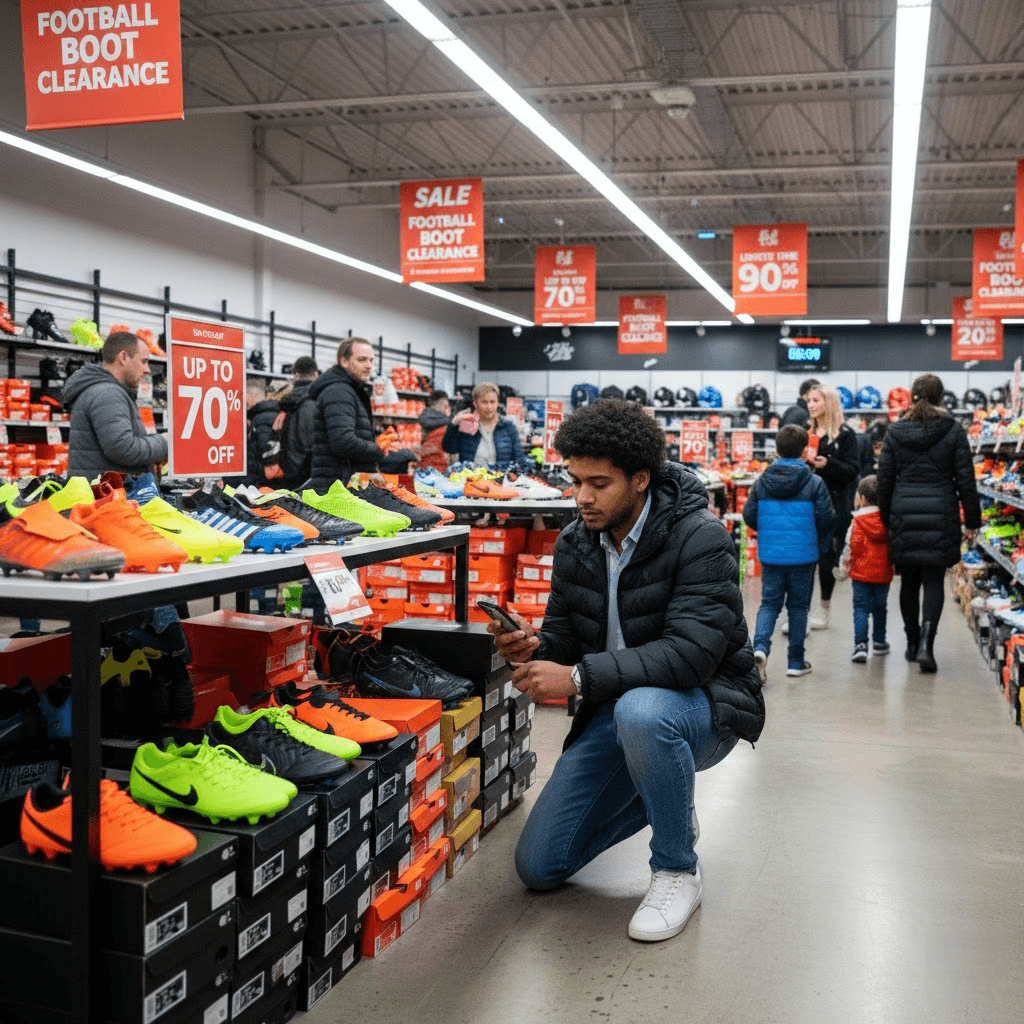
 For any player in the United Kingdom, from the muddy Sunday League pitches of Hackney Marshes to the pristine 4G surfaces of professional academies, the cost of the beautiful game has been steadily climbing. The days when a decent pair of boots cost forty quid are a distant memory. Today, elite-level footwear frequently breaks the £250 barrier, transforming what used to be a standard seasonal purchase into a significant investment. This is why the hunt for a genuine football boots sale has become as competitive as the matches themselves.
Navigating the clearance aisles—whether digital or on the high street—is an art form. It is not merely about finding the lowest price tag; it is about securing the right technology, the correct soleplate for our unpredictable British weather, and a fit that won’t leave you limping off ten minutes after kickoff. Buying cheap is easy; buying smart requires a bit more tactical knowledge.
Understanding the “Tier” System Before You Buy
One of the most common mistakes players make during a football boots sale is being seduced by a brand name without understanding the model tier. Manufacturers like Nike, Adidas, and Puma release their silos (e.g., Mercurial, Predator, Future) in tiers. Visually, they often look identical to the untrained eye, which is by design. However, the performance difference is massive.
When you see a pair of boots slashed from £80 to £40, you might think you are getting a steal. But if those boots are the entry-level “Club” or “Academy” versions, you are paying for basic synthetic materials with zero technology. Conversely, finding a “Pro” or “Elite” model discounted from £200 to £100 represents genuine value.
- Elite / + (Top Tier): These are what the Premier League stars wear. They feature the lightest materials, carbon fibre soleplates, and premium treatments like ACC (All Conditions Control). In a sale, these are the gold dust items.
- Pro (Second Tier): This is arguably the sweet spot for the amateur player. You often get 80% of the tech found in the Elite version—better leather, high-quality knit, and decent heel counters—but at a significantly lower price point. Snapping these up in a sale offers the best price-to-performance ratio.
- Academy / Team (Third Tier): Good for growing kids or casual 5-a-side. They are durable but lack the touch and responsiveness of higher tiers.
- Club (Entry Tier): Basic protection. Usually thick synthetic materials. Unless the budget is extremely tight, experienced players should try to aim higher, even on clearance.
The Seasonal Cycle: Timing Your Attack
Retailers in the UK operate on specific cycles. Understanding these can help you predict when a football boots sale is about to drop. The biggest discounts rarely happen randomly.
The “Pack” mentality drives prices. Brands release “packs”—new colourways of existing boots—roughly every three months. When the “Winter Pack” arrives, the “Autumn Pack” immediately becomes old news. The technology hasn’t changed; the studs are the same; the fit is identical. The only difference is the colour. If you aren’t fussy about wearing neon yellow instead of electric blue, you can save upwards of 30% just by purchasing the previous season’s colourway.
Furthermore, the end of the domestic season (May/June) is prime time for clearance. Retailers need to clear warehouse space for the incoming pre-season stock. This is when you will find the widest range of sizes available at discounted rates. Conversely, January sales can be hit-or-miss; while the prices are low, popular sizes (UK 8-10) are often the first to vanish post-Christmas.
The Critical Importance of Soleplates in the UK
Buying from a sale can lead to impulse purchases where players ignore the soleplate type just to grab a bargain. In the UK, this is a recipe for injury or poor performance.
We live on an island where it rains for a significant portion of the year. If you buy a pair of Firm Ground (FG) boots because they were 50% off, but you play on a boggy pitch in November, you will spend the match slipping over. No amount of money saved is worth a groin strain.
Soft Ground (SG) Bargains
Soft Ground boots, characterized by their longer, metal studs (often interchangeable), are essential for winter football in Britain. Interestingly, these often hit the sale rail harder in the summer months. Buying your winter boots in July might feel counter-intuitive, but that is when retailers are desperate to shift them. You can pick up pro-level SG boots for a fraction of the price if you buy out of season.
The Artificial Grass (AG) Trap
With the rise of 3G and 4G pitches across the UK, players need to be careful. Many sales are populated with FG boots. Wearing FG blades on artificial turf is dangerous; the traction is too aggressive, leading to knee ligament injuries because the foot gets “stuck” in the turf while the knee rotates. When browsing a football boots sale, filter specifically for AG or MG (Multi-Ground) plates if you play on plastic pitches. Do not compromise on safety for a discount.
Material Matters: Leather vs. Synthetic vs. Knit
When high-end boots go on sale, you have the luxury of choice regarding materials. However, how these materials age on the shelf or fit after breaking in varies.
Leather Boots: Classics like the Puma King or the Mizuno Morelia utilize K-leather or high-quality calfskin. If you find these on sale, remember that leather stretches. If the boot feels comfortably loose in the shop, it will be too big after three matches. A leather boot on sale should feel tight (but not painful) when you first try it on. It will mould to your foot.
Synthetic and Knit: Modern speed boots (like the Mercurial) or control boots (like the Predator) use knitted uppers coated in synthetic skins. These do not stretch much. The size you buy is the size they stay. If you are buying online from a sale, be wary of “unisex” sizing or narrow fits. Brands like Nike tend to run narrower, whereas New Balance and Puma can be more accommodating for wider feet. A cheap boot that gives you blisters is a waste of money.
The “Pro-Direct” Effect and Where to Look
In the UK, the landscape of buying boots has shifted online. Giants like Pro:Direct Soccer, Lovell Soccer, and Sports Direct dominate the market. However, the savvy shopper looks beyond the obvious.
Outlet Stores: Physical outlet villages (like those in Cheshire Oaks, Bicester, or Wembley) often hold stock that never made it to the main website. You can find “B-grade” stock here too—boots with minor cosmetic blemishes that do not affect performance but are sold at heavily reduced rates.
End of Line Sports Shops: Don’t ignore smaller, independent sports shops. They may not have the marketing budget of the big chains, but they often have old stock sitting on shelves for years. You might stumble upon a pair of classic Adidas F50s or Nike T90s gathering dust at their original price—which, compared to today’s inflation, is a bargain in itself.
The Hidden Gem: The “Takedown” Models Done Right
Sometimes the best sale item isn’t an Elite boot reduced, but a mid-tier boot that punches above its weight. Brands occasionally drop a “takedown” model that is virtually indistinguishable from the top tier.
For example, the Nike Premier is a standalone silo. It isn’t a “takedown” of a more expensive boot, but it is priced like one (usually around £90-£100 full price, often £60 in a sale). It offers premium Kangaroo leather and a classic esthetic. It is widely regarded as the best value-for-money boot on the market. Spotting these consistent performers in a sale is often a smarter move than buying a discounted flashy speed boot that will fall apart in six months.
Pitfalls to Avoid in the Clearance Section
The psychology of a sale is powerful. The countdown timers and “low stock” warnings are designed to make you panic buy. Here are the traps to avoid:
- The “Growth Room” Myth: Parents often buy sale boots a size too big for their children to “grow into.” In football, this is detrimental. A loose boot affects touch, shooting accuracy, and stability. It increases the risk of tripping. If the right size isn’t in the sale, don’t buy the wrong size just to save £20.
- The Sock Collar Fad: High-collared boots (the “sock” look) are popular, but they are often difficult to put on. In clearance sales, you often see these returned because players couldn’t get their feet in. If you have wide feet or high arches, stick to a traditional low-cut boot with a detached tongue, which allows for easier entry and adjustability.
- Checking the Return Policy: Clearance items often come with stricter return policies. Some retailers will not offer a cash refund on sale items, only store credit. Always check the small print before checking out, especially if you are unsure about the sizing.
Caring for Your Bargain
Once you have secured a victory in the football boots sale, longevity becomes the goal. Cheap boots can last just as long as expensive ones if treated right, and expensive boots bought cheap can be ruined in weeks if neglected.
The biggest killer of football boots in the UK is the practice of leaving them in the boot bag after a game. Wet, muddy boots left in a plastic bag will rot. The stitching weakens, and the soleplate can separate from the upper. Even if you paid £30 for them, take them out, bang the mud off, and let them air dry naturally (never on a radiator, which cracks the synthetic and dries out the leather). Stuffing them with newspaper helps absorb internal moisture and keeps the shape.
The Rise of the “Mystery Boot” Box
A recent trend in the UK market is the “Mystery Boot” box. Companies buy surplus stock—often high-end boots—and sell them at a fixed, low price, but you don’t know what you are getting until you open the box. While this is technically a sale, it is a gamble. It is an exciting option for players who aren’t tied to a specific brand or colour, but for those with specific orthotic needs or wide feet, it is a risk best avoided. However, for a backup pair, it can be a cost-effective way to get an Elite tier boot.
Conclusion: The Smart Player Wins
Ultimately, a successful raid on a football boots sale is about preparation. It requires knowing your size across different brands, understanding the difference between a “Club” and an “Elite” tag, and being patient enough to wait for the colourway refresh. It is about refusing to compromise on the soleplate for the sake of a discount.
The market is flooded with options, but the gems are there for those who look. Whether you are a tricky winger needing a lightweight speed boot or a no-nonsense centre-back needing sturdy leather studs, the perfect deal exists. By applying these tactics, you ensure that the only thing you leave on the pitch is your best performance, not your hard-earned cash.