 savingsspot.co.uk
 There is a specific rhythm to a Friday night in the United Kingdom. The work week fades, the kettle boils for a final cup of tea before the wine is opened, and the inevitable question arises: “What are we eating?” For millions of households, from busy London flats to quiet cottages in the Cotswolds, the answer is often a piping hot pepperoni passion or a texas bbq. However, seasoned takeaway enthusiasts know a secret truth. The menu price is rarely the real price. Paying full price for pizza is almost a voluntary tax on the uninitiated. The true currency of the weekend feast is the elusive, yet powerful, domino’s discount code.
Navigating the world of pizza vouchers isn’t just about saving a few pounds; it is a strategic game. It turns an expensive treat into an affordable weekly ritual. This guide dives deep into the mechanics of takeaway economics, exploring how to find, apply, and maximise discounts across the UK franchise network. We aren’t just looking for a quick fix; we are looking at the philosophy of the “smart order.”
The Psychology of Pizza Pricing
To understand why a domino’s discount code is so essential, one must first understand the pricing model of major pizza chains in the UK. Unlike your local chippy, where the price of cod and chips is relatively static, the price of a large pizza is fluid. It fluctuates based on time, method of acquisition (delivery vs. collection), and basket composition.
The “menu price” acts as an anchor. When you see a large pizza listed for over £20, it sets a high perceived value. When a voucher drops that price by 50%, the consumer feels a rush of victory. You haven’t just bought dinner; you’ve “beaten” the system. This is dynamic pricing in action. The chains know that some customers—perhaps those ordering late after a night out—will pay the full anchor price. But to capture the price-conscious families and students, they rely on the discount ecosystem.
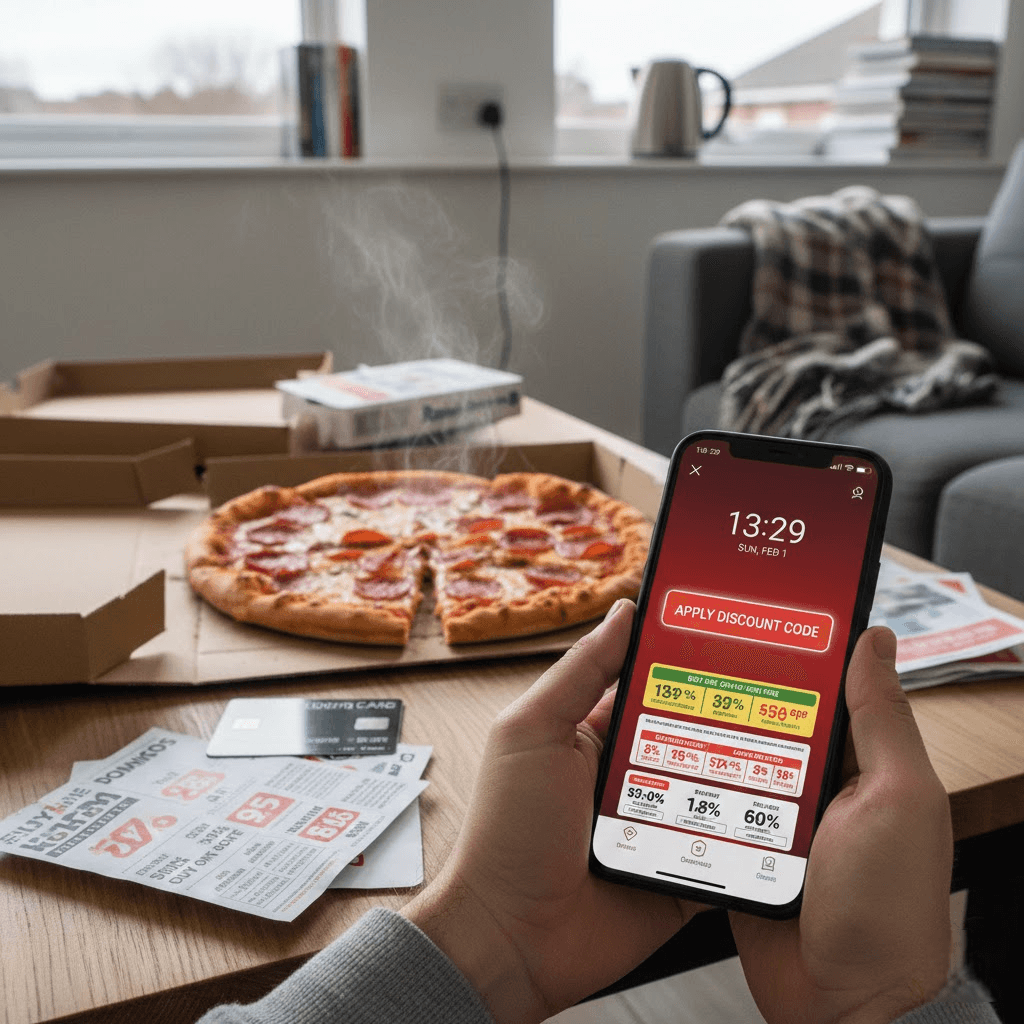
Therefore, searching for a code isn’t cheap; it is the intended user behaviour. The business model assumes a significant portion of orders will be discounted. If you aren’t using a code, you are effectively subsidising the meal of the person who is.
Decoding the Franchise Network
One of the most frustrating experiences for UK pizza lovers is finding a fantastic code—perhaps “50% off orders over £30″—only to enter it at checkout and see the dreaded “invalid for this store” message. To troubleshoot this, you have to understand the franchise structure.
Domino’s in the UK is largely a network of franchisees. While there is a corporate head office running national campaigns (like the ubiquitous Two for Tuesday), individual stores are owned by local business people who pay fees to the brand. These franchise owners have margins to protect. A store in central Manchester with high rent and wages might not be able to honour the same aggressive discount code as a store in a rural town with lower overheads.
This is why you will often find “local” codes on paper flyers posted through your letterbox. These are gold dust. They are generated specifically for your local branch and are almost guaranteed to work. While digital aggregators are useful, never throw away the physical menu that comes through the door without scanning it for a unique string of characters. That paper slip often holds a better deal than anything you will find on Google.
The Hierarchy of Discounts
Not all vouchers are created equal. When hunting for a domino’s discount code, you need to categorise them to know which one fits your current hunger level. Generally, they fall into three distinct tiers:
1. The Percentage Slash
These are the most flexible codes, usually offering 30%, 40%, or 50% off. The caveat? They almost always apply to “pizza only” or require a minimum spend.
Best for: Large orders where you are buying multiple pizzas. 50% off a £60 order saves you £30, which is significant.
Watch out for: The exclusion of sides, drinks, and ice cream. If you load your basket with chicken strippers and cookies, the discount won’t touch those items, and your bill might remain surprisingly high.
2. The Fixed Price Bundle
Examples include “Any Large Pizza, Side, and Drink for £19.99.”
Best for: Solo diners or couples. When you don’t hit the minimum spend for a percentage discount, the bundle is king. It simplifies the maths and prevents you from over-ordering just to unlock a deal.
3. The ‘Buy One Get One’ (BOGOF)
The classic. Buy one, get one free.
Best for: Even numbers of people. It is essentially a 50% discount, provided the pizzas are of equal value.
The Trap: If you want a Mighty Meaty and your partner wants a simple Margherita, you pay for the expensive one. To maximise this, always try to pair pizzas of similar price points.
The ‘Two for Tuesday’ Phenomenon
In the pantheon of UK takeaway culture, “Two for Tuesday” sits alongside “Fish and Chip Friday.” It is a national institution. However, is it always the best use of your money?
Strictly speaking, Two for Tuesday is a BOGOF deal valid only on that specific day. It is excellent for office lunches or mid-week family treats. However, because it is a “hard-coded” automatic offer, it often blocks the use of other discount codes. You usually cannot stack a “free side” voucher on top of a Tuesday deal.
Pro Tip: Check the collection offers on a Tuesday. Sometimes, the “collection special” price is so low that buying two pizzas via collection is actually cheaper than the Two for Tuesday delivery price. Always compare the basket total before hitting pay.
The Art of the ‘Collection’ Deal
If you have a car, or live within walking distance of a branch, delivery is a luxury you should reconsider. The “Collection Perfection” or simply “Collection Deal” is often the most aggressive discount available, and it rarely requires a typed code—it’s usually a button on the ‘Deals’ tab.
Why is it so cheap? Delivery is expensive for the franchisee. They have to pay the driver, insure the vehicle, and pay for petrol. When you walk in to collect, you save them all those costs. They pass these savings back to you. It is not uncommon to see a large pizza priced at £22.99 for delivery available for £9.99 or £11.99 if you collect. That is a massive saving that no standard domino’s discount code can usually match.
Furthermore, collection eliminates the “delivery fee” which has crept into the UK market in recent years. A £2 delivery fee plus a driver tip can add £5 to your order before you’ve even eaten a slice. Collecting bypasses this entirely.
Student and NHS Discounts: The Verify Gatekeepers
For specific demographics in the UK, the codes are evergreen. Students and NHS staff (via the Blue Light Card) often have access to persistent discounts, typically ranging from 30% to 50%.
For Students: The days of flashing a physical NUS card at the driver are mostly gone. Now, verification is digital, often handled through third-party portals like Student Beans or UNiDAYS. These platforms generate a unique, one-time-use domino’s discount code for your session. The advantage here is consistency. You don’t have to scour the web; you just log in and generate.
For NHS Staff: The Blue Light Card discount is a thank you to emergency services. Similar to the student route, this usually requires logging into the Blue Light app to get a code. However, some local franchises are very generous and will accept a physical ID badge at the door for a collection discount, sometimes superior to the national online offer. It is always worth asking the staff at your local counter: “Do you do an NHS rate?”
The “Create Your Own” Loophole
Sometimes, the best way to save isn’t a code, but menu manipulation. The “Speciality” pizzas (like the Meateor or the Vegi Supreme) carry a premium price tag. However, the “Create Your Own” option often starts at a lower base price.
If your favourite pizza only has three toppings, check the price of a “Create Your Own” with those exact three toppings. It can sometimes come out cheaper than the pre-set menu item, especially if you are using a code that applies to the base price. Furthermore, this prevents you from paying for toppings you pick off anyway. If you hate mushrooms but love the rest of the Vegi Supreme, building it from scratch without mushrooms saves waste and potentially money.
Troubleshooting: Why Your Code Won’t Work
There is nothing more deflationary than the “Computer Says No” moment at checkout. If your domino’s discount code is being rejected, run through this checklist:
- The Minimum Spend Cap: This is the most common culprit. A code might say “50% off orders over £40”. If your basket is £39.99, it won’t work. Adding a singular garlic dip might push you over the threshold and actually reduce your total bill. This is one of the few times buying more costs less.
- The Ice Cream Exclusion: As mentioned, many codes apply to “Main Menu items” or “Pizza” only. Ben & Jerry’s tubs are often excluded from discount calculations because the markup on them is lower for the store.
- The “Deal Stacking” Rule: You cannot use a discount code on an item that is already on a deal. If you have selected a “Lunch Bundle” from the menu, you cannot then apply a 20% off voucher to the whole basket. The system forces you to choose one or the other.
- Postcode Lottery: You may have found a code on a forum intended for a store in Leeds, but you are ordering in Southampton. If the franchise owner is different, the code is void. Look for “National” codes or verify your local store’s specific offers.
The Rise of the App-Exclusive Deal
In the digital age, data is king. Domino’s wants you on their app because it allows them to send push notifications and track your ordering habits. To incentivise this, they often release app-exclusive deals that do not appear on the desktop website.
If you are struggling to find a code on your laptop, download the app. You might find a “App Only” banner offering a free side or a better percentage discount. Additionally, the app often has a “bot” or “wizard” feature that automatically tries to apply the best deal to your current basket. It’s not infallible, but it can save you the headache of manual searching.
Timing Your Order for Maximum Value
Pizza demand is elastic. It peaks on Friday and Saturday nights and during major sporting events (like the World Cup or Premier League matches). During these times, dynamic pricing might mean fewer aggressive codes are available because the demand is naturally there.
Conversely, “dead times” are ripe for bargains. Monday lunchtimes or mid-afternoon slumps often see “Happy Hour” style emails sent out to registered users. If you are flexible about when you eat, ordering at 5:00 PM might unlock a different tier of savings compared to ordering at 7:30 PM. Furthermore, pre-ordering early in the day can sometimes lock in a deal that might expire or be retracted later during a rush.
Ethical Code Hunting
While we all love a bargain, there is a grey area in code hunting—using codes that clearly aren’t meant for you. There have been instances of corporate codes (intended for huge office orders of 50+ pizzas) leaking online. While these might work initially, stores can and do cancel orders if they suspect misuse. If you order 10 pizzas using a code meant for a specific charity event, don’t be surprised if the manager calls you for verification.
Stick to public domain codes, student portals, and flyer codes. They are plentiful enough that you shouldn’t need to game the system to that extent.
The Side Dish Strategy
Finally, a word on sides. Potato wedges, chicken strippers, and garlic pizza bread are high-margin items for the chain. Often, a domino’s discount code will lure you in with cheap pizza, but you end up spending £20 on sides at full price.
Be disciplined. If the code is “50% off Pizza”, stick to pizza. If you are craving chicken, look for a “Bundle” deal that includes sides. Alternatively, supermarkets in the UK now sell very convincing “takeaway style” garlic breads and chicken sides for a fraction of the price. If you are ordering delivery, you have 30 minutes to heat up a supermarket garlic bread in your own oven while you wait. It’s a hybrid strategy that protects your wallet.
Conclusion: The Savvy Eater’s Mindset
Ordering a Domino’s in the UK is a treat, but it shouldn’t be a financial burden. The landscape of discounts is vast, ranging from the trusty “Two for Tuesday” to the hyper-local flyer sitting on your doormat. By understanding the franchise model, respecting the terms of the deal, and knowing when to collect rather than click for delivery, you can ensure that every slice tastes just a little bit better knowing you paid the right price.
Next time hunger strikes, don’t just hit “Re-order” on your last full-price meal. Take five minutes. Check the app, check your wallet for old receipts, and search for that valid domino’s discount code. The savings, over the course of a year, could literally pay for your next holiday. Bon appétit.