 savingsspot.co.uk
 There is a distinct thrill in upgrading the centrepiece of the British living room. The television has evolved from a simple box broadcasting four channels to a sophisticated portal of global entertainment, gaming, and home automation. However, walking into a high street retailer or scrolling through an online store during a major TV sale can feel less like a shopping trip and more like an exam in advanced electronics. With acronyms like OLED, QLED, VRR, and HDMI 2.1 flying around, the fear of making an expensive mistake is real.
Finding a genuine bargain isn’t just about spotting the biggest red discount sticker. It is about understanding where the value lies, decoding the lifecycle of technology, and knowing when a “cheap” TV is actually a poor investment. This deep dive into the mechanics of the TV market will arm you with the knowledge to navigate the next sale with the confidence of a tech expert, ensuring your hard-earned pounds secure a screen that will delight you for years to come.
The Psychology of the Discount: When to Buy
The first rule of mastering a TV sale is timing. Unlike pint of milk, the price of consumer electronics fluctuates based on a predictable, cyclical calendar. Retailers in the UK operate on specific schedules driven by manufacturing cycles and cultural events. Understanding this rhythm is the difference between saving fifty quid and saving five hundred.
The Spring Shuffle: Most major manufacturers—Samsung, LG, Sony, Panasonic—announce their new lineups at trade shows in January (CES). However, these new models don’t typically hit UK shelves until April or May. This creates a golden window in March and April. Retailers are desperate to clear floor space for the incoming stock. This is often the absolute best time to buy a high-end model from the previous year. The “old” model is usually only incrementally different from the new one, yet the price can be slashed by 40% or more.
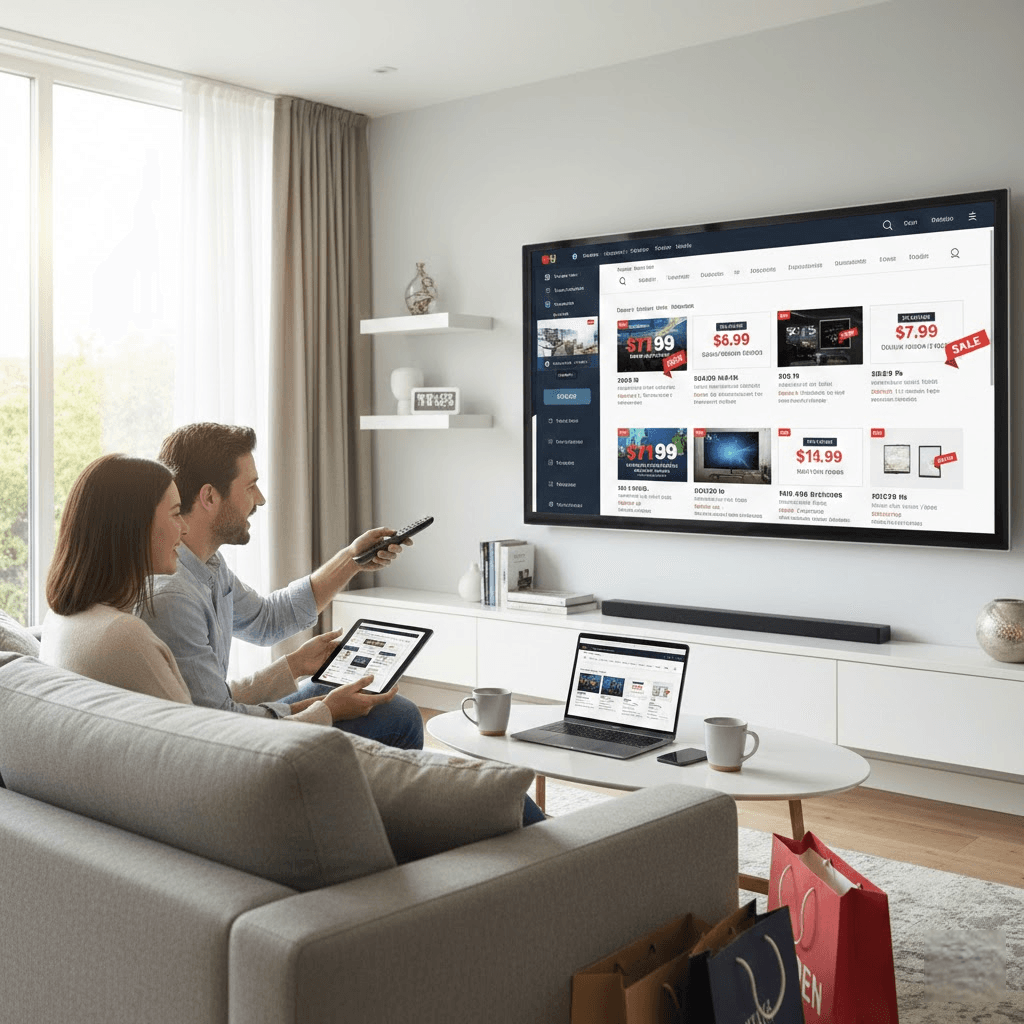
Black Friday and Cyber Monday: While this American import has taken over British retail, a word of caution is necessary. Black Friday is excellent for volume. You will see incredible prices on mid-range and budget sets. However, some manufacturers produce specific “holiday derivatives”—TVs made specifically for these sales with slightly lower specifications (fewer HDMI ports, plastic rather than metal stands) to hit a low price point. Always check the model number carefully. If it looks slightly different from the standard model number (e.g., a “UE50AU7000” vs a “UE50AU7100”), investigate why.
Major Sporting Events: In the UK, football drives panel sales. In years featuring a World Cup or the Euros, retailers will push aggressive marketing campaigns in late May and June. These sales often focus on larger screens—55 inches and above—under the premise of “bringing the stadium home.” If you are looking for a massive screen, this is often a better time to buy than Christmas.
Deciphering the Panel Alphabet
When browsing a TV sale, the most significant differentiator in price is the panel technology. This is where the visual magic happens, and understanding the hierarchy is essential.
LED and LCD: The Standard Bearers
At the entry and mid-level price points, you are looking at standard LED LCD TVs. These use a backlight to illuminate pixels. They are reliable, bright, and affordable. In a sale, these can drop to incredibly low prices. They are perfect for kitchens, spare bedrooms, or for viewers who primarily watch news and daytime television. However, they often struggle with “blacks”—dark scenes can look grey or washed out because the backlight can’t shut off completely.
QLED and Mini-LED: The Brightness Kings
Popularised by Samsung and now used by TCL and Hisense, QLED (Quantum Dot LED) adds a layer of quantum dots to boost colour and brightness. If you have a bright living room with lots of windows, a QLED is often a better buy than an OLED. They can push out massive amounts of light, making HDR content pop even in midday sun. Mini-LED takes this further by using thousands of tiny LEDs for the backlight, offering much better contrast control. In a sale, finding a Mini-LED at a QLED price is a massive win.
OLED: The Cinematic Choice
For movie buffs and drama lovers, OLED (Organic Light Emitting Diode) remains the gold standard. Each pixel generates its own light and can turn off completely. This results in “infinite contrast”—black is truly black. This makes colours look incredibly vibrant. LG and Sony are the heavy hitters here. The downside? They are generally not as bright as QLEDs and can be more expensive. However, during sales events, previous-generation OLEDs (like the LG C-series) are among the most sought-after items. If you watch primarily in the evenings, an OLED is usually the superior choice.
Resolution and Processing: The Hidden Engine
You will struggle to find a TV in a sale nowadays that isn’t 4K. 4K has become the standard resolution, offering four times the detail of the old HD sets. But if all TVs are 4K, why does a £400 4K TV look worse than a £1,500 4K TV? The answer lies in the processor.
Think of the processor as the TV’s brain. Most of what you watch—broadcast TV via Freeview, older streaming content, or DVDs—is not 4K. The TV has to “upscale” this lower-resolution footage to fit the 4K screen. A cheap processor will do a messy job, resulting in blurry, blocky images with “noise” around the edges of objects. A premium processor (often boasting AI capabilities) analyses the image and intelligently fills in the missing detail.
When looking at sale specifications, ignore “8K”. Unless you have money to burn and a screen size over 75 inches, 8K is currently redundant. There is almost no native 8K content available, and the upscaling required is demanding. Stick to a high-quality 4K panel.
The HDR Jungle
High Dynamic Range (HDR) is a term plastered over every box in a TV sale. It refers to the TV’s ability to display a wider range of colours and greater contrast between the lightest and darkest parts of the image. However, not all HDR is created equal.
- HDR10: The basic standard. Every HDR TV supports this. It is static, meaning it sets one brightness level for the whole movie.
- HDR10+: A dynamic format championed by Samsung and Amazon Prime Video. It adjusts the picture frame-by-frame.
- Dolby Vision: The premium dynamic format used by Netflix, Disney+, and Apple TV. It is widely considered the best for cinematic accuracy.
Here is the catch: Samsung TVs do not support Dolby Vision. They only support HDR10+. LG and Sony usually support Dolby Vision. If you are a heavy Netflix user, you might lean towards a set that supports Dolby Vision to get the most out of your subscription.
Gaming Capabilities: More Than Just a Picture
If there is a PlayStation 5 or Xbox Series X in your home, the criteria for a “good deal” changes drastically. Modern consoles require specific features that budget TVs often lack, even if they are 4K.
To get the most out of next-gen gaming, look for HDMI 2.1 ports. These allow for 4K gaming at 120Hz (120 frames per second), which makes gameplay incredibly smooth. Standard TVs typically cap out at 60Hz. Additionally, look for VRR (Variable Refresh Rate). This syncs the TV’s refresh rate with the console, eliminating “screen tearing” where the image looks disjointed during fast motion.
A “cheap” 60Hz TV with no HDMI 2.1 might be fine for Animal Crossing, but it will bottleneck a PS5 playing Call of Duty. In a sale context, checking for “120Hz native panel” is a great way to filter out the low-end sets from the mid-range bargains.
Sound: The Thin TV Compromise
As TVs have become thinner, the space for speakers has vanished. The result is that even £2,000 flagship TVs can sound tinny and weak. Physics is the enemy here; you cannot create deep, resonant bass without air volume.
When budgeting for a TV sale, you must factor in audio. Many retailers in the UK (like Richer Sounds or John Lewis) will offer bundle deals where you can get a soundbar at half price when buying a TV. This is almost always worth it. A £150 soundbar will outperform the built-in speakers of a £3,000 TV. Look for soundbars that support Dolby Atmos, which bounces sound off the ceiling to create a 3D audio effect, immersing you in the action.
Smart Platforms and the UK Viewer
The operating system (OS) determines how easy the TV is to live with. LG uses WebOS (slick, pointer remote), Samsung uses Tizen (feature-rich, integrates with smart homes), and Sony/Philips often use Google TV (huge app selection).
For the UK buyer, one specific logo is essential: Freeview Play. While global apps like Netflix and YouTube are on everything, the UK terrestrial catch-up apps (BBC iPlayer, ITVX, Channel 4, My5) are best integrated through Freeview Play. This allows you to scroll backward in the TV guide to watch shows you missed. Some global versions of TVs imported or sold on grey markets might lack this specific UK integration, forcing you to cast from your phone or buy a separate stick.
However, do not let a bad operating system ruin a great hardware deal. If you find a TV with an incredible picture but a slow, clunky menu system, buy it anyway. You can always plug in a relatively cheap Amazon Fire Stick 4K or Apple TV 4K to bypass the TV’s internal smarts entirely. You are buying the panel; the software is secondary.
Red Flags: How to Spot a “Fake” Deal
Not every price drop is a bargain. Retailers are masters of psychological pricing. Here are the red flags to watch for when the sale banners go up.
The “Was” Price Inflation: You might see a TV listed as “Now £499, Was £899”. Be skeptical. Was it £899 yesterday, or was it £899 for two days six months ago? Use price-tracking tools like CamelCamelCamel (for Amazon) or PriceSpy to see the price history. Often, the TV has been selling for £550 for months, making the £499 deal good, but not the miracle the retailer claims.
The “Series” Trick: Manufacturers release TVs in series. The “7000 series” is usually budget, “8000” mid-range, and “9000” or named series (like QN90 or C3) are high end. A sale might scream “Samsung 4K TV for £350!” but if it is a 7000-series entry-level model, that is just the standard price, not a special offer. Compare the specs, not just the brand name.
The IPS vs. VA Panel Lottery: Some manufacturers use different panel types in the same model range depending on the size. A 50-inch model might use a VA panel (great contrast, narrow viewing angle), while the 55-inch version of the exact same TV uses an IPS panel (great viewing angles, grey blacks). Reviews often only cover one size. If you are extremely particular about picture quality, check enthusiast forums to confirm the panel type for the specific size you are buying.
Size and Placement: The Practical Realities
It is easy to get carried away in the showroom or by the thumbnail image. A 75-inch screen looks majestic in a warehouse store, but it can be oppressive in a standard British terraced house living room. There is such a thing as “too big.”
If you sit too close to a massive screen, you will start to see the individual pixels (even in 4K), and you may suffer from eye strain as you physically have to move your head to see the corners of the screen. A general rule of thumb for 4K is that the ideal viewing distance is 1.2 to 1.5 times the screen diagonal width. For a 65-inch TV, you want to be sitting about 2.5 to 3 metres away. If you are closer, a high-quality 55-inch OLED will offer a better experience than a budget 65-inch LED.
Warranties and Return Policies
Finally, where you buy matters as much as what you buy. In the UK, consumer rights are robust, but retailer policies vary. John Lewis is famous for including a 5-year guarantee on TVs at no extra cost. This adds significant value. If a TV at John Lewis is £20 more expensive than at a discount warehouse, the 5-year warranty makes John Lewis the cheaper long-term option.
Richer Sounds is another standout, offering a 6-year guarantee to their VIP club members (which is free to join). Amazon has great return policies but standard manufacturer warranties. Currys often pushes paid-for care plans—calculate if the cost of the plan negates the saving on the TV.
Conclusion: The Intelligent Buyer
A TV sale is an opportunity to elevate your home entertainment, but it requires a cool head and a sharp eye. By looking past the marketing jargon and focusing on the core technologies—panel type, processor capability, and refresh rate—you can filter out the noise. Remember that a television is a long-term purchase. You will likely stare at this rectangle of glass for thousands of hours over the next five to seven years.
Spending an extra £100 to move from a budget edge-lit LED to a mid-range QLED or older OLED is pennies per hour of entertainment. Don’t just buy a TV because it is cheap; buy it because it fits your life, your room, and your content. When the stars align—the right timing, the right tech, and the right price—you won’t just be buying a gadget; you’ll be investing in countless movie nights, match days, and gaming sessions to come.