 savingsspot.co.uk
 The search for a reliable vehicle is a rite of passage for almost every driver in the United Kingdom. Whether you have just passed your test and are looking for a nimble hatchback to navigate the high street, or you are a family looking to upgrade to an estate for those rainy holidays in Cornwall, the process usually starts with the same six words typed into a search engine: “used car for sale near me.”
However, typing the phrase is the easy part. Navigating the results—filtering out the gems from the rust buckets, understanding the implications of the ULEZ (Ultra Low Emission Zone) expansion, and ensuring you don’t get taken for a ride on the price—is where the real challenge lies. The British second-hand car market is vast, bustling, and occasionally treacherous. This guide dives deep into how to find, inspect, and purchase a pre-owned vehicle in your local area without losing your cool or your cash.
The Shift to Local: Why Proximity Matters
In an age where we can order almost anything from the other side of the world, there remains a strong preference for buying vehicles locally. When you look for a used car for sale near me, you aren’t just saving on travel time; you are buying a layer of security.
Buying a car from a seller in your local dealership or a private seller a few towns over means you can inspect the vehicle in daylight, perhaps more than once. It means if a warning light pops up on the dashboard three days after purchase, you can drive back to the dealer rather than facing a four-hour motorway trek to resolve the issue. Proximity offers leverage and convenience that nationwide delivery services, for all their gloss and marketing, sometimes struggle to match.
Where to Look: Platforms and Forecourts
The digital age has transformed how we find cars, but the physical forecourt is far from dead. To get the best spread of options, you need to adopt a hybrid approach.
1. The Digital Heavyweights
Most searches begin on the giants of the industry. Auto Trader remains the default king of the UK market. Its filters are granular, allowing you to search by distance from your postcode, specifically targeting that “near me” requirement. However, don’t sleep on eBay Motors or Gumtree. These platforms often host private sellers who might list cars at lower prices to avoid dealer markups. The trade-off is that you have less legal recourse if things go wrong compared to buying from a registered trader.
2. Social Media Marketplaces
Facebook Marketplace has become a hive of activity for cheap runabouts. It is hyper-local by design. You can find a Ford Fiesta or a Vauxhall Corsa just three streets away. However, this is the “Wild West” of car buying. Scams are prevalent, and descriptions can be brief. If you go this route, always view the profile of the seller. Do they look like a real person? Have they sold items before? Caution is your watchword here.
3. Manufacturer Approved Used
If your budget allows, visiting the local franchise dealerships (Ford, BMW, Audi, etc.) for “Approved Used” stock is the safest route. These cars usually come with a 12-month warranty, roadside assistance, and a rigorous multi-point inspection. You pay a premium for this peace of mind, but for many, avoiding the headache of unexpected repairs is worth the extra cost.
The ULEZ and Clean Air Zone Factor
You cannot discuss buying a used car in the UK today without addressing the elephant in the room: Clean Air Zones (CAZ) and the Ultra Low Emission Zone (ULEZ). From London’s expansion to zones in Birmingham, Bristol, Glasgow, and others, where you live dictates what you can drive without paying a daily penalty.
When searching locally, you must verify the Euro status of the engine. Generally, petrol cars registered after 2005 (Euro 4) and diesel cars registered after September 2015 (Euro 6) are compliant. Buying a cheap diesel from 2012 might look like a bargain until you realise it costs £12.50 every day just to drive to the shops. Always run the registration plate through the official TFL or government vehicle checker before booking a viewing.
The V5C and MOT History: The Paper Trail
Before you even look at the paintwork, you must look at the paperwork. A car with a missing V5C (logbook) is a massive red flag. The V5C proves who the registered keeper is. If the seller makes excuses—”It’s in the post,” or “I lost it during the move”—walk away. It can make taxing the vehicle impossible and may indicate the car is stolen or has outstanding finance.
Furthermore, the UK government provides a free, invaluable tool: the MOT history checker. By entering the registration number online, you can see the car’s entire history of passes, fails, and advisories.
- Check for mileage discrepancies: Does the odometer drop from 80,000 miles in 2019 to 50,000 miles in 2020? That is “clocking,” and it is illegal.
- Look for recurring nightmares: If the car failed three years in a row for suspension issues or excessive corrosion, it suggests a vehicle that has been neglected and cheaply patched up rather than properly fixed.
The Physical Inspection: Kick the Tyres (Literally)
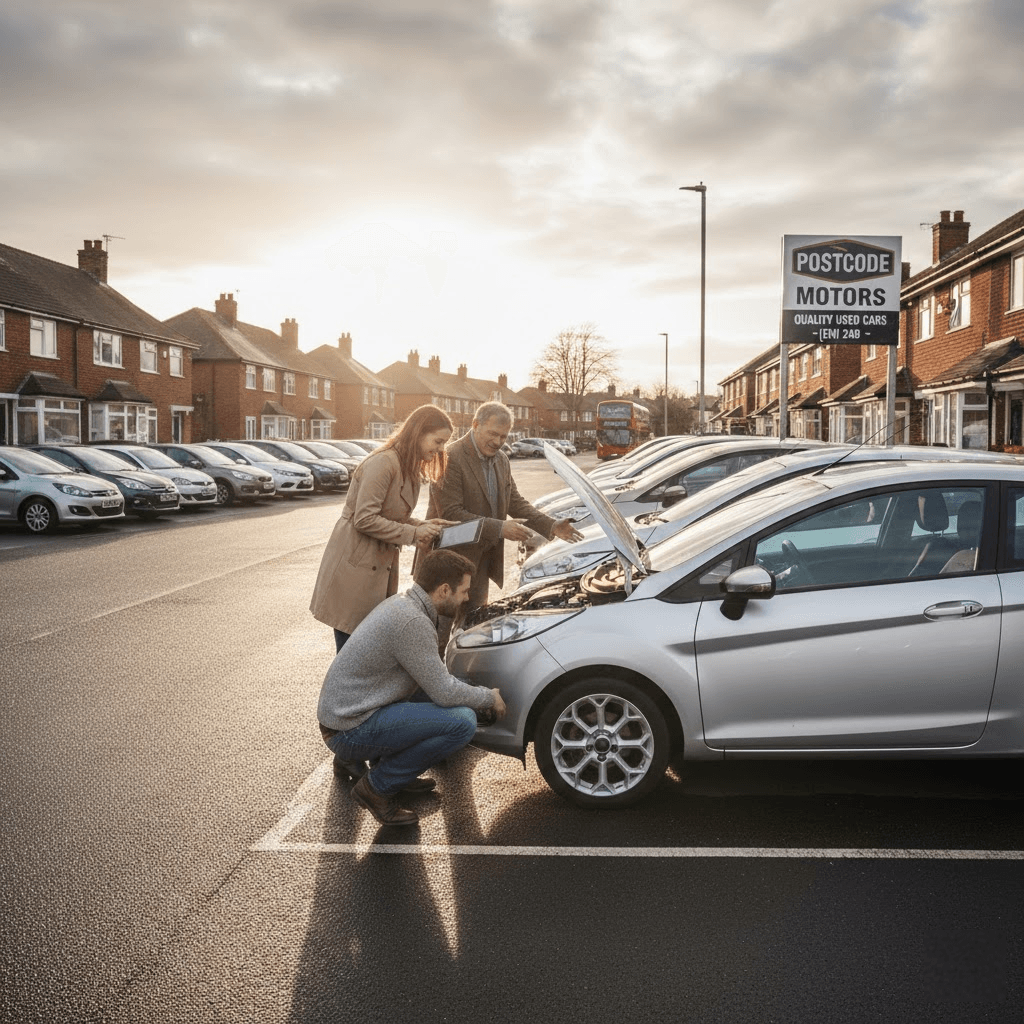
Once you have found a potential candidate nearby and verified the paperwork, it is time for the viewing. Try to take a knowledgeable friend with you; a second pair of eyes is invaluable. Ensure you view the car in dry daylight. Rain hides scratches, and darkness hides everything.
Exterior Checks
Walk around the car. Look at the panel gaps—the spaces between the doors and the body. They should be uniform. If the gap is wide at the top and narrow at the bottom, the car may have been in a crash and poorly repaired. Check the wheel arches and sills for rust. In the UK, salt on the roads during winter is a killer for metal. Bubbling paint is usually the tip of the iceberg.
Inspect the tyres. They are the only contact between you and the road. The legal minimum tread depth is 1.6mm, but you really want to see at least 3mm. Uneven wear on the tyres suggests the tracking is out or the suspension is damaged.
Under the Bonnet
You don’t need to be a mechanic to spot a disaster.
The Oil: Pull out the dipstick. The oil should be golden or dark brown. If it looks like chocolate milkshake or mayonnaise, coolant is mixing with the oil, indicating a blown head gasket—a catastrophic and expensive failure.
The Fluids: Check the coolant tank. It should be pink or green, not brown sludge.
The Start: Ask the seller to start the engine *cold*. Touch the bonnet before they start it to check. A warm engine hides starting issues. Watch the exhaust. Blue smoke means burning oil; white smoke (when the engine is warm) suggests a coolant leak; black smoke indicates a fueling issue.
The Test Drive: Listen and Feel
Never buy a car without driving it. A quick spin around the block isn’t enough. You need a mix of roads if possible—some stop-start town driving and a stretch of dual carriageway.
Turn the radio off. You want to hear the car, not the local radio station. Listen for clunks when going over speed bumps (suspension links) or whining noises when you steer (power steering pump).
Test the clutch. Find a hill, put the car in a high gear, and accelerate. If the revs go up but the car doesn’t speed up, the clutch is slipping. That is a £300 to £1,000 repair bill waiting for you. Test the brakes. On a clear road, check if the car pulls to one side when you brake firmly. It should stop in a straight line.
Negotiation: The British Art of Haggling
British people are notoriously polite, which makes haggling feel awkward. However, the price listed is rarely the final price. Dealers expect a negotiation. Private sellers build a “wiggle room” buffer into their asking price.
Do your homework. If you found the car by searching “used car for sale near me,” look at other similar cars in a 50-mile radius. If this one is £500 more expensive than a similar one in the next town, mention it. Use the flaws you found during your inspection as bargaining chips. “I like the car, but the rear tyres are close to the limit and will need replacing soon. I’ll need to factor that into my offer.”
A good phrase to use is: “What is the best price you can do for a drive-away today?” It shows you are serious and have the funds ready. Be prepared to walk away. It is the strongest negotiating tool you have.
Payment and Protection
If you strike a deal, pay safely. Cash is becoming less common for large amounts due to money laundering checks and security risks. Bank transfer (Faster Payments) is the standard. It provides a digital trail.
If buying from a dealer, consider paying a small portion (even £100) on a credit card. Under Section 75 of the Consumer Credit Act, this can give you protection for the full value of the purchase (between £100 and £30,000) if the goods are misrepresented or the dealer goes bust.
Discounts and Deals
While “promo codes” aren’t standard for the car price itself, you can save money on the peripherals. When buying online through platforms like Cinch or Cazoo, keep an eye out for seasonal offers like “£250 off” weekends or free home delivery codes. Additionally, for history checks, services like CarVertical or HPI Check often have influencer codes (usually found on YouTube car reviews) that can save you 10-20% on the report cost. Always search “HPI check promo code” before paying full price.
Avoiding Scams
The “near me” search can sometimes lead you down dark alleys—digitally speaking. Be wary of:
- The “Virtual” Seller: “I am currently working on an oil rig/in the armed forces, but I can have the car delivered to you.” This is almost always a scam.
- Underpriced Cars: If a 2019 VW Golf is listed for £3,000 when the market rate is £10,000, it is not a bargain; it is a trap.
- Pressure Tactics: “I have three other people coming to view it today.” Don’t be rushed. Panic buys are regretful buys.
The Future of Used Buying: Electric Avenues
As we move toward the 2035 ban on new petrol and diesel sales, the used market for Electric Vehicles (EVs) is growing in your local area. Buying a used EV requires a different mindset. You worry less about clutches and exhausts and more about battery health (SOH). Most modern EVs have a battery warranty that lasts 8 years or 100,000 miles. If looking at a used Nissan Leaf or Renault Zoe near you, check if the battery is owned or leased—a leased battery involves a monthly rental fee on top of the purchase price.
Conclusion: The Keys to Success
Finding the perfect “used car for sale near me” is a journey that blends online research with offline practicality. It requires you to be a detective, a mechanic, and a negotiator all at once. But the reward is significant. There is a profound satisfaction in driving away in a car that suits your needs, fits your budget, and has passed your rigorous inspection.
Remember, the perfect car doesn’t exist. Every used car has a history. Your job is to ensure that history doesn’t become your future headache. Take your time, trust your gut, and don’t be afraid to walk away and type that search query in again tomorrow. The right motor is out there, parked just around the corner, waiting for you to find it.