 savingsspot.co.uk
 There is a distinct energy to Newcastle upon Tyne that is difficult to replicate elsewhere in the UK. It is a city where industrial heritage meets modern innovation, where the grey stone of Grainger Town contrasts with the glass curves of the Sage just across the river. For those searching for houses for sale Newcastle offers more than just bricks and mortar; it offers entry into one of the country’s most vibrant, friendly, and rapidly evolving communities.
Whether you are a first-time buyer looking to escape the rental trap, a family seeking the leafy avenues of Gosforth, or an investor eyeing the high yields of student accommodation, the market here is diverse. Unlike the stagnating markets in parts of the south, the North East remains a hive of activity. However, navigating the sheer variety of options—from classic Tyneside flats to sprawling Victorian terraces—requires a bit of local know-how.
Why the Newcastle Market is Bucking the Trend
When people type “houses for sale Newcastle” into their search engines, they are often surprised by the value proposition. The North East consistently ranks as one of the most affordable regions in England, yet the quality of life in Newcastle is exceptionally high. This disparity between cost and lifestyle value is the primary driver of the local market.
But it isn’t just about cheap housing. The city is undergoing significant regeneration. The Newcastle Helix project, a £350 million landmark partnership between Newcastle University, Newcastle City Council, and Legal & General, is transforming the city centre into a tech and science hub. This brings high-quality jobs, which in turn fuels demand for high-quality housing. When you buy here, you aren’t just buying for today; you are buying into a city with a robust future strategy.

Neighbourhood Watch: Where Should You Look?
Newcastle is a patchwork of villages that have grown together over time, each retaining a distinct personality. Finding the right house for sale in Newcastle depends entirely on matching your lifestyle to the postcode.
Jesmond: The Cosmopolitan Hub
If you take a stroll down Osborne Road on a Friday evening, you’ll see why Jesmond is the jewel in Newcastle’s crown. It is affluent, leafy, and packed with independent boutiques and bars. The housing stock here is predominantly large Victorian terraced houses and high-end apartments.
It is traditionally the most expensive area. Families flock here for the proximity to excellent private and state schools, while young professionals enjoy the “London village” vibe without the London price tag. However, be aware that parts of Jesmond are heavily populated by students from the two major universities, which can affect noise levels and parking. If you are looking for a forever home, focus on the streets closer to Jesmond Dene, a stunning wooded valley that cuts through the suburbs.
Gosforth: The Family Favourite
Just north of Jesmond lies Gosforth. If Jesmond is the trendy younger sibling, Gosforth is the mature, settled older brother. The High Street is bustling but practical, lined with bakeries, banks, and supermarkets.
For those searching for houses for sale Newcastle has few better options for families than Gosforth. The Garden Village area offers unique arts-and-crafts style housing, while the terraces off the High Street provide solid, spacious accommodation. The transport links are superb, with multiple Metro stations connecting you to the city centre in under ten minutes.
Heaton: The Rising Star
For decades, Heaton was seen primarily as student territory. While that demographic remains, the area has matured significantly. Chillingham Road is now a foodie destination, boasting some of the best coffee shops and pizzerias in the North East.
Property hunters often find that their budget goes much further here than in Jesmond. You can find beautiful Edwardian terraces and the famous “Tyneside flats” (more on those later) at very competitive prices. It has become a magnet for creatives and young families who want a vibrant community feel. The crowning glory is Heaton Park, which connects directly to Armstrong Park and Jesmond Dene, creating a massive green corridor.
The Quayside and City Centre
If you prefer a concierge to a garden, the Quayside is the place to look. Following a massive regeneration in the 90s and 2000s, the banks of the Tyne are lined with modern apartment blocks offering spectacular views of the bridges.
Searching for houses for sale Newcastle city centre might yield fewer results than apartments, but there are pockets of townhouses available. Living here means the cultural heartbeat of the city—The Baltic Centre for Contemporary Art, The Sage, and the Sunday Market—is on your doorstep.
Ouseburn: The Cultural Quarter
Once the cradle of the industrial revolution in Newcastle, Ouseburn is now the city’s coolest district. Old warehouses have been converted into flats, music venues, and art studios. It is gritty, artistic, and incredibly popular. Housing stock here is limited and moves fast. If you see a converted warehouse apartment for sale here, you often have to move quickly.
Understanding Property Types: The Tyneside Flat
One of the most unique aspects of searching for houses for sale in Newcastle is encountering the “Tyneside Flat.” To an outsider, these look like standard terraced houses. However, look closely at the front door. You will often see two front doors side-by-side.
These are not standard conversion flats. They were purpose-built in the late 19th and early 20th centuries to house industrial workers. The ground floor flat has one front door, and the upstairs flat has the other. Unlike leasehold flats in London or Manchester, Tyneside flats traditionally operate on a “Tyneside Lease” or “Criss-Cross Lease.”
Here is how it works essentially:
- The owner of the downstairs flat owns the freehold for the upstairs flat.
- The owner of the upstairs flat owns the freehold for the downstairs flat.
- This arrangement prevents the issues commonly associated with absent freeholders and ground rents.
It is a brilliant historic legal mechanism that makes owning a flat in Newcastle much more akin to owning a freehold house. If you are looking at listings and see “Tyneside Flat,” know that this is generally a positive feature, though you should always have your solicitor check the specific lease terms.
The Logistics of Buying in the North East
When you have identified a few promising houses for sale Newcastle estate agents will generally expect you to be “proceedable.” The market can be fast-paced, especially for properties in the £200,000 to £400,000 bracket.
The Viewing Process
Newcastle estate agents are generally friendly and down-to-earth. The aggressive sales tactics seen in some capital cities are rare here. However, due to high demand in areas like Heaton and Gosforth, open days or block viewings are becoming common.
When viewing older properties, particularly the Victorian terraces, keep an eye out for:
- Roofing: Many original slate roofs are reaching the end of their lifespan. Look for slipped slates.
- Damp: In older stone or brick properties, check the ground floor walls. Newcastle is near the coast and has a river running through it; moisture can be an issue if the damp proof course has failed.
- Windows: Many properties are in conservation areas (especially in Jesmond), which may restrict your ability to replace single-glazed sash windows with uPVC.
Conveyancing and Surveys
Given the mining heritage of the North East, a coal mining search is absolutely mandatory when buying property here. While subsidence is rare, old mine shafts criss-cross the region underground. Your solicitor will order this automatically, but it is a specific quirk of buying houses for sale in Newcastle that newcomers should be aware of.
Investment Potential: Buy-to-Let and Airbnb
For investors, Newcastle is a goldmine. The city has two major universities—Newcastle University and Northumbria University—creating a massive, consistent demand for student housing. Areas like Sandyford and Shieldfield are dominated by this demographic.
Furthermore, the rise of domestic tourism has made short-term lets lucrative. Newcastle is a popular stag and hen do destination, as well as a base for exploring Northumberland’s coast and castles. Properties near the city centre or the Metro lines perform exceptionally well on platforms like Airbnb. However, be mindful of local council restrictions. Newcastle City Council is becoming stricter on HMO (House in Multiple Occupation) licenses to preserve community balance in residential areas.
Transport and Connectivity
One of the biggest selling points when browsing houses for sale Newcastle is the transport infrastructure. The Tyne and Wear Metro is a light rail system that serves Newcastle, Gateshead, Sunderland, and the coast.
If you buy a house near a Metro station, you are effectively connected to the airport, the beach, and the city centre without needing a car. This adds a premium to property prices but offers immense convenience. For commuters heading further afield, Newcastle Central Station on the East Coast Main Line gets you to London Kings Cross in under three hours and Edinburgh in ninety minutes.
Schools and Education
For families, the school catchment area is often the deciding factor. Newcastle performs well here.
- Primary: There are numerous “Outstanding” Ofsted-rated primary schools, particularly in Gosforth and High Heaton.
- Secondary: The Royal Grammar School (RGS) in Jesmond is one of the top independent schools in the North. St Mary’s Catholic School and Gosforth Academy are highly regarded state options.
When searching for houses for sale, use the government’s school performance comparison tool alongside your property search. A house priced slightly higher but within the catchment of a top school often retains its value better during market downturns.
New Builds vs. Period Properties
The eternal debate: character or convenience?
Period Properties: Newcastle is famous for its Georgian and Victorian architecture. Buying a period terrace in Fenham or Jesmond gives you high ceilings, fireplaces, and character. However, these homes require maintenance. Heating bills can be higher, and renovations are often ongoing projects.
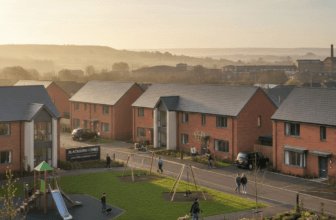
New Builds: To the west of the city, in areas like Great Park, massive development has taken place. Here you will find modern detached houses with garages, driveways, and high energy efficiency ratings. These are perfect for buyers who want a “turn-key” solution. The trade-off is often smaller room sizes compared to the Victorian equivalents and a location further from the city centre.
The “Geordie” Factor: Lifestyle and Community
You cannot write about houses for sale in Newcastle without mentioning the people. The reputation for friendliness is not a myth. It is common for neighbours to know each other, for shopkeepers to chat, and for a genuine sense of community to exist.
Living here means access to world-class culture. The Theatre Royal attracts West End productions. The Utilita Arena hosts international music acts. For sports fans, St James’ Park isn’t just a stadium; it’s a cathedral of football that dominates the skyline and the city’s mood. Even if you don’t like football, the atmosphere on a match day is electric.
Furthermore, you are never far from nature. Within 20 minutes of the city centre, you can be walking on the pristine sands of Tynemouth Longsands or hiking in the wild expanses of Northumberland National Park. This balance of urban excitement and rural accessibility is why so many people who come to Newcastle for university end up staying for life.
Future Outlook: Is 2026 the Right Time to Buy?
Predicting property markets is never an exact science, but the indicators for Newcastle are positive. The city is attracting significant inward investment. Tech companies are moving north, drawn by the talent pool and quality of life.
While interest rates fluctuate, the relative affordability of Newcastle compared to the national average provides a buffer. A budget of £300,000 might get you a one-bedroom flat in the outskirts of London, but in Newcastle, it could secure a four-bedroom semi-detached house with a garden in a good area. As remote working becomes a permanent fixture for many, this “space for money” ratio is driving a migration of buyers moving north.
Final Thoughts for Buyers
Searching for houses for sale Newcastle is an exciting journey because the city offers such variety. You can live in a riverside apartment, a leafy Victorian suburb, or a modern eco-home, all within the same city limits.
The key is to visit. Walk the streets of Heaton with a coffee in hand. Take the Metro to Tynemouth. Stand on the Quayside and look up at the Tyne Bridge. Property listings can give you the stats, but they can’t give you the feeling of the place. Newcastle is a city that welcomes you with open arms, and somewhere amongst its streets, your perfect home is waiting.