 savingsspot.co.uk
 There is a specific kind of adrenaline rush known only to beauty enthusiasts. It is that flutter in the chest when you spot a “50% Off” sticker on a palette you have been eyeing for six months. It is the satisfaction of refreshing a browser on Boxing Day morning and securing a luxury serum for the price of a high-street moisturiser. A makeup sale is not merely a transaction; in the current economic climate, it is a strategic operation. With the cost of living pinching purses across the United Kingdom, paying full price for cosmetics feels increasingly like a luxury we can rarely afford.
However, navigating the landscape of discounts, clearance bins, and flash offers requires a cool head. It is all too easy to fall into the trap of false economy—spending £50 on random items just because they were reduced, rather than buying the one £40 item you actually needed. This article dives deep into the mechanics of the British beauty market, revealing how to spot a genuine bargain, when to stock up, and how to avoid the pitfalls of expired stock and impulse clutter.
The Great British Sale Calendar: Timing Your Haul
Unlike the unpredictable nature of viral TikTok trends, sales generally follow a rigid, cyclical structure. Understanding the rhythm of the retail year is your first defence against overspending. If you know a major markdown is three weeks away, you can hold your nerve.
The January Clearance (and the ‘New Year’ Trap)
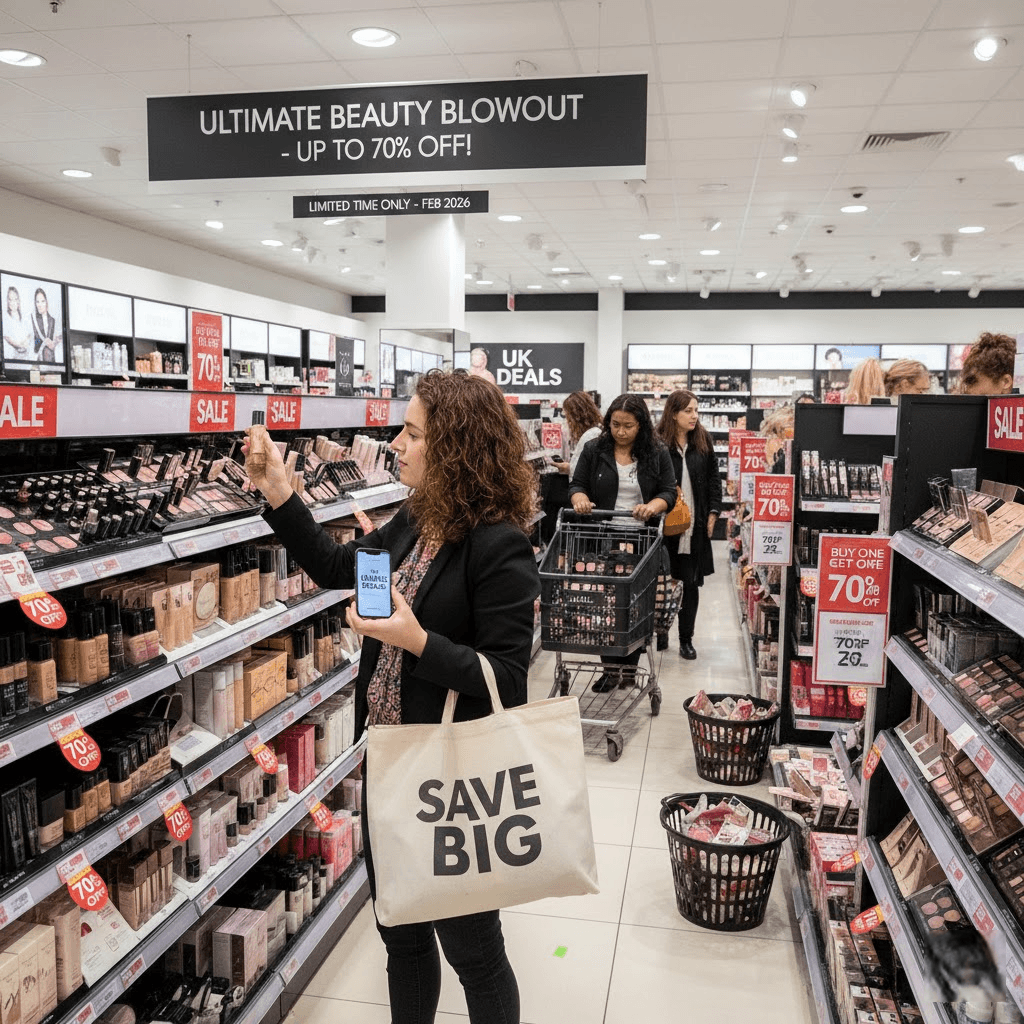
Boxing Day (December 26th) remains the heavyweight champion of the UK retail calendar, but the dynamics have shifted. The “January Sale” often starts online on Christmas Eve. This is prime time for gift sets. Retailers like Boots and Superdrug are desperate to offload bulky Christmas “Star Gifts” and seasonal packaging.
The Strategy: Look for sets where the products inside are part of the permanent collection but the box is festive. Once you throw away the cardboard reindeer box, you have a year’s supply of your favourite mascara or night cream, often for 70% less than the individual retail price.
Black Friday and Cyber Monday
Once an American import, Black Friday has thoroughly conquered the UK. Occurring in late November, this is rarely just a day anymore; it is often a “Cyber Month.” Brands like Charlotte Tilbury, MAC, and LookFantastic often do tiered discounts (e.g., 20% off £50, 30% off £100).
The Strategy: This is not the time for experimentation; it is the time for replenishment. Stock up on staples like foundation and setting spray. The discounts are usually flat-rate across the whole site, making it the best time to buy “boring” essentials rather than flashy new releases.
Mid-Season and Summer Sales
Often overlooked, the mid-season sales (usually around June/July) are excellent for high-end beauty. Department stores like John Lewis, Selfridges, and Harrods clear out stock to make room for Autumn/Winter collections. This is where you find limited-edition summer bronzers or bright lipstick shades that didn’t sell as well as anticipated.
High Street vs. High End: Where to Look
The UK has a distinct divide between high street chemists and luxury retailers, and they handle their makeup sale tactics very differently.
The High Street Giants: Boots and Superdrug
Boots is an institution. Their “£10 Tuesday” has become legendary online. Every Tuesday, a selection of products (often retailing for £15–£25) drops to a flat £10 online. It is a flash sale in the truest sense, lasting only 24 hours.
Superdrug, on the other hand, operates heavily on membership pricing. Their “Star Buys” usually rotate weekly. A keen eye on the Superdrug Health & Beautycard prices can often reveal discounts that aren’t immediately obvious to non-members. Furthermore, Superdrug is often faster to discount “failed” viral products—items that had a moment of hype but then plateaued.
The Online Powerhouses
Sites like Beauty Bay, Cult Beauty, and ASOS Face + Body have changed the game. Because they lack the overheads of physical stores, their sales sections are permanent fixtures.
- The Outlet Sections: Most of these sites have a permanent “Outlet” tab. This is the graveyard of broken packaging or discontinued lines. If you don’t care about a slightly dented outer box, you can secure luxury items for drugstore prices.
- Bundle Deals: Online retailers often bundle slow-moving stock with best-sellers. You might see a “Mystery Bag” or a “Summer Edit.” Be cautious here: calculate the value of the items you actually want. If the bundle costs £40 and the only item you want is worth £20, it is not a saving.
The TK Maxx Treasure Hunt
No discussion of UK beauty bargains is complete without mentioning TK Maxx. It is a chaotic jumble of high-end skincare and obscure Korean beauty brands. However, it requires a forensic approach. Shoppers have a bad habit of opening products to test them.
The Golden Rule: Never buy unsealed liquid products at TK Maxx. Stick to pumps that can’t be tampered with, or palettes that are housed in security boxes. Use batch code checkers (websites where you can input the code printed on the bottle) to ensure the product wasn’t manufactured five years ago.
The Psychology of the Red Sticker
Why do we buy makeup we don’t wear? Retailers employ sophisticated psychological triggers during a makeup sale to bypass our logical decision-making.
The “Was/Now” Anchoring
Seeing “Was £45, Now £20” creates an anchor price. Our brain focuses on the £25 saving rather than the £20 expenditure. We feel we are earning money by spending it. To combat this, cover the “Was” price with your thumb. Ask yourself: “Would I buy this product today for £20 if I had never seen the original price?” If the answer is no, put it back.
Scarcity Tactics
“Only 3 left in stock!” or “12 people are looking at this item right now.” These digital nudges increase cortisol levels, making us panic-buy. In the world of mass-produced cosmetics, true scarcity is rare. Unless it is a limited-edition collaboration, it will likely be restocked, or available elsewhere.
The “Free Shipping” Threshold
This is the classic cart-filler trap. You have £25 worth of sale items, but free shipping is at £30. You spend an extra £8 on a lipstick you don’t need to save £3.99 on postage. In this scenario, you are effectively paying the retailer to take their stock. It is often mathematically smarter to pay for shipping than to buy clutter.
Safety First: The Hidden Dangers of Clearance Makeup
One of the most critical aspects of shopping a makeup sale—and one often ignored—is product safety. Makeup expires. A clearance sale is often a retailer’s way of shifting stock that is nearing its shelf life.
Understanding PAO and Expiry
Every cosmetic product sold in the UK has a PAO (Period After Opening) symbol, which looks like a little open jar with a number and an ‘M’ (e.g., 12M). However, this only applies once the seal is broken. Unopened products also have a shelf life, usually 30 to 36 months.
When you buy from a deep clearance sale, specifically with “clean” beauty brands that use fewer preservatives, you might be buying a product manufactured two years ago. It might only have six months of stability left even if unopened.
Liquid vs. Powder
- Powders (Eyeshadow, Blush, Bronzer): These are generally safe to buy in sales. Bacteria struggle to thrive in dry environments. A discontinued powder blush can last for years if stored correctly.
- Liquids and Creams (Foundation, Mascara, Liquid Lipstick): Proceed with caution. These contain water and oils, a breeding ground for bacteria. If a liquid foundation has separated in the bottle on the shelf, or a lipstick looks “sweaty” (wax bloom), leave it.
- SPF Products: Never buy sunscreen or SPF-infused makeup from a clearance bin without checking the printed expiry date. The active ingredients degrade over time, meaning you won’t get the protection advertised.
The Rise of Dupes: An Alternative to Sales
Sometimes, the best way to handle a makeup sale is to ignore it entirely. The UK beauty market has been revolutionised by “dupe” culture. Brands like Revolution, Collection, and e.l.f. have built empires on creating affordable alternatives to prestige products.
Is it better to buy a luxury foundation at 30% off (bringing it down to £30) or a high-performing drugstore alternative for £10 full price? Often, the technology in cosmetics trickles down. The hyaluronic acid or niacinamide found in a £50 serum is chemically identical to that in a £10 serum. The difference is often in the packaging and the fragrance.
Before lunging for a sale item, do a quick Google search: “[Product Name] dupe UK”. You might find that you can get the look for a fraction of the price without waiting for a seasonal discount.
Strategic Shopping: A Checklist for Success
To truly win at the sales game, you need a protocol. Here is a step-by-step guide to ensuring your haul is a hit rather than a regret.
1. The Pre-Sale Audit
Before a big event like Black Friday, dump your makeup bag out on the floor. What do you have? If you have four open mascaras, you are banned from buying mascara. If you have hit the pan on your bronzer, write it down. Make a physical list of “Needs” and “Wants.”
2. The Cart Abandonment Trick
If you are shopping online outside of a flash sale period, try this: log in, add items to your basket, and then close the tab. Many retailers have automated email flows set up to trigger 24 hours later, offering a “Come back and finish your purchase” discount code, usually an extra 10% or 15% off.
3. Cashback is King
In the UK, sites like TopCashback and Quidco are underutilised by beauty shoppers. Before making a purchase at Boots, LookFantastic, or Charlotte Tilbury, click through a cashback site. You can earn anywhere from 2% to 10% back on your purchase. It adds up significantly over a year.
4. Check the Return Policy
Sale items often come with stricter return policies. In the UK, you have statutory rights, but retailers can refuse returns on pierced jewellery or unsealed cosmetics for hygiene reasons. However, if an item is faulty (e.g., the pump is broken or the product is dried out), you are entitled to a refund regardless of it being a sale item. Know your rights under the Consumer Rights Act 2015.
The Sustainability Conversation
Finally, we must address the elephant in the room. The beauty industry is a massive contributor to plastic waste. Sales encourage overconsumption. Buying five lipsticks because they are £3 each creates waste if you only wear one colour.
A “sustainable makeup sale” approach is to look for refills. Many luxury brands (dior, Charlotte Tilbury, Fenty) now sell refillable compacts. During a sale, look for the refills themselves. They are often cheaper than the full packaging and allow you to try a luxury product with less plastic waste.
Furthermore, consider the “cost per wear.” A £40 foundation you wear every single day until the bottle is empty is a better value proposition than a £10 bright blue eyeliner you wear once for a festival and then throw away three years later.
Conclusion
Navigating a makeup sale in the UK is about balance. It is about balancing the thrill of the bargain with the reality of your budget and your storage space. It requires looking past the neon “SALE” signs and scrutinising the product itself—its batch code, its ingredients, and its place in your routine.
By understanding the retailer calendars, utilising loyalty points like the Boots Advantage Card, and refusing to be swayed by artificial scarcity, you can curate a high-end collection on a high-street budget. Remember: a bargain is only a bargain if you use it. Otherwise, it’s just expensive clutter.