
 savingsspot.co.uk
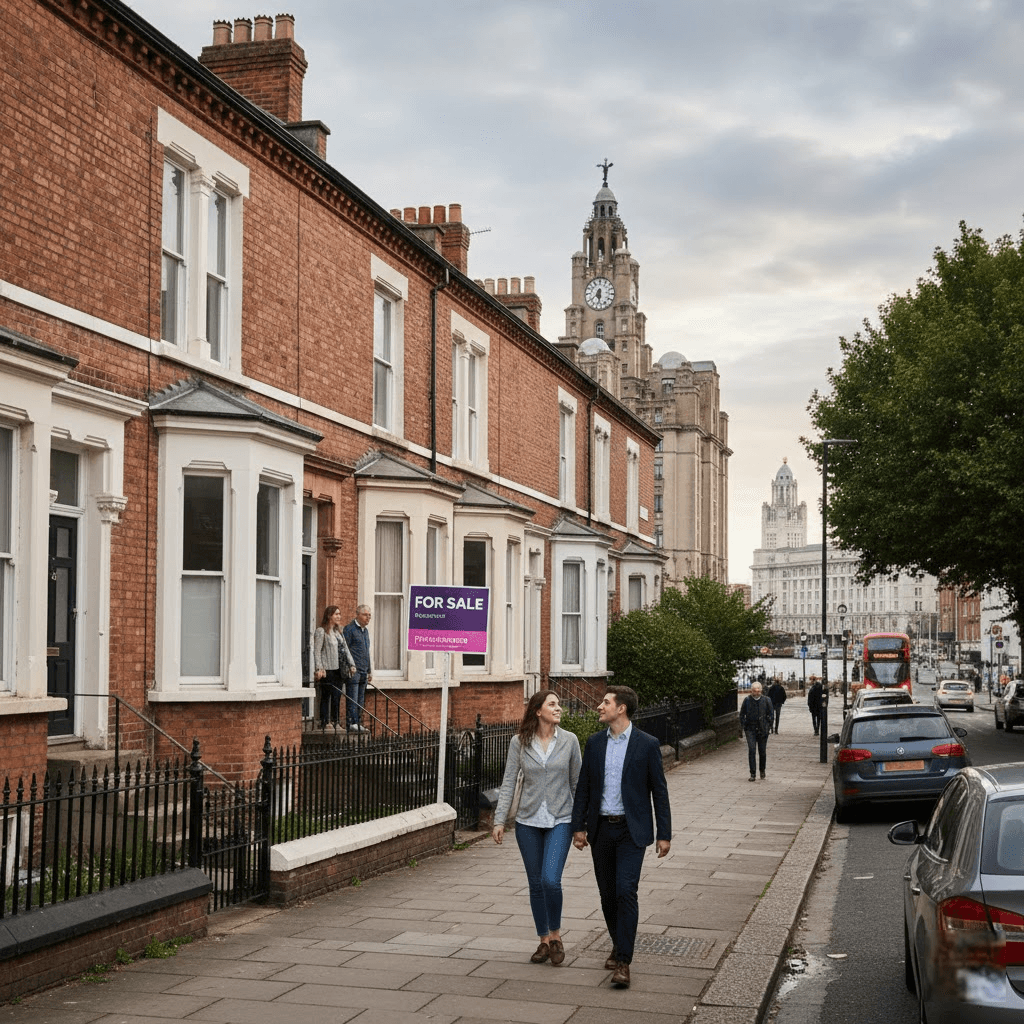
 Liverpool is a city that refuses to be ignored. For decades, it has punched above its weight culturally, exporting music, sport, and wit to every corner of the globe. But in recent years, the conversation has shifted from its glorious past to its vibrant future. For home movers and investors alike, the search for houses for sale Liverpool has become a pursuit of value, character, and significant growth potential. Unlike the stagnant or prohibitively expensive markets of the South East, Merseyside offers a dynamic property landscape where Georgian grandeur sits comfortably alongside sleek waterfront regeneration.
Whether you are a first-time buyer looking to escape the rental trap, a family seeking the leafy sanctuary of the suburbs, or an investor eyeing up some of the highest rental yields in the UK, Liverpool presents a compelling case. However, navigating this market requires local knowledge. The city is a patchwork of distinct villages and quarters, each with its own micro-economy and architectural flavour. This article dives deep into the reality of buying property in this iconic maritime city.
The Liverpool Rennaissance: Why Buy Now?
To understand the property market here, you have to understand the city’s trajectory. Since the Capital of Culture win in 2008, Liverpool has undergone a physical and economic transformation. The Liverpool One shopping complex reshaped the city centre, while the Knowledge Quarter has attracted billions in investment for science and technology.
For buyers, this economic resilience translates to property stability. While house prices have risen, they remain remarkably accessible compared to the national average. You can still find substantial Victorian terraced homes for a fraction of what they would cost in Manchester or Birmingham, let alone London. This affordability gap is the primary driver for the influx of new residents, including young professionals relocating for a better work-life balance.
Decoding the Postcodes: Where to Look?
When typing “houses for sale Liverpool” into a search engine, the sheer variety of areas can be overwhelming. The city is broadly divided into the City Centre, the South, the North, and the East. Each offers a radically different lifestyle.
1. South Liverpool: The Leafy Aspirational Belt
If you ask a local where the “desirable” areas are, they will almost invariably point South. This area is characterised by expansive parks, independent high streets, and period architecture.
- Aigburth (L17): This is the stomping ground for young families and creative professionals. Sitting along the river and backing onto the magnificent Sefton Park, Aigburth is famous for Lark Lane—a bohemian street packed with bistros, wine bars, and antique shops. The housing stock here is predominantly Victorian and Edwardian. Large semi-detached homes and spacious terraces command a premium, but the lifestyle is arguably the best in the city.
- Allerton & Mossley Hill (L18): Home to the famous Penny Lane, these suburbs are traditional, safe, and green. They boast some of the best state schools in the region, making them a magnet for families. The houses here are often 1930s semis with generous gardens, alongside grander detached villas. Calderstones Park provides a massive green lung, and the Allerton Road offers a bustle of amenities that rivals many town centres.
- Woolton & Gateacre (L25): Further out, these areas feel more like historic villages than city suburbs. With sandstone cottages, the oldest cinema in Liverpool, and leafy avenues, Woolton carries a prestige that holds its value incredibly well. It is quieter, more reserved, and perfect for those seeking a slower pace without leaving the city limits.
2. The City Centre & The Docks: Urban Living
The skyline of Liverpool has changed dramatically. The historic warehouses of the Baltic Triangle and the Wapping Dock have been converted into stunning loft-style apartments. For those who want the buzz of the city right on their doorstep, the L1, L2, and L3 postcodes are the target.
The Georgian Quarter (L8) deserves special mention. It is frequently used as a filming location for period dramas because it retains one of the largest collections of terraced Georgian townhouses outside of London. Living here means high ceilings, sash windows, and proximity to the Philharmonic Hall and the cathedrals. It is expensive, sophisticated, and undeniably beautiful.
3. North Liverpool: The Coastal Value
For a long time, the North of the city was overlooked, but that is changing rapidly. The coastline here is spectacular, and the value for money is hard to beat.
- Crosby & Waterloo (L22, L23): These areas offer a coastal lifestyle that rivals the South West of England but at a Northern price point. Famous for Anthony Gormley’s “Another Place” iron men statues on the beach, Crosby has great schools and a direct rail link to the city centre (roughly 20 minutes). The houses range from massive Victorian seafront villas to affordable terraces.
- Everton & Anfield (L4, L5): These areas are the focus of intense regeneration. The expansion of Anfield stadium and the new Everton stadium at Bramley-Moore Dock are catalysts for change. While these areas have historically struggled, they are now hotspots for investors and first-time buyers willing to bet on the “ripple effect” of regeneration. You can still find properties here for under £100,000—a rarity in modern Britain.
4. East Liverpool: The Suburban Middle Ground
Areas like West Derby (L12) offer a solid middle ground. Historically a village (appearing in the Domesday Book), West Derby has retained a quaint centre with pubs and shops, surrounded by sprawling estates of semi-detached housing. It is a very practical choice for those who need good motorway access via the M62 while retaining a community feel.
The Buying Process: A Local Perspective
Once you have identified an area, the mechanics of buying a house in Liverpool follow the standard UK process, but there are local nuances to be aware of.
The Leasehold Trap: One particular issue prevalent in the North West of England is the leasehold status on houses. Unlike the rest of the UK where houses are typically freehold and flats are leasehold, many older terraced houses and even some new builds in this region are sold as leasehold. It is vital to check the length of the lease and the ground rent terms. A “peppercorn” rent with 900 years remaining is fine; a doubling ground rent with 80 years left is a problem. Always instruct your solicitor to check the tenure immediately.
The Survey Matters: Liverpool’s housing stock is old. Many of the Victorian terraces were built rapidly in the late 19th century to house dock workers. While many have stood the test of time, issues like damp, wall tie failure, and roof slippage are common. A simple mortgage valuation is rarely enough. A HomeBuyer Report (Level 2) is the minimum you should consider for pre-1950s properties to avoid nasty surprises regarding repair costs.
Competition and Bidding: In hot spots like Aigburth or Crosby, “best and final offers” (sealed bids) are becoming common again. Estate agents in Liverpool are generally approachable, but the market moves fast. If a house is priced correctly in L17 or L18, it will likely be sold within two weeks. Having your Decision in Principle (AIP) ready and a solicitor lined up before viewing can be the difference between securing a home and losing out.
Investment Potential: Yields and Capital Growth
If you are looking at houses for sale Liverpool from an investment perspective, the metrics are highly favourable. Liverpool consistently ranks in the top five UK cities for rental yields. This is driven by a large student population (three major universities) and a growing workforce of young professionals who are not yet ready to buy.
The Student Market: The traditional HMO (House in Multiple Occupation) model is shifting. While student terraces in Wavertree (L15) are still a staple, there is a move towards purpose-built student accommodation in the city centre. However, professional HMOs in areas like Kensington and Fairfield are seeing a resurgence as rents rise.
Short-Term Lets: The tourism industry in Liverpool is massive, fueled by football tourism and Beatles heritage. This has created a lucrative market for short-term lets (Airbnb style). However, the council is becoming stricter on regulation, so ensure you check planning permissions before buying a property with this intent.
Life in Liverpool: Beyond the Bricks
Buying a house is buying a lifestyle, and this is where Liverpool truly shines. The cost of living is lower than the UK average, meaning your disposable income goes further.
Transport: The Merseyrail network is often described as the “London Underground of the North.” It is efficient, relatively cheap, and connects the coastal suburbs to the city centre effectively. For drivers, the M62 connects you to Manchester in 45 minutes, and the M6 provides access to the rest of the country. Liverpool Lime Street station has undergone massive upgrades, offering high-speed connections to London Euston in just over two hours.
Culture and Nightlife: It is impossible to discuss Liverpool without mentioning the social scene. The city has moved beyond just pubs and clubs (though Mathew Street remains a pilgrimage site). The Baltic Triangle is a hub of street food markets, breweries, and rave venues. The waterfront arena attracts global superstars. For high culture, the Philharmonic Orchestra and the Everyman Theatre are world-class institutions.
Green Spaces: Despite its industrial past, Liverpool is incredibly green. Sefton Park with its Palm House is the jewel in the crown, but smaller parks like Calderstones, Princes Park, and Stanley Park provide ample space for recreation. The 22 miles of coastline stretching from the city up to Southport offers beaches, dunes, and pine woods.
Looking Ahead: Future Developments
When searching for houses for sale in Liverpool, it is wise to look at the long-term master plans. The “Liverpool Waters” project is a multi-decade regeneration of the northern docks which will create new neighbourhoods, cruise terminals, and business districts. This is expected to pull the centre of gravity of the city slightly northwards.
Furthermore, the Knowledge Quarter is expanding with the new Paddington Village, creating a hub for medical and scientific research. This brings high-skilled jobs, which in turn drives demand for high-quality housing in the surrounding areas.
There is also a growing trend towards sustainability. Liverpool City Council has ambitious net-zero targets, and we are seeing an increase in retrofitting of older properties. Buying a home with a decent energy rating (EPC C or above) is becoming more important, not just for bills, but for future resale value as regulations tighten.
Tips for the Savvy Buyer
- Walk the neighbourhood at night: A street can feel very different at 11 AM on a Tuesday compared to 9 PM on a Friday. Liverpool is a safe city, but like any major urban area, it has pockets of anti-social behaviour. Checking the vibe at different times is crucial.
- Check the Council Tax Band: Generally, council tax in Liverpool can be high relative to property values. Factor this monthly cost into your affordability calculations.
- Look for “No Onward Chain”: The conveyancing process in the UK is notoriously slow, currently averaging 3-5 months. Buying a property with no chain (vacant possession) can shave weeks off this timeline and reduce the stress significantly.
- Engage with local independents: Don’t just rely on the big national estate agent chains. Many of the best properties in South Liverpool are sold by local, independent agencies who have deep roots in the community and may know of properties coming to market before they hit the portals.
Conclusion
The search for houses for sale Liverpool is an exciting journey into one of the UK’s most spirited cities. The market offers a rare combination of affordability, architectural beauty, and genuine community warmth. Whether you settle for the sea breeze of Crosby, the bohemian buzz of Aigburth, or the urban cool of the Baltic Triangle, you are buying into a city that welcomes newcomers with open arms.
The days of Liverpool being a “hidden gem” are arguably over; the secret is out. However, the window of opportunity to buy prime property at reasonable prices is still very much open. By doing your research, understanding the distinct personality of each postcode, and navigating the technicalities of the local market, you can find not just a house, but a home in a city that prides itself on being unlike anywhere else.