Beyond the Sticker Price: Mastering the Expedia Discount Code Ecosystem for Smarter Travel
 savingsspot.co.uk
 There is a distinct thrill in booking a holiday. It is that moment when you finally click ‘confirm’ and the anticipation sets in—visions of Spanish beaches, New York skylines, or perhaps a cosy cottage in the Cotswolds. However, for most UK travellers, that thrill is often paired with a sharp intake of breath at the final total. In an economic climate where every pound counts, paying the listed price feels less like a necessity and more like a missed opportunity.
This is where the hunt for an Expedia discount code transforms from a casual browse into a strategic necessity. Expedia is a behemoth in the travel industry, offering access to hundreds of thousands of hotels, flights, and car hire options. Because of its size, it operates a complex, tiered system of pricing that is not always transparent to the casual observer. The price you see isn’t always the price you have to pay.
Navigating the world of travel vouchers, loyalty tiers, and mobile-exclusive offers can feel like solving a puzzle. This guide isn’t just about finding a random string of letters to paste into a checkout box; it is about understanding the architecture of Expedia’s pricing engine to ensure you never overpay for a getaway again.
The Anatomy of an Expedia Discount Code
To use these codes effectively, one must first understand what they actually are. In the travel industry, a discount code (often called a coupon, promo code, or voucher) functions differently than it does in retail. Buying a jumper from an online shop is straightforward—the code applies to the whole basket. Travel is trickier.

An Expedia discount code is usually specific to the “pre-paid” portion of your booking. This is a crucial distinction. Many hotels offer a “pay at property” option. In almost all cases, discount codes cannot be applied to these bookings because the transaction is handled by the hotel’s front desk, not Expedia’s payment gateway. To trigger the savings, you generally must pay upfront.
Furthermore, these codes often come with specific targeting:
- Percentage Off: The most common variety, usually ranging from 8% to 15%. These are great for high-value bookings where a percentage yields a significant chunk of change.
- Fixed Value: A simple “£50 off when you spend £200”. These are excellent for short stays or budget city breaks where a percentage discount wouldn’t amount to much.
- Platform Exclusive: Codes that only work if you are booking via the mobile app (more on this later).
The “Member Prices” Phenomenon
Before you even scour the internet for an external code, you need to look at what Expedia gives you just for existing. For a long time, the “Guest Checkout” was the standard for hasty bookers. This is a mistake.
Expedia has aggressively pushed its membership structure. By simply logging in, you instantly unlock “Member Prices.” These are not technically “discount codes” in the manual sense, but they function as automatic, applied-at-source vouchers.
Statistics suggest that Member Prices typically save around 10% or more on thousands of hotels. This discount is applied before you even reach the checkout page. The beauty of this system is stackability. In many instances, you can start with a Member Price (saving 10%) and then apply a valid Expedia discount code at checkout for an additional reduction. This layering effect is how savvy travellers secure luxury accommodation for mid-range prices.
The Mobile App Strategy
If you are booking your holiday on a desktop computer or laptop, you might be voluntarily paying more than necessary. Expedia, like many tech-forward travel giants, is desperate for real estate on your smartphone. To incentivise this, they do not just offer a better user interface; they offer better prices.
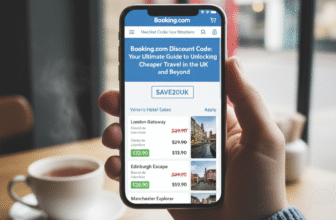
It is common to find an Expedia discount code that is strictly “App Only.” These can offer double the savings of their desktop counterparts. For example, a standard seasonal sale might offer 10% off on the website, but the app might feature a “15% off with code APP15” banner.
Moreover, the rewards accumulation (OneKeyCash) is often accelerated on the app. If you find a hotel you like while browsing on your laptop at work, do not book it there. Open the app, find the same property, and check the price. It is rarely higher, but frequently lower.
One Key: The New Currency of Savings
UK travellers used to be familiar with Expedia Rewards, but the landscape has shifted with the introduction of “One Key.” This is a unified loyalty programme spanning Expedia, Hotels.com, and Vrbo. Understanding One Key is vital because it effectively acts as a deferred discount code.
Every time you book, you earn OneKeyCash. Unlike complex airline miles that require a degree in mathematics to redeem, this is essentially digital cash. If you book a flight to Barcelona today, you earn cash that can be applied to a hotel in Manchester next month.
The “Silver,” “Gold,” and “Platinum” tiers of this programme are not just vanity badges. They unlock higher percentage savings at “VIP Access” properties. Moving up to Silver status can unlock savings of 15-20% on specific hotels. When searching for a discount code, do not neglect the “code” you might already have sitting in your account balance in the form of OneKeyCash.
The “Bundle” Hack
One of the most potent, yet underutilised, ways to simulate a massive discount is the “Bundle and Save” mechanism. We often book flights and hotels separately, thinking we can find the best deal for each independently. However, Expedia has access to “opaque” fares.
Airlines often prohibit travel agents from selling tickets below a certain public price to protect their brand value. However, they allow agents to sell those tickets at a steep discount if—and only if—they are hidden inside a package.
By booking your flight and hotel together on Expedia, you aren’t just saving convenience fees; you are accessing a wholesale pricing tier that is contractually forbidden from being sold separately. While this isn’t a copy-paste Expedia discount code, the net effect on your bank balance is often superior to using a 10% voucher on a room-only booking.
Seasonal and Event-Based Codes
Timing is everything. The release of discount codes in the UK market follows a predictable rhythm, synced with British spending habits and holidays.
- The January Sales: Post-Christmas blues trigger a rush for summer holiday bookings. Expedia typically releases robust codes in early January to capture this market.
- Black Friday & Cyber Monday: Once an American curiosity, this is now the Super Bowl of travel discounts. You can expect codes offering up to 30% off select hotels, but usually for a very limited booking window.
- Bank Holidays: Look out for flash sales leading up to May and August Bank Holidays. These are often targeted at shorter, city-break style trips.
- Travel Tuesday: Occurring the Tuesday after Thanksgiving (and Black Friday), this is a growing trend specifically focused on travel deals, often boasting better inventory availability than Black Friday itself.
Student, NHS, and Key Worker Discounts
If you belong to specific demographic groups in the UK, you should never pay full price.
Students: Platforms like UNiDAYS or Student Beans frequently partner with Expedia. These codes are verified via your student status and are unique to you. They are usually generous because travel companies want to hook customers while they are young.
NHS and Key Workers: Since the pandemic, the appreciation for key workers has translated into tangible benefits. Blue Light Card holders often have access to exclusive Expedia discount codes. These are not usually advertised on the main homepage; you must log in to the Blue Light Card portal to retrieve the unique string.
The “Abandon Cart” Technique
This is a trick as old as e-commerce, but it remains surprisingly effective. If you are logged into your Expedia account, go through the process of booking a holiday. Select your dates, pick your room, and get all the way to the payment page. Then, simply close the tab.
Marketing automation systems are triggered by this action. They see a user who is “high intent” but hesitated at the final hurdle. Within 24 to 48 hours, you may receive an email with a subject line like “Still thinking about Paris?” Inside, there is a distinct possibility of finding a unique discount code designed to nudge you over the line. It doesn’t work 100% of the time, but if you are not in a rush, it is worth a try.
Why Isn’t My Code Working? (Troubleshooting)
There is nothing more frustrating than finding a code, pasting it in, and seeing the dreaded “Invalid Code” message. Here is why that usually happens in the Expedia ecosystem:
1. The “Big Chain” Exclusion: This is the most common pitfall. Large global hotel chains (think Marriott, Hilton, IHG, Hyatt) have strict price parity agreements. They rarely allow third-party sites like Expedia to undercut their direct booking prices via coupons. If you try to apply a general “10% off” code to a Hilton booking, it will almost certainly be rejected. These codes usually work best on independent boutique hotels or smaller chains.
2. Pay at Hotel: As mentioned earlier, if you selected “Pay at Property,” the code will not work. You must switch your payment method to “Pay Now” to enable the coupon field.
3. Flight Bookings: It is incredibly rare to find a generic coupon code for flights alone. Margins on air travel are razor-thin. Most codes are for hotels or “flight + hotel” packages.
4. Minimum Spend and Dates: Always check the fine print. A code might require a minimum spend of £200, or it might exclude travel dates during peak school holidays (Christmas, Easter, half-terms).
Credit Card Partnerships
In the UK, certain financial institutions have partnerships with travel aggregators. American Express, for example, often runs “Statement Credit” offers. While this isn’t a code you type into Expedia, it works the same way. You might see an offer on your Amex app: “Spend £200 at Expedia, get £50 back.”
It is vital to check your banking offers before booking. Additionally, standard rewards credit cards (like Avios or Virgin Atlantic cards) allow you to double-dip. You earn the OneKeyCash from Expedia, plus the points from your credit card provider.
The Ethical Grey Area: VPNs and Location Swapping
There is much discussion in travel hacking communities about using VPNs (Virtual Private Networks) to change your digital location to find cheaper prices. The theory is that Expedia’s point of sale in a lower-income country might offer lower prices than the UK version of the site.
While this can sometimes yield results, it comes with risks. Currency conversion fees can eat up savings, and managing a booking made via “Expedia Vietnam” when you are based in Birmingham can be a customer service headache if things go wrong. For the average traveller, sticking to the UK site and utilizing legitimate codes and loyalty tiers is the safer, more consistent route.
Conclusion: The Savvy Traveller’s Mindset
Securing a discount on Expedia is not about luck; it is about process. It is about refusing to accept the first price shown. It involves a quick check of the app, a glance at your One Key balance, a verification of your student or NHS status, and perhaps a strategic bundling of your flight and hotel.
The travel landscape is becoming increasingly expensive, but it is also becoming more competitive. Expedia wants your business, and they have created a mechanism of discount codes and rewards to win it. By understanding how to pull these levers, you move from being a passive passenger to an active, savvy traveller. So, before you book that next adventure, pause. Look for the code. Check the app. The world is waiting, and there is no reason you should pay full price to see it.