 savingsspot.co.uk
 For decades, the British high street possessed one undisputed heavyweight champion of the seasonal scramble: the Next physical sale. Hordes of determined shoppers would set their alarms for 4:30 AM on Boxing Day or a crisp July morning, clutching thermal flasks, ready to sprint toward the womenswear or children’s racks the second the glass doors slid open.
Today, the battleground has shifted. You no longer need to freeze on a pavement outside a retail park to secure a pair of tailored work trousers for £12 or a pure cotton children’s sleepsuit set for a fiver. The savvy modern consumer operates almost exclusively within the Next Online Clearance portal. However, much like the physical stampede of old, navigating the digital clearance racks requires strict strategy, insider timing, and a fundamental understanding of how Next’s warehouse algorithms actually work.
The Vital Distinction: Clearance vs. The Seasonal Sale
The single biggest mistake casual British shoppers make is using the terms “Next Sale” and “Next Clearance” interchangeably. To the retailer’s inventory management system, they are two entirely different beasts.
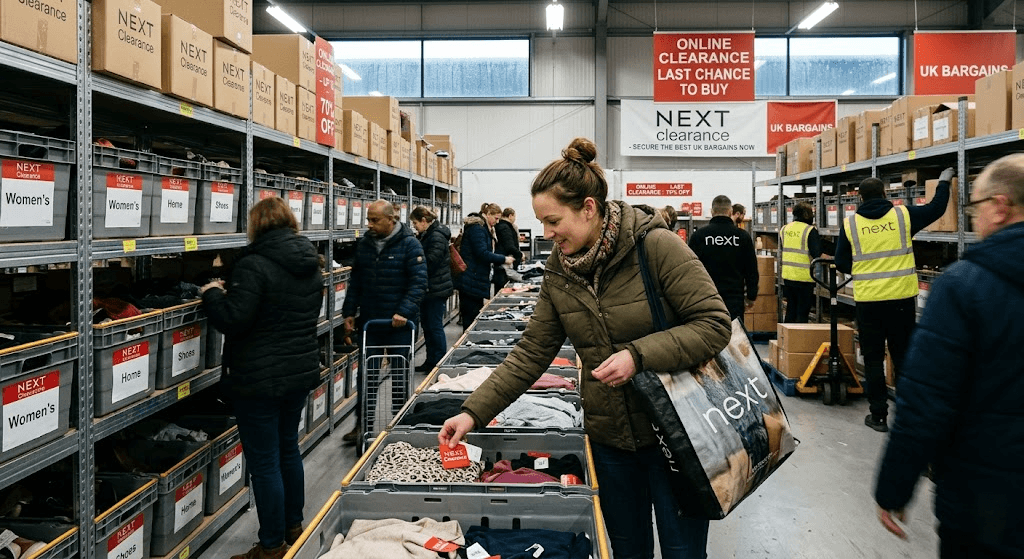
- The Seasonal Sale: These are the famous, highly publicized quarterly events (typically Spring, Summer, Autumn, and the legendary Boxing Day drop). They feature massive, sitewide markdowns and operate on a strict first-come, first-served ticketed system for early online access.
- The Online Clearance: This is a permanent, 365-days-a-year digital outlet. Found via a quiet link buried in the main website’s navigation tree, the clearance section is where surplus stock, customer returns, and odd-sized remnants from the seasonal sales go to live until they drop to their absolute floor price.
While the seasonal sale requires an explosive burst of morning energy, mastering the online clearance is an ongoing game of patience, tracking, and knowing precisely when the digital stockroom gets restocked.
The 4:30 AM Phenomenon: Understanding the Restock Algorithm
If you sit down with a cup of tea at 11:00 AM on a Tuesday to browse the Next clearance, you are effectively picking through the digital bones of the carcass. The high-value items—the staple black denim, the 100% linen summer shirts, the branded sportswear—will already show the dreaded greyed-out “Out of Stock” box across every normal size.
To win the clearance, you have to understand the Next warehouse batch cycle. Next operates one of the most sophisticated automated logistics hubs in the UK. Throughout the day, thousands of online returns arrive at the depot, get inspected, are re-bagged, and are scanned back into the system.
The main inventory database pushes these re-entered items live to the public website in a massive overnight server refresh. Historically, and reliably to this day, this batch drop occurs between 3:30 AM and 4:45 AM (GMT/BST).
Serious clearance hunters set an alarm for 4:30 AM, particularly on Tuesday and Thursday mornings, which correlate with the highest volume of weekend return processing. When you refresh the clearance landing page at 4:35 AM, items that were completely sold out the afternoon before will suddenly show one or two units available in standard UK sizes 10, 12, or Medium. By 6:30 AM, the morning commuters browsing on their phones will have bought them all over again.
Cracking the Next VIP Sale Access
While this guide focuses heavily on the year-round clearance, the two ecosystems feed into one another. You cannot be a master of the Next digital clearance without holding the golden key: a Next VIP Sale Slot.
Before any major seasonal sale pushes unsold stock into the permanent clearance pool, Next offers “VIP Slots” to select online customers. This allows you to log into a mirrored version of the site up to 48 hours before the general public and lock in your basket. To get invited to the VIP tier, your account must satisfy several unadvertised background criteria:
- The Credit Gateway: You must have an active NextPay or Next3Step credit account. Standard “pay-as-you-go” debit card accounts are rarely, if ever, handed VIP slots.
- The Balance Rule: Your NextPay account must have at least £250 of available credit sitting on it at the time the algorithms generate the invite list (usually a week before the sale). If your card is maxed out, you are skipped.
- The Order History Threshold: You must have placed, paid for, and kept at least one full-priced order from the current season’s directory within the last three to four months.
- The Return Ratio Trap: This is the secret killer. If your account shows a history of ordering 20 items to try on at home and returning 18 of them consistently, Next’s system flags you as a “high-cost processor.” High-return accounts are quietly bumped to the back of the VIP queue, or excluded entirely.
7 Advanced Tactics for the Online Clearance Portal
Once you are in the clearance section at the right time, standard browsing will lose you the race. Apply these seven expert habits to secure the bag.
1. The 6-Digit Code Decryption
Every single item at Next carries a unique 6-digit alphanumeric identifier (for example: T45-129). If you spot a full-priced coat in October that you love but refuse to pay £120 for, write that code down in your phone’s notes app. In January, rather than endlessly scrolling the “Womenswear Coats” clearance sub-menu, type that exact code directly into the clearance search bar. If it got pushed to clearance, it will take you straight to the ghost page, even if the main clearance menu hasn’t indexed it visually yet.
2. The “Save to Wishlist” Pivot
In the old days, shoppers would put full-priced items into their digital shopping bag the night before a sale, hoping the price would magically drop in the morning. Next caught onto this years ago; the system now deliberately forces an automated “Bag Clear” at midnight prior to a sale launch.
The workaround is the Wishlist function. Add your target items to your Wishlist weeks in advance. When the clearance updates or a sale launches, open your Wishlist. The items that have been moved to the clearance database will show their new red markdown price right there, allowing you to click “Move to Bag” in a fraction of a second.
3. Exploit the “Third-Party Brand” Blindspot
Next is no longer just an own-brand clothing merchant; it is a massive digital department store that owns or partners with high-end brands. You can find Reiss, Lipsy, Victoria’s Secret, FatFace, Joules, Gap, and JoJo Maman Bébé lurking inside the Next online clearance.
Because the average shopper associates the URL strictly with Next’s own-label stock, the third-party clearance tabs are vastly under-shopped. It is entirely common to find a £220 Reiss wool blazer sitting in the Next clearance for £65, days after Reiss’s own official website has sold out of it.
4. Master the “Ghost Stock” Refresh
You find your dream boots. You select Size 6. You hit “Add to Bag.” A red error message appears: “Sorry, this item is no longer available.” Yet, the button stays green.
This is “Ghost Stock.” It happens when another shopper has that exact size sitting in their basket, but hasn’t checked out yet. Next holds an item in a user’s digital basket for strictly 20 minutes before the server forcibly times them out and drops the item back into the live public pool. If you hit a ghost stock barrier, look at the clock. Add 20 minutes to the current time, go make a coffee, and hit F5 (hard refresh) at that exact minute. Nine times out of ten, the basket lock expires and the item drops straight into your bag.
5. Use the “New In” Sort Override
When you click into a clearance category (e.g., Boys’ Shoes), the default sorting algorithm is set to “Recommended” or “Best Sellers.” This pushes the oldest, most clicked-on stock to the top—meaning you are staring at items that only have a size 13 Left shoe available.
Immediately hit the sort drop-down and change it strictly to “Price: High to Low” or, if available on that sub-tier, “New In”. Because clearance items drop in price incrementally the longer they sit in the warehouse, the higher-priced clearance items are almost always the ones that were injected into the system that very morning, meaning they have a full run of sizing available.
6. Neutralize the £4.50 Delivery Tax
There is a profound psychological defeat in buying a clearance t-shirt for £6, only to be hit with Next’s flat £4.50 standard home delivery charge at the checkout. It ruins the math of the bargain.
You have two ways to kill this fee:
- The Store Collect Bypass: Ship the clearance items to your nearest Next retail store. It is 100% free, regardless of whether you spent £3 or £300. You are given 10 days to pick it up, meaning you can wait until your normal weekend run to grab it.
- The “Next Unlimited” Math: If you buy from Next more than five times a year, purchase the *Next Unlimited* delivery pass (roughly £22.50 annually). Once attached to your account, the delivery cost disappears entirely. This fundamentally changes how you shop the clearance: you can buy a single £4 pack of clearance socks at 4:30 AM without feeling compelled to add £30 of junk to your basket just to “justify the postage.”
7. Sizing Quirks and the “Sister Size” Rule
Next’s automated markdown system relies on volume. If a specific warehouse bay has 400 units of a Size 16 dress and only 10 units of a Size 12, the Size 16 will be dropped into the clearance pool weeks earlier, and at a steeper discount, to clear the physical cubic space in the depot.
If you sit between two sizes (e.g., a 12 and a 14), always check the clearance price of *both*. It is remarkably frequent to find the exact same garment priced at £18 in a Size 12, but £11 in a Size 14, purely because the warehouse was over-indexed on the larger cut.
Navigating Next Home Clearance: The High-Stakes Arena
While clothing requires speed, the Next Home Clearance requires tactical logistics. This sub-section of the site (covering furniture, premium lighting, rugs, and heavy made-to-measure curtains) holds the highest cash-saving potential on the entire UK internet.
A £1,200 corner sofa returned because it didn’t fit through a customer’s doorframe will frequently hit the Home Clearance at £450. However, there are two strict rules for Home Clearance shopping:
- The Two-Man Surcharge: While clothing can be routed to a local store for free, bulky furniture clearance items carry a mandatory, non-negotiable two-man delivery fee (usually £15 to £25). When calculating if a side table is a genuine bargain, mentally add £20 to the sticker price immediately.
- The Fabric Variance: Next Home clearance is heavily populated by “custom made” canceled orders. If you buy a clearance armchair, check the fabric code carefully. It may look grey in the tiny digital thumbnail, but the description might read “Bouclé Ochre” or “Velvet Forest”. Always cross-reference the written fabric name against Next’s standard fabric guide before hitting buy.
The Returns Safety Net
One of the primary reasons consumers hesitate to buy heavy clearance items online is the fear of being stuck with a non-refundable mistake. Under UK law (The Consumer Contracts Regulations), online clearance stock possesses the exact same statutory protections as full-priced stock.
You have 14 days from the day of delivery to register a return, and another 14 days to hand it back. However, do not use the courier collection service to return clearance items. Next charges a £2.50 collection fee per parcel, which gets deducted from your refund.
Instead, bag the rejected items up, take them to the till at any high street Next branch, and present the digital QR code found in your account’s “My Orders” tab. The return is processed instantly at zero cost, and the funds usually settle back into your bank account or NextPay balance within 48 to 72 hours.
The Ultimate Clearance Master Schedule
To summarize your digital campaign, keep this cheat-sheet mentally pinned next time you open your web browser:
- 04:30 AM (Tue/Thu): The Prime Restock Window. This is when you hunt high-demand footwear and premium third-party brands.
- 08:30 AM (Daily): The “Abandoned Basket” harvest. Commuters who put items in their bag on the train at 8:00 AM have timed out; check for ghost stock.
- Mid-October / Mid-March: The “Pre-Directory” flush. Next clears out the back-catalogue to prepare the digital architecture for the massive Summer/Winter main drops. Clearance inventory swells by up to 300% during these specific fortnights.
By approaching the Next online clearance not as a digital jumble sale, but as an automated logistical matrix, you transform yourself from a passive browser into an elite British bargain hunter. Keep your Wishlist primed, memorize your product codes, and never, under any circumstances, pay the £4.50 postage.