
 savingsspot.co.uk
 Unlocking M&S: The Savvy Shopper’s Guide to Discount Codes and Hidden Value
Marks & Spencer is more than just a retailer in the United Kingdom; it is a cultural institution. From the reassuring weight of their cashmere jumpers to the almost mythical status of Percy Pigs, M&S represents a specific kind of British quality. However, that quality often comes with a price tag to match. For the savvy shopper, the holy grail is the elusive marks and spencer discount code. Unlike fast-fashion retailers that spray 20% off codes across social media daily, M&S is far more discreet, strategic, and frankly, dignified about how they dispense discounts.
If you have spent hours scouring the internet for a magic string of letters to paste into the checkout box, only to be met with “Invalid Code,” you are not alone. This guide digs deep into the reality of saving money at Marks & Spencer. We will move beyond the broken links of coupon sites and reveal how to legitimately unlock value, utilizing everything from the Sparks loyalty algorithm to the precise timing of yellow sticker reductions in the Food Hall.
The Truth About the “Missing” Promo Codes
Let’s address the elephant in the room immediately. If you search for a generic “20% off everything” code for M&S, you will likely come up empty-handed. Marks & Spencer rarely issues blanket discount codes for the general public that work on all items. They do not need to; their brand loyalty is strong enough that they don’t have to devalue their stock to shift it.
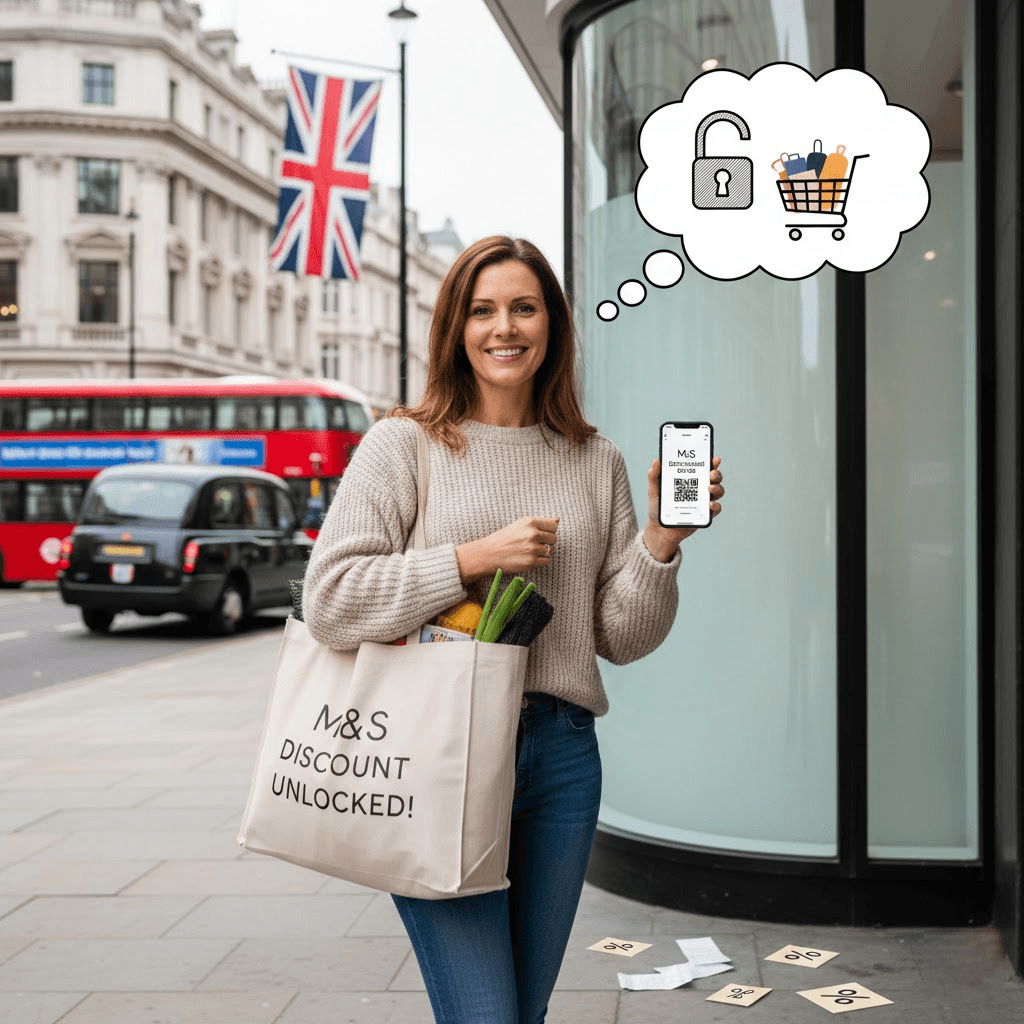
However, “rarely” does not mean “never.” When valid codes do appear, they tend to fall into specific categories:
- New Customer Incentives: Occasionally, M&S or their partner platforms (like Ocado for food) will offer a welcome code, such as
WELCOME10orFIRSTORDER, though these are often time-limited and account-locked. - Category-Specific Codes: You are more likely to find a code like
FLOWERS20for 20% off bouquets or a specific code for hampers than you are for general clothing. - Influencer & Affiliate Codes: During specific campaigns (often involving beauty boxes or school uniforms), M&S provides specific influencers with unique codes. These are usually short-lived and tracked aggressively.
The takeaway? Stop looking for a “magic key” code and start looking at the systems M&S has built to reward loyalty. That is where the real savings hide.
Mastering the Sparks Scheme: It’s Not Just Points
The single most powerful tool for generating a usable marks and spencer discount code is the Sparks card. However, calling it a “loyalty card” is somewhat misleading. Unlike Tesco Clubcard or Nectar, where you accrue points to spend as cash later, Sparks is an offers engine. It uses an algorithm to look at what you buy and spits out personalised discounts.
How the Algorithm Works for You
If you buy children’s clothing regularly, Sparks will eventually trigger a “20% off Kidswear” offer. If you buy avocados every Tuesday, you might get a “Free Avocado” coupon. The trick to “hacking” this is consistency. Scan your card (or app) every single time, even for a pint of milk. The more data you feed the system, the more likely it is to generate a high-value offer.
The Hidden Sparks Perks
Beyond the personalised offers, Sparks holds several “always-on” benefits that many shoppers ignore:
- The Free Shop: Every week, in every store, M&S randomly selects a shopper scanning their Sparks card and gives them their entire trolley for free. It is a lottery, but someone wins it in every branch, every week.
- The Coffee Tally: If you frequent the M&S Café, the app tracks your hot drink purchases. Buy six, and the seventh is free. This is digital—no need to keep a tatty stamped card in your wallet.
- Birthday Treats: Ensure your date of birth is correct in the app. On your birthday, M&S is known for gifting freebies, ranging from a bag of Percy Pigs to a free cake or a significant discount voucher for clothing.
The “Beauty Box” Phenomenon: Value Stacking
One of the most reliable ways to secure a massive discount at M&S—effectively getting products for 70% off or more—is via their seasonal Beauty Boxes and Advent Calendars. This is a strategy used by “super-shoppers” who want premium brands like Ren, L’Occitane, or Clinique without the premium price.
The mechanic is almost always the same: “Spend £30 on Clothing, Home, or Beauty, and get this box of goodies worth £150 for just £25.”
Here is how you play this to your advantage:
- Wait for the promotion to drop (usually Summer and pre-Christmas).
- Buy something you actually need (e.g., school uniforms or a staple coat) to hit the spend threshold.
- Buy the box for the discounted price.
- The Hack: Break the box down. The box will contain 10-15 items. Keep the ones you want, and use the others as high-quality stocking fillers or birthday gifts throughout the year.
By splitting the box, your “cost per gift” drops to £2 or £3 for items that retail for £15+. It is not a direct discount code, but mathematically, it beats almost any coupon you could find.
The Science of the “Yellow Sticker”
For the food shopper, the yellow reduction sticker is the beacon of hope. M&S food is legendary, but a simple “Dine In” meal can be pricey. However, M&S has a fairly rigid schedule for reductions, focused on reducing waste. While every store manager has some discretion, the national patterns are distinct.
The Reduction Timeline
- The Morning Lull (Opening – 11 AM): You might find leftovers from the previous night that were not sold. These are rare but can be absolute steals (think 10p loaves of bread).
- The Afternoon Dip (2 PM – 4 PM): Staff begin the first round of reductions. This is usually 10% to 20% off. It’s good, but not great. This is the “casual browser” discount.
- The Golden Hour (6 PM – Closing): This is when the heavy hitters arrive. Prices are slashed by 50%, 75%, or even 90%. The famous “Yellow Sticker Hunters” gather at this time. If you want a roast chicken for £1.50 or a luxury dessert for 40p, this is when you shop.
Pro Tip: Look for the “Ambience of Chaos.” If you see a trolley stacked with mixed goods rolling out from the back warehouse around 6 PM, follow it. That trolley is usually destined for the “Reduced” chiller cabinet.
The Student and Key Worker Equation
If you are a student, you might be frustrated. Does M&S do a student discount? Yes and no. It is one of the most confusing policies on the high street, often leading to awkward moments at the till.
The “Food on the Move” Limitation
Through platforms like UNiDAYS or Student Beans, M&S typically offers a discount (often 25%), but it is strictly for the “Food on the Move” range. This means sandwiches, salads, and drinks from the grab-and-go section. You generally cannot use this for a weekly shop, raw ingredients, or clothing. It is designed for the student lunch break, not the student lifestyle.
NHS and Key Workers
During the pandemic, M&S was generous with NHS discounts. While many of those temporary boosts have ended, it is always worth checking the “Health Service Discounts” portal or asking at the till if there is a current “Blue Light” offer. These fluctuate wildly depending on the economic climate and corporate strategy, so never assume, but always ask.
The Ocado Connection: A Backdoor to Discounts
Since Ocado took over the delivery of M&S Food, a new avenue for discounts has opened up. Ocado operates as a separate entity regarding marketing, meaning they have their own aggressive customer acquisition targets.
It is very common to find Ocado codes like VOU5099988 (generic example) offering “30% off your first grocery shop + Free Delivery.” Since Ocado sells M&S goods, this is effectively a way to get 30% off M&S food—something you would almost never get in a physical M&S store. If you have never used Ocado, this is the single best way to stock your freezer with M&S quality at Aldi prices.
Clothing and Homeware: Timing the Sales
M&S fashion cycles are predictable. If you have your eye on a specific leather jacket or a velvet sofa, patience is your best financial advisor. M&S runs four major sale events:
- Boxing Day / January Sale: The big one. Up to 50% off initially, dropping to 70% off as January progresses.
- Spring Sale: Usually March/April to clear winter heavy knits.
- Summer Sale: Starts mid-June. Excellent for buying linen and swimwear for next year.
- Spectaculars: These are mid-season events often branded as “Rainbow Sales” or similar.
The “Shwopping” Bonus: Don’t forget the “Shwopping” scheme. If you donate old clothing (any brand) to Oxfam or M&S collection points, you can sometimes receive a voucher (e.g., £5 off a £35 spend). This is physically handed to you or scanned into your app. It’s an eco-friendly way to manufacture your own discount code.
Troubleshooting: Why Your Code Won’t Work
If you have found a marks and spencer discount code on a voucher site and it fails, here is usually why:
1. School Uniform Exclusion: M&S school uniform is a huge seller. They rarely discount it outside of the specific “20% off Schoolwear” weeks in July. General clothing codes often exclude the uniform category.
2. Sale Items: Most codes are for “Full Price Items Only.” If you have a clearance pair of socks in your basket, the code might reject the whole basket or just not apply to the socks.
3. Guest Checkout: Many codes require you to be logged into a Sparks account to function. The system needs to verify you aren’t using a “New Customer” code for the tenth time.
The Furniture Strategy
Furniture is where the raw cash savings are highest. A 20% code on a £5 pair of knickers saves you £1. A 20% offer on a £2,000 sofa saves you £400. M&S runs “Home Events” roughly every quarter. Never buy M&S furniture at full price unless it is an emergency. The cycle is reliable. If you see a sofa you like in October, wait until November; it will almost certainly be reduced or carry a “Spend & Save” offer (e.g., Save £100 when you spend £1000).
Conclusion: The “Stacked” Shopper
The days of clipping a paper coupon from a magazine are largely gone. To save money at Marks & Spencer in the 2020s, you need to be a “Stacked Shopper.” You stack the benefits:
You shop at 6 PM for yellow stickers (Layer 1), you scan your Sparks card to trigger future algorithm offers (Layer 2), you pay with a rewards credit card (Layer 3), and you buy through a cashback site like TopCashback or Quidco (Layer 4). By combining these small margins, you create your own comprehensive discount.
M&S offers incredible quality—the reduced items often taste better than full-price items from budget competitors. It is not about cheapening the experience; it is about outsmarting the system. So download the app, keep an eye on the yellow stickers, and stop searching for fake promo codes. The real value is already waiting in the aisles.