 savingsspot.co.uk
 There is a distinct satisfaction in opening a freezer and finding it well-stocked. In a time when the weekly shop seems to climb in price every time we blink, the humble chest freezer has transitioned from a bulky luxury to a household essential for many British families. It is the secret weapon against food inflation, the guardian of the “yellow sticker” bargain, and the savior of the Sunday roast leftovers. However, buying one shouldn’t necessitate freezing your bank account. Finding the right chest freezer sale is about more than just spotting a red price tag; it is about understanding value, efficiency, and exactly what you need for your home.
If you are currently scouring the internet or wandering the aisles of Currys and Argos looking for that perfect white box to stash in your garage or utility room, you have come to the right place. This isn’t just a list of specs; it is a deep dive into securing a deal that pays for itself over time.
Why the Chest Freezer is Making a Comeback
For years, the upright freezer reigned supreme in UK kitchens due to its smaller footprint. But the chest freezer is having a renaissance. Why? It comes down to pure physics and economics. Cold air is heavy; it sinks. When you open the door of an upright freezer, a significant amount of cold air tumbles out and sinks to the floor, replaced by warm kitchen air that the motor must then work hard to freeze. When you open a chest freezer, the cold air sits happily at the bottom. This inherent efficiency makes them cheaper to run—a crucial factor with current energy caps.
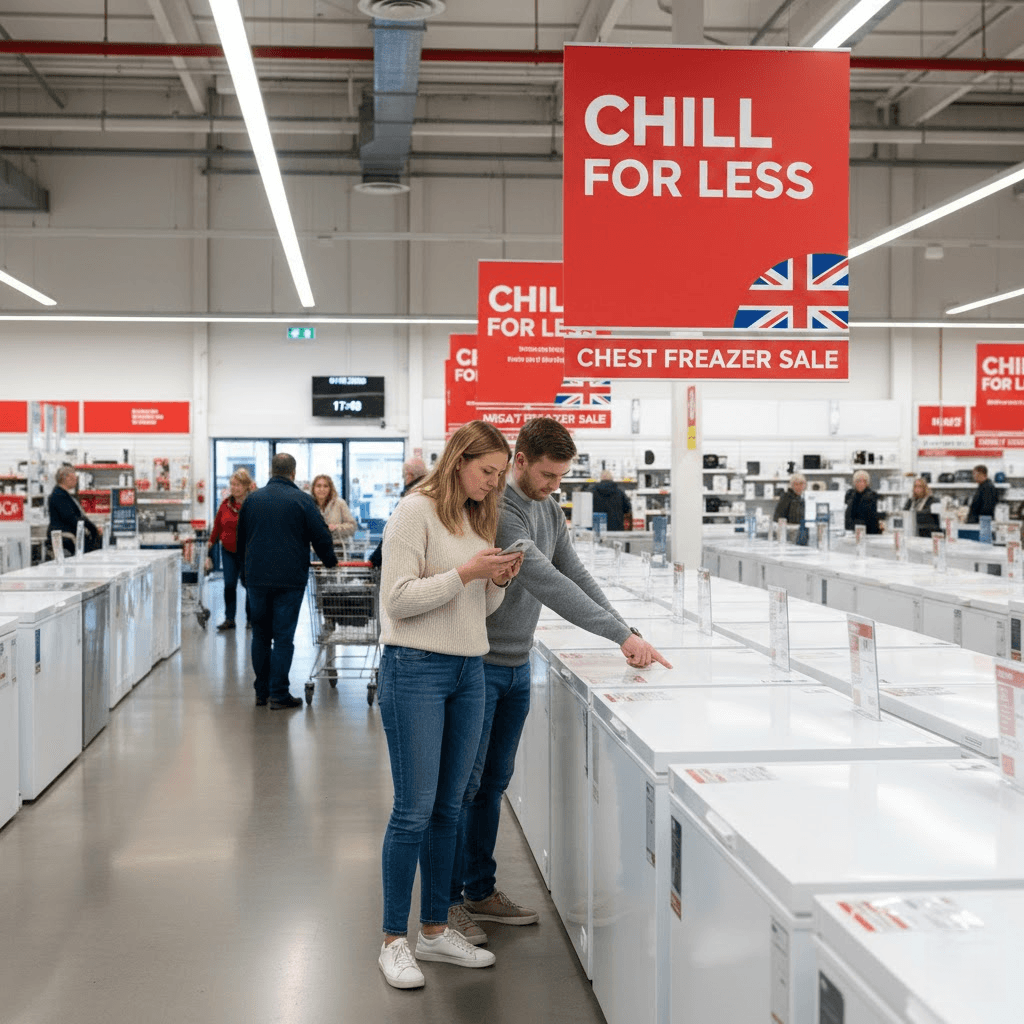
Furthermore, the usable space in a chest freezer is unmatched. There are no drawers to crack or restrict the shape of items. If you have bought a particularly awkward leg of lamb or a bulk box of pizzas, the chest freezer accommodates it without complaint. It is this versatility that drives people to hunt for a chest freezer sale, especially ahead of major holidays like Christmas or prior to the summer BBQ season.
Timing Your Purchase: When to Look for a Sale
Finding a bargain is often about timing. In the UK retail calendar, appliances like white goods follow a predictable cycle of discounts. While you can find deals year-round, certain periods offer deeper cuts.
- Bank Holiday Weekends: Whether it is Easter, May, or the August Bank Holiday, major retailers often launch “Mega Deals” or “Big events” during these long weekends.
- Black Friday and Cyber Monday: Late November is prime time for appliance shopping. Retailers like AO.com, John Lewis, and Very often slash prices on older models to clear stock before the new year.
- Boxing Day and January Sales: The traditional clearing house for retail. If you can hold on until after Christmas, you might pick up a premium model for a budget price.
- Spring Cleans (March/April): As new models are often released in the spring, last year’s stock gets discounted.
Keep an eye out for “clearance” sections on websites. These are often returns (where the box was opened but the item wasn’t used) or slight seconds with cosmetic scratches. For a chest freezer that will likely live in a garage or shed, a small scratch on the side is a negligible price to pay for a £50-£100 saving.
Decoding the Jargon: What Matters in a Sale?
When you land on a chest freezer sale page, you will be bombarded with terminology. Let’s strip that back to what actually matters for daily use.
1. Capacity: Litres vs. Shopping Bags
Manufacturers list capacity in litres, but that can be hard to visualize. A rough rule of thumb used by UK retailers is that 18 litres of space equals roughly one bag of food shopping.
- Small (95L – 150L): Holds about 5-8 bags. Perfect for couples or small families needing overflow storage.
- Medium (150L – 250L): Holds 8-13 bags. The sweet spot for a family of four.
- Large (250L+): Holds 14+ bags. Ideal for allotment owners, bulk buyers, or large households.
Don’t buy bigger than you need. An empty freezer is actually less efficient than a full one, as the frozen food helps maintain the temperature. If you buy a massive 400L beast and only put two pizzas in it, you are paying to freeze a lot of empty air.
2. Garage Ready (Winter Guard / Freezer Guard)
This is the most critical feature for UK buyers. Most appliances are designed to work in room temperatures (above 10°C). If you put a standard freezer in an unheated garage in December, the thermostat gets confused. It thinks, “Oh, it’s cold enough already,” and stops the compressor. The result? Your freezer turns off, and your food thaws.
Look specifically for technology like Beko’s “Freezer Guard” or similar tech from Russell Hobbs and Bush. These are designed to operate in ambient temperatures as low as -15°C. If you plan to keep your freezer in an outbuilding, do not compromise on this feature, regardless of how cheap the sale price is.
3. Energy Ratings (The A to G Shift)
Post-Brexit, the UK (alongside the EU) recalibrated energy labels. What used to be an A++ might now be an F. Do not be alarmed by seeing an ‘F’ rating on a new appliance; it is simply a stricter scale. However, when comparing sale items, look at the “Annual Energy Consumption” in kWh. Multiply that number by your current electricity tariff (e.g., 29p) to see exactly what that bargain will cost you to run per year.
Top Brands to Watch in the Sales
During a chest freezer sale, certain names pop up frequently. Here is a candid look at what to expect from them.
Beko: The undisputed king of the “garage ready” market in the UK. They are generally affordable, reliable, and almost all their chest freezers come with Freezer Guard technology. They are often the benchmark for value.
Russell Hobbs: Known for small kitchen appliances, their white goods are surprisingly robust. They often feature sleek black designs if you want something that looks a bit smarter in a utility room. Watch for them in supermarket sales (like Asda or Tesco Direct) as well as Amazon.
Haier: If you are looking for something more premium, Haier freezers often come with better internal lighting, digital displays, and “Fast Freeze” functions. They are pricier, so catching them in a sale is a real win.
Logik / Essentials: These are often the “house brands” for retailers like Currys. They are basic—no frills, manual defrost usually—but if the goal is purely cold storage for the lowest price, they are hard to beat.
The Hidden Costs of a Sale Item
You’ve found a freezer for £150. Bargain, right? Before you click “Buy,” consider the logistics. Chest freezers are bulky. Does the retailer offer free delivery? Getting a chest freezer into the back of a hatchback is a recipe for back pain and scratched bumpers.
Additionally, consider the disposal of your old unit. Many UK retailers offer a “recycle old appliance” service for around £20-£30. It is usually worth paying this to avoid the hassle of a trip to the local tip (HWRC), especially given the size of these units.
Living with a Chest Freezer: Organization and Maintenance
Once the delivery van pulls away, the reality sets in. A chest freezer can quickly become a “frozen abyss” where sausages go to die, only to be discovered three years later covered in freezer burn. To truly benefit from your chest freezer sale purchase, you need a system.
The Basket System
Most sale models come with one flimsy wire basket. It isn’t enough. You can buy universal stacking baskets online. Use them. Keep the items you use daily (peas, bread, ice cream) in the top baskets. Keep the long-term storage (raw meat joints, batch cooking) at the bottom.
The Inventory List
It sounds tedious, but a magnetic whiteboard on the lid is a game changer. Write down what goes in and cross it off when it comes out. This prevents the “buy more chips because I think we are out” scenario, only to find three bags buried at the bottom later.
Defrosting: The Necessary Evil
Unless you pay a premium for a “Frost Free” chest freezer (which are rare and expensive), you will have to defrost it eventually. Ice builds up and acts as insulation, meaning the motor has to work harder to push cold through the ice layer. When the ice is about 1cm thick, it’s time.
Look for a model with a front-mounted drainage port. This allows you to unscrew a cap at the bottom front, place a shallow tray underneath, and let the water flow out. Without this, you are left baling water out with a sponge—a miserable task.
Smart Shopping Strategies for Promo Codes
While we are discussing sales, we cannot ignore the power of the promo code. When purchasing white goods online, never check out without a quick search. Retailers like Currys, AO, and Argos often have codes floating around.
For example, you might see codes like LKA50 (often used for £50 off large kitchen appliances) or FREEZE10 during specific promotion weeks. New customer codes for catalogue sites like Very or Littlewoods can sometimes yield 20% off your first credit order (Buy Now Pay Later), though always be cautious with interest rates if you don’t pay it off immediately. Student discounts (via UNiDAYS or Student Beans) can sometimes apply to appliances too—perfect for university house shares needing extra pizza storage.
Safety First: Power Cuts and Food Hygiene
One of the unsung heroes of the chest freezer is its insulation. In the event of a power cut—something becoming slightly more of a concern with varied grid pressures—a chest freezer is your best bet. A decent model, if left unopened, can keep food frozen for up to 36 hours without power. An upright freezer might only manage 10-12 hours.
When reading the specs during a sale, look for “Power Failure Safe Storage Time.” The higher the number, the thicker the insulation, which usually translates to better energy efficiency day-to-day as well.
The Environmental Angle
We are all trying to be greener. Buying a new appliance has a carbon footprint. However, if you are replacing a 20-year-old rusty freezer with a modern, energy-efficient model bought in a sale, the net benefit is positive. Modern refrigerants (usually R600a) are far less damaging to the ozone layer than the gases used decades ago. Plus, by reducing food waste—freezing leftovers rather than binning them—you are lowering your personal carbon footprint significantly.
Final Checklist Before You Buy
You have your credit card ready. The chest freezer sale is ending soon. Run through this quick checklist:
- Measure the space: Include space for the lid to open fully! You don’t want to hit low shelving or a boiler.
- Measure the door: Can you actually get it into the house/garage?
- Check the temperature range: Is it going in the garage? Confirm “Freezer Guard” or climatic class SN-T.
- Calculate the running cost: Check the kWh/annum.
- Check the drainage: Does it have a front drain port?
Conclusion
Investing in a chest freezer is a commitment to a different way of eating and shopping. It allows you to buy in bulk when prices are low, cook in large batches to save time and energy, and reduce food waste. While the initial cost might seem steep, finding a good chest freezer sale can mitigate that, and the long-term savings on your weekly grocery bill will eventually pay for the appliance itself.
Whether you choose a compact model for a flat or a cavernous chest for a rural farmhouse, the principles remain the same: look for efficiency, ensure it suits the room temperature of its final home, and organize it well. Happy hunting, and may your future be filled with perfectly preserved bargains.