 savingsspot.co.uk
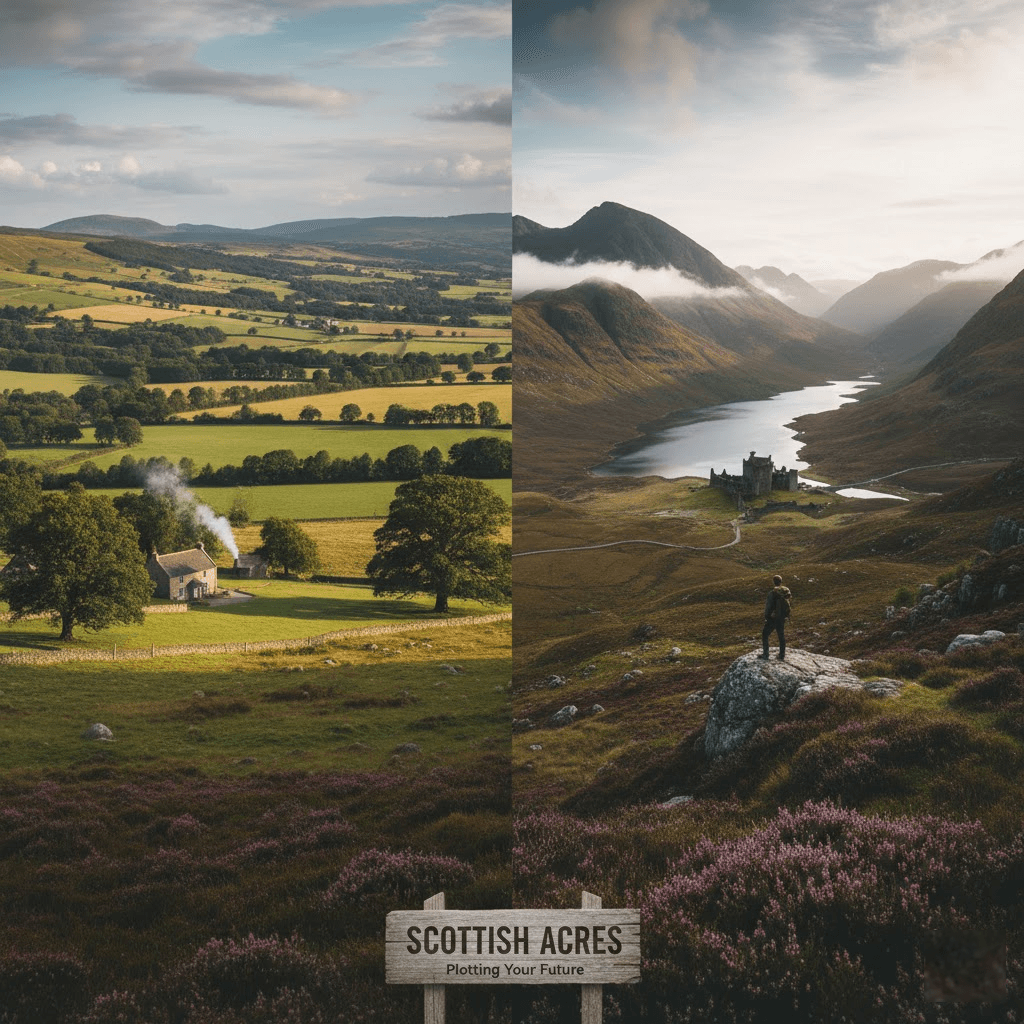
 There is a distinct romance associated with the Scottish landscape. From the mist-rolling munros of the Highlands to the fertile, gold-dusted fields of the Borders, the diversity of the terrain is matched only by the diversity of the opportunities it presents. For many, the search for farms for sale Scotland is not merely a business transaction; it is a pursuit of a lifestyle change, a return to the land, or a strategic investment in what is fast becoming one of Europe’s most dynamic rural property markets.
While the English countryside often commands a significant premium, Scotland has historically offered more acreage for your pound. However, the secret is well and truly out. The market is evolving rapidly, driven by traditional agricultural needs, lifestyle buyers seeking solitude, and a new wave of “green investors” looking to capitalize on natural capital and carbon sequestration. Navigating this market requires more than just a healthy budget; it demands an understanding of regional nuances, Scottish property law, and the unique capabilities of the land itself.
The Current State of the Scottish Rural Market
If you are actively looking at farms for sale in Scotland, you will likely notice a competitive atmosphere. The demand for rural land has outstripped supply in many areas for several consecutive years. This is driven by three distinct buyer types:
- The Expanding Farmer: Existing agribusinesses looking to increase economies of scale by acquiring neighbouring plots.
- The Lifestyle Buyer: Often moving from southern UK cities, seeking smallholdings or “hobby farms” with high-speed internet and scenic views.
- The Natural Capital Investor: Corporations and funds purchasing hill farms and grazing land for afforestation (tree planting) and peatland restoration to offset carbon emissions.
This third category has fundamentally changed the valuation of what was once considered “poor” agricultural land. Rough grazing land, previously of little value beyond sheep farming, is now commanding higher prices due to its environmental potential. Consequently, the gap between prime arable land prices and hill land prices is narrowing, though prime arable land in areas like East Lothian and Angus remains the gold standard.
Regional Breakdown: Where to Buy?
Scotland is not a monolith; the agricultural potential changes drastically within a fifty-mile radius. Understanding the geography is the first step in filtering your search for farms for sale Scotland.
1. The Borders and the Lothians
If your focus is on prime arable production, this is the engine room of Scottish agriculture. Stretching from the English border up towards Edinburgh, the Scottish Borders offer rolling hills that are perfect for mixed farming—both livestock and crops. The Lothians, particularly East Lothian, boast some of the most fertile soils in the country (Grade 1 and 2). Farms here command the highest prices due to yield potential and proximity to major transport links and the capital.
2. Dumfries and Galloway
To the southwest lies the dairy capital of Scotland. The climate here is milder and wetter, fueled by the Gulf Stream, resulting in lush grass growth that supports intensive dairying and beef production. For buyers looking for high-productivity livestock units, this region offers excellent value compared to similar landscapes in Northern England.
3. Aberdeenshire and Moray
The northeast is a powerhouse of barley and beef. Famous for the “Aberdeen Angus” breed and malting barley for the whisky industry, this area is characterized by large, efficient commercial units. The infrastructure for farming here is superb, with a strong network of suppliers, markets, and machinery dealerships. It is a working landscape, less focused on tourism than the west coast, but highly profitable for serious agriculturalists.
4. The Highlands and Islands
This is where the dream often meets reality. The terrain is rugged, the weather can be harsh, and the farming is predominantly extensive livestock (sheep and hardy cattle). However, this is also where you find the most breathtaking scenery and the unique system of “crofting” (more on this later). Buying here is often a lifestyle choice or a tourism-diversification play. The land prices per acre are generally lower, but the operational challenges are higher.
Understanding Scottish Land Tenure: It’s Different Here
One critical mistake potential buyers from England or overseas make is assuming property law is uniform across the UK. It is not. Scotland has its own legal system, and this significantly impacts how you buy farms for sale Scotland.
The “Missives” System
In England, a property transaction is not legally binding until “exchange of contracts,” which can happen weeks or months after an offer is accepted. In Scotland, the process is concluded through “Missives”—a series of formal letters between solicitors. Once the missives are concluded (which can happen very quickly after an offer is accepted), the deal is legally binding. This reduces the risk of “gazumping” (where a seller accepts a higher offer at the last minute), providing more security for the buyer.
Closing Dates
Because demand is high, many farms are sold via a “Closing Date.” Interested parties must submit their best and final offer in a sealed envelope by a specific time. You do not know what others are bidding. This blind bidding system favors serious buyers who have their finance in place and have done their due diligence upfront.
Crofting Tenure
If you are looking at land in the Highlands and Islands, you will encounter “Crofting.” A croft is a small agricultural unit, but buying one is complex. You might own the land, or you might be a tenant, but the “Crofting Commission” regulates what you can do. Crofters have duties to reside on or near the croft and to work the land. It is not simply a case of buying a house with a big garden; it is a regulated lifestyle that protects rural communities. Always check if the land is under crofting tenure before bidding.
Financial Considerations and Funding
Purchasing a farm is a capital-intensive endeavour. Beyond the purchase price, you must factor in the Land and Buildings Transaction Tax (LBTT), which is Scotland’s equivalent of Stamp Duty. The rates for residential and non-residential (commercial/agricultural) property differ, and mixed-use properties (a farmhouse with land) require careful tax planning.
Agricultural Support and Subsidies
Post-Brexit, agricultural policy has diverged across the UK. Scotland is currently transitioning its subsidy framework. The focus is shifting towards conditionality—receiving payments in return for meeting environmental and efficiency standards. If you are buying a farm, you must investigate the current entitlement to payments. Are the “entitlements” (the right to claim subsidy) included in the sale? This can amount to thousands of pounds of annual income and must be negotiated as part of the chattels or the land price.
Diversification: The Key to Modern Viability
Unless you are buying a 500-acre prime arable unit, relying solely on primary food production can be financially precarious. When browsing farms for sale Scotland, view the property through the lens of diversification.
- Renewable Energy: Scotland is the windiest country in Europe. Is there potential for a wind turbine? Is the roof space on the barns suitable for solar arrays? Is there a water source suitable for micro-hydro?
- Agritourism: Scotland’s tourism industry is booming. Old stone barns (steading) can often be converted into holiday cottages, subject to planning. Glamping pods are increasingly popular and require less permanent infrastructure.
- Forestry: With the government’s target to increase woodland cover, grants are available for planting trees. This not only provides future timber income but can create immediate capital through carbon credit sales.
Due Diligence: What to Watch For
Before you fall in love with a farmhouse kitchen or a view of the loch, you must conduct rigorous checks. The physical and legal reality of the land is paramount.
1. Soil Analysis
Request a soil map. The James Hutton Institute classifies land capability for agriculture. Class 1 is excellent; Class 7 is of very limited agricultural value. Ensure the price you are paying reflects the classification. Do not pay arable prices for Class 5 grazing land.
2. Servitudes and Rights of Way
Scotland has a “Right to Responsible Access” (often called the Right to Roam). This means the public generally has the right to walk across your land, provided they do so responsibly. However, you should check for specific “servitudes” (easements) regarding access for neighbours, utility companies, or timber extraction routes that might impact your privacy or operations.
3. Drainage and Fencing
In a wet climate, drainage is everything. Ask for drainage maps. When was the field drainage last replaced? Broken drains lead to waterlogged fields and rushes, rendering land useless. Similarly, check the boundaries. Stone dykes (walls) and fences are expensive to repair. If a 200-acre farm needs perimeter fencing, you could be looking at a bill of tens of thousands of pounds immediately after purchase.
The Future of Scottish Farming
Despite the challenges of rising input costs and market volatility, the outlook for Scottish land remains positive. The nation is positioned as a leader in sustainable agriculture and climate resilience. The abundance of water—a resource becoming scarce in southern Europe—makes Scottish land a strategic long-term hold.
Furthermore, the cultural shift towards “local food” creates opportunities for direct-to-consumer sales. Farm shops and veg-box schemes are thriving, particularly near urban hubs like Glasgow, Edinburgh, and Aberdeen. Buying a farm today is about more than just producing commodities; it is about managing an ecosystem and engaging with a consumer base that values provenance.
Conclusion
Finding the right farms for sale Scotland requires patience, local knowledge, and a clear vision of what you want to achieve. Whether you are drawn by the solitude of a Highland croft, the productivity of a Border estate, or the diversification potential of a smallholding near the coast, the opportunities are vast.
The market is robust, and the assets—soil, water, and timber—are finite. By understanding the specific legalities of the Scottish system, such as missives and crofting tenure, and by keeping an eye on future trends like natural capital, you can make an investment that provides not just a financial return, but a profound connection to one of the most beautiful landscapes on earth.