 savingsspot.co.uk
 There is a specific, almost primal joy associated with the sound of a doorbell on a rainy Friday night in the United Kingdom. It signals that the cooking is cancelled, the washing up is postponed, and a cardboard box radiating heat and the scent of melting mozzarella has arrived. Pizza Hut has been a staple of British high streets and takeaway nights for decades, synonymous with the Deep Pan, the stuffed crust, and the ice cream factory. However, as the cost of living continues to pinch our wallets, that “cheeky takeaway” has transformed from a casual habit into a calculated luxury.
This is where the savvy consumer steps in. Paying full price for a pizza in 2024 feels like a rookie mistake. The landscape of fast food pricing is designed with a high “rack rate” offset by a constant stream of promotions. Understanding how to navigate this ecosystem isn’t just about saving a couple of quid; it’s about maximizing the value of every calorie. If you are searching for a Pizza Hut discount code, you are already on the right path. But a code is just one tool in a much larger arsenal of money-saving tactics.
This guide dives deep into the mechanics of Pizza Hut UK’s pricing structure. We will explore the differences between their delivery and dine-in offers, the digital tricks to finding hidden vouchers, and the specific loopholes that can turn a standard family meal into a budget-friendly feast.
The Great Divide: Delivery vs. Restaurants
Before you even type “Pizza Hut discount code” into your browser, you must understand a fundamental operational quirk of Pizza Hut in the UK. The brand essentially operates as two distinct entities: “Pizza Hut Delivery” and “Pizza Hut Restaurants” (The Huts).
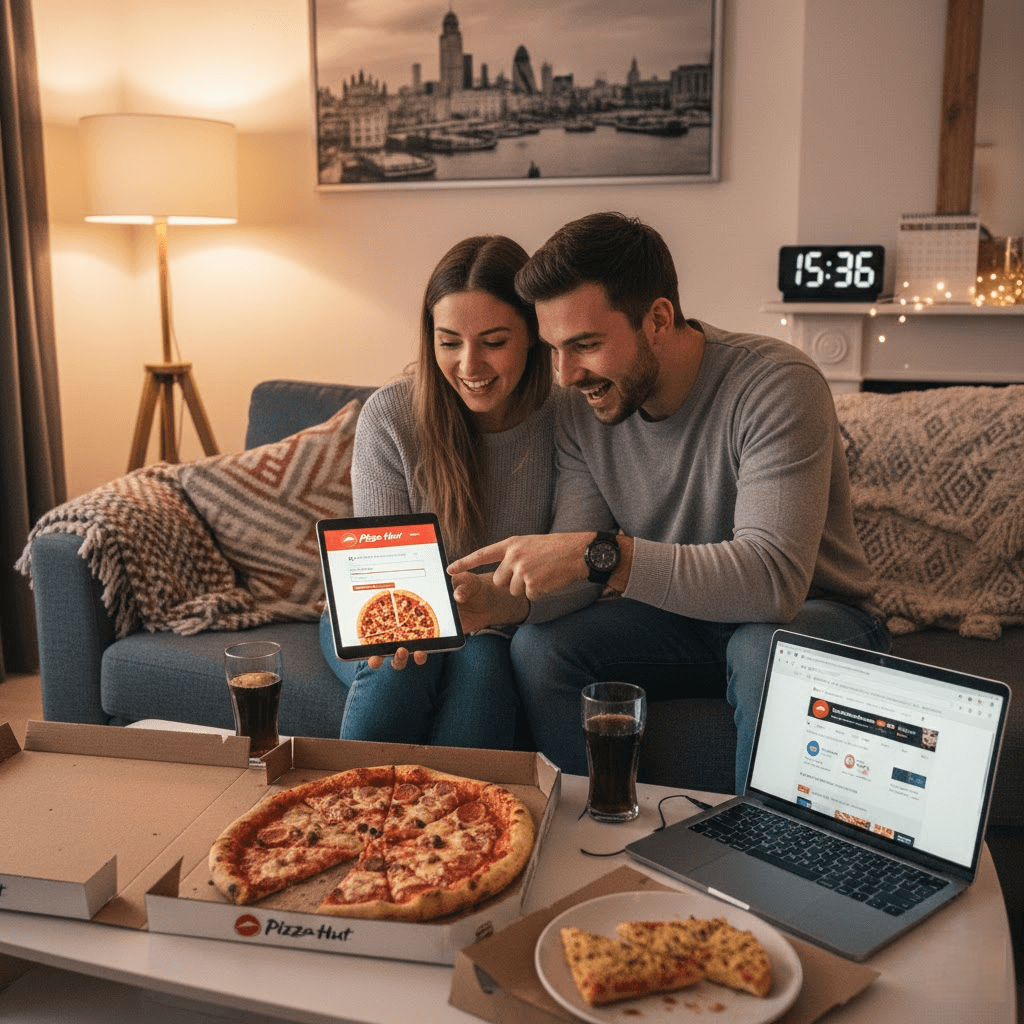
Why does this matter? Because a code designed for one will almost never work for the other. This is the most common frustration for bargain hunters. You find a screaming deal for 50% off, load up your basket on the delivery site, and get the dreaded “Invalid Code” error. Usually, this is because you are trying to use a restaurant voucher for a delivery order, or vice versa.
The Restaurant Experience (Dine-In): The dine-in Huts are franchises focused on the experience. Their discounts are often geared towards upsizing the meal—think “Unlimited Buffet” deals, student discounts, or set menus that include a drink and a side. The codes here are often QR codes or printable vouchers.
The Delivery Ecosystem: Pizza Hut Delivery is a volume game. They are competing directly with Domino’s and Papa John’s. Their discount codes are almost always percentage-based (e.g., “50% off when you spend £30”) or “bogof” (Buy One Get One Free) structures. These codes are alphanumeric and must be entered at the online checkout.
The Holy Grail: Two for Tuesdays and Fixed Deals
If you are looking for reliability, you cannot ignore the institutional offers. These aren’t temporary glitches; they are part of the brand’s DNA. While they don’t always require a manual Pizza Hut discount code, knowing when to order is just as powerful as having a coupon.
Two for Tuesdays: This is the heavyweight champion of pizza deals in the UK. It is simple, effective, and requires zero effort. On Tuesdays, you buy one pizza and get another free. However, the savvy user knows the limitations. This usually applies to medium and large pizzas. If you are ordering for one person, this deal might actually force you to overspend on food you won’t eat (unless you love cold breakfast pizza, which, let’s be honest, is a delicacy in itself).
The £5 Favourites Menu: Often overlooked, the value menu is a way to bypass the need for a percentage-off code. If you stick to the classic toppings on a smaller base, the price point is artificially held low to compete with supermarket prices. Combining several “value” items can sometimes be cheaper than buying a “Premium” pizza with a 30% discount code.
Hunting for the Codes: Where to Look
You’ve decided you want a stuffed crust, it’s not Tuesday, and you don’t want the basic menu. You need a Pizza Hut discount code. Do not just click the first link on a “voucher farm” website that hasn’t been updated since 2019. Here is a systematic approach to finding codes that actually work.
1. The Official “Deals” Page
It sounds obvious, but Pizza Hut hides its best codes in plain sight. Both the Delivery and Restaurant websites have a dedicated “Deals” tab. The algorithm often tailors these bundles. For example, the “Family Deal” usually bundles sides and drinks for a price that is mathematically lower than applying a 20% discount to individual items. Always check the official math first.
2. The App Ecosystem
Pizza Hut, like all modern fast-food chains, wants to live on your home screen. To incentivize you to download their app, they often “geo-fence” specific offers. This means there might be a Pizza Hut discount code available exclusively to app users in your specific postcode. Furthermore, the app tracks your loyalty. The “Hut Rewards” scheme allows you to earn “Slices” (points) for every order. Enough slices eventually equal a free pizza. While this isn’t an immediate discount, it is a deferred 100% discount.
3. The Aggregators (Just Eat, Uber Eats, Deliveroo)
This is a double-edged sword. Often, the menu prices on third-party apps are inflated to cover the commission fees. However, these platforms frequently run their own subsidized campaigns. You might find a “20% off orders over £20” code issued by Uber Eats that applies to Pizza Hut, even if Pizza Hut itself isn’t running a sale. Always compare the final basket price on the official site vs. the aggregator app. The delivery fee can often be the tie-breaker.
4. Student and Worker Discounts
The UK has a robust network of verified status discounts. If you fall into one of these categories, you likely have a permanent Pizza Hut discount code waiting for you.
- Student Beans / UNiDAYS: Students can almost always secure a 20% to 30% discount. This is usually valid Sunday through Thursday to fill the quiet periods.
- Blue Light Card: For NHS, emergency services, and armed forces. Pizza Hut has historically been very generous with this demographic, offering significant discounts on collection orders and dine-in.
The “Collection” Hack
One of the most underutilised strategies for saving money involves putting on your shoes. Pizza Hut Delivery charges for, well, delivery. In many UK franchises, there is a specific pricing tier for “Collection Only.”
Many franchises run a permanent “Buy One Get One Free on Collection” offer, regardless of the day of the week. They do this because it saves them the cost of a driver and the logistics of routing. If you live within a 10-minute drive or walk of a Hut, selecting “Collection” is effectively an automatic 50% discount code without needing to type in a single character. Plus, the pizza is guaranteed to be hot, as it hasn’t spent 20 minutes in a thermal bag touring your neighbourhood.
The Survey Receipt Loophole
Have you ever looked at the bottom of your receipt? Most people crumple it up and throw it in the bin along with the crusts. This is a mistake. Pizza Hut often runs a “Guest Experience Survey.”
The mechanics are simple: you go to the URL printed on the receipt, answer a few questions about whether your waiter was polite or if your pepperoni was crispy, and in exchange, they generate a unique validation code. This code is usually valid for a “2-for-1” or a free side on your next visit. If you eat at Pizza Hut regularly, this creates a virtuous cycle where every meal subsidises the next one.
Advanced Stacking: Can You Combine Deals?
The golden question: Can you stack a Pizza Hut discount code with a set meal? Generally, the computer says no. The Point of Sale (POS) systems are programmed to prevent “double dipping.” If you try to apply a 50% student discount to a “Two for Tuesdays” order, the system will usually reject it or apply the discount to the full menu price, which negates the Tuesday offer.
However, there is a form of “soft stacking.” This involves using a cashback credit card or a cashback site (like TopCashback or Quidco). You click through the cashback portal to reach the Pizza Hut site. You order your discounted pizza using a valid code. You pay. You then receive a percentage of that spend back in your cashback account weeks later. It requires patience, but it is technically stacking a discount with a rebate.
The “Abandoned Basket” Technique
This is a trick that works across many e-commerce sectors, and it can sometimes work with pizza. The strategy is psychological warfare against the marketing algorithm.
- Log in to your Pizza Hut account.
- Add a large amount of food to your basket.
- Proceed to the checkout page, but do not pay.
- Close the browser tab.
Wait. Sometimes, within 24 hours, the automated marketing system will panic. It thinks it has lost a sale. To lure you back, it may email you a unique Pizza Hut discount code saying something like, “Did you forget something? Here is 10% off to complete your order.” This isn’t guaranteed, but if you are planning a pizza party for the weekend, try this on a Wednesday to see if you can trigger a code generation.
Menu Engineering: Creating Your Own Value
Sometimes the best way to save isn’t a code; it’s understanding the physics of the pizza. We are talking about surface area and volume.
A large pizza is significantly larger in surface area than two smalls. If you are ordering for a group, do not let everyone order their own individual small pizza. You are paying a premium for the crust and the labour. Ordering two Large pizzas and splitting the toppings (half and half) is almost always cheaper per square inch of food than ordering four individual pizzas.
Furthermore, consider the “Create Your Own” fallacy. Adding toppings individually can be expensive. It is usually cheaper to find a pre-set menu pizza that is close to what you want, and then pay for one removal or one addition, rather than building a “Meat Feast” from scratch on a Margherita base.
Common Pitfalls: Why Your Code Won’t Work
There is nothing more frustrating than the “Computer Says No” moment when you are hungry. If your Pizza Hut discount code is failing, it is usually due to one of these nuanced reasons specific to the UK market:
- Franchise Exclusions: Not all Pizza Huts are owned by the corporate HQ. Many are independent franchises. A national code marketed on TV might not be accepted by a local franchisee who operates on tight margins. This is common in smaller towns.
- Minimum Spend Thresholds: That “50% off” code often has a caveat in small print: “Minimum spend £35.” If your basket is £34.50, it won’t trigger. Adding a dip for 50p is often the key to unlocking a £15 discount.
- The “Premium” Trap: Some codes exclude “Premium” range pizzas or specific crusts (like the Cheesy Bites crust). If the code fails, try switching to a standard Pan or Thin base to see if that resolves the conflict.
- Beverage Tax: In the UK, sugar tax applies to certain soft drinks. Often, discount codes apply to the food portion of the bill but legally cannot discount the tax portion of the sugary drink. This can cause calculation errors in older POS systems.
Seasonal Opportunities
The UK calendar is peppered with events that trigger pizza discounts. Keep an eye out for these specific windows:
National Pizza Day (February): Usually sees aggressive flash sales. Results Day (August): A-Level and GCSE results days often see “Free Pizza” or massive discounts for students bringing in their results papers. Veganuary (January): Pizza Hut has invested heavily in their vegan menu. In January, they often push aggressive discounts on vegan pizzas to encourage trial.
Conclusion: The Art of the Savvy Slice
The days of simply picking up the phone and ordering a pizza without a thought for the cost are behind us. But that doesn’t mean the joy of the takeaway is dead. It just requires a slight shift in mindset.
Finding the perfect Pizza Hut discount code is about awareness. It is about knowing the difference between a Tuesday and a Friday. It is about checking the app, understanding the difference between delivery and collection, and knowing that the large pizza is mathematically better value than the small. It’s about being a smart consumer.
So, the next time the hunger strikes and you crave that specific texture of a deep-pan dough, pause for a moment. Check the “Deals” tab. Look at your student status. Consider a walk to collect. With the strategies outlined above, you ensure that the only thing heavy about your meal is the cheese, not the price tag. Now, go forth and feast—frugally.